
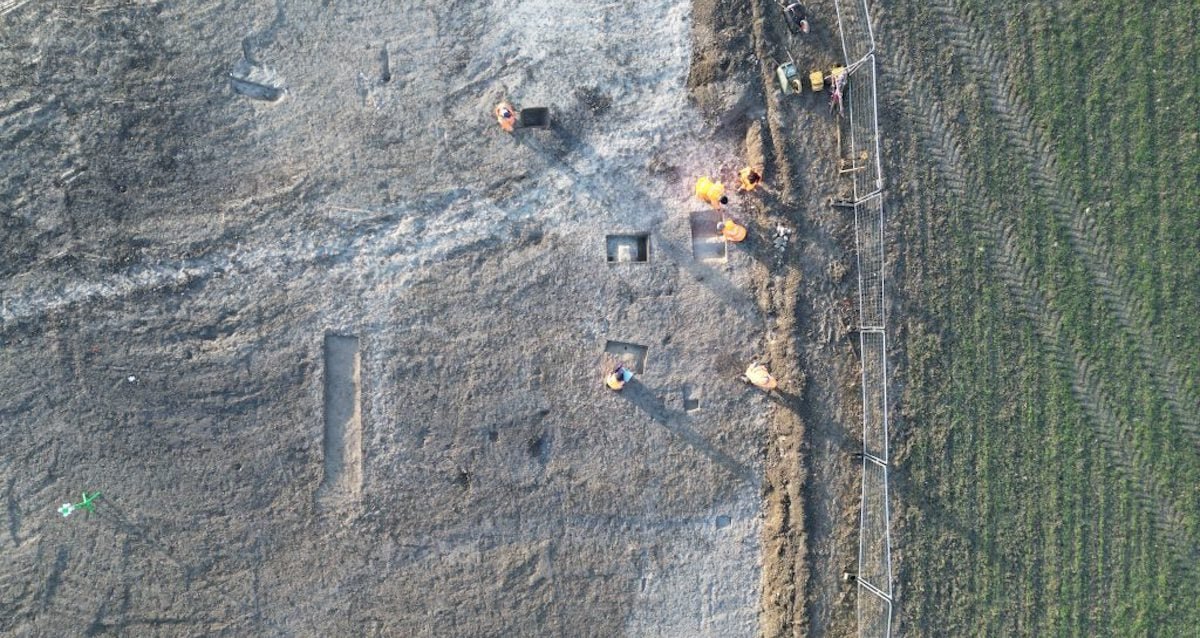
Archaeologists from Cotswold Archaeology have uncovered a significant Roman settlement in Wendover, England, during the construction of a new cricket ground. The site, located approximately 40 miles northwest of London, contains a dense collection of artifacts and burials dating from the first through the fourth centuries C.E., confirming the existence of a community that persisted for roughly four hundred years.
Roman Economic Activity and Trade Networks
The excavation revealed a high volume of material goods, suggesting the settlement was a commercially active hub. Among the most abundant finds were 54 copper alloy coins recovered from a single section of the site. These coins date from the mid-second to the late fourth centuries C.E., with the most recent specimens dated to approximately 383-388 C.E., which may indicate the period when the settlement was abandoned.
The diversity of pottery found at the site further highlights the settlement’s integration into broader trade networks. While much of the pottery was produced locally, researchers identified pieces from kilns in Oxford, St. Albans, Buckinghamshire, and Bedfordshire. Additionally, some items were imported from Spain and Gaul (modern-day France), demonstrating the international commerce that characterized Roman Britain.
Household Items and Daily Life
The artifacts recovered include a variety of household tools and construction materials such as bricks, plaster, and tiles. Key discoveries include:
- Cooking and storage jars, drinking beakers, bowls, and dishes.
- Mortaria, which functioned as mortars and pestles for food preparation.
- Millstones and querns used for grinding flour.
- An antler-made folding pocketknife handle featuring holes for belt attachment.
Funerary Customs and Unique Burials
Archaeologists discovered nine Roman-era burials, including five inhumation burials of infants and young children. Some remains were cremated and placed in jars, often accompanied by grave goods such as small cups. A notable pattern emerged where some cremation jars were intentionally misfired or imperfect, a practice observed in other regions of Roman Britain.
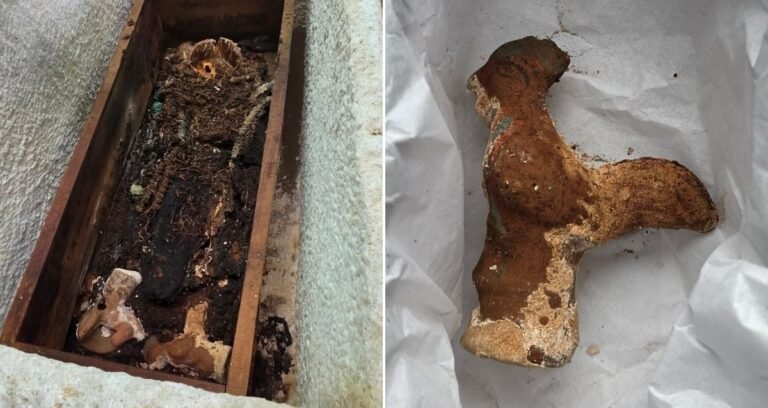
The most distinctive find was the burial of a nine-month-old infant, likely dating to the third or fourth century C.E. The infant’s body was placed inside a pottery vessel, which was then turned upside down and buried with a hen and a songbird as votive offerings. According to a statement from Cotswold Archaeology, this type of burial is common in other parts of the Roman Empire but is believed to be the first of its kind found in England.
Researchers suggest that the parents of the child may have brought these specific funerary customs from elsewhere in the Roman Empire, reflecting the diversity of the inhabitants of the settlement. Further analysis and excavations are expected to provide more clarity on the cultural origins of the people who occupied the settlement for four centuries.