
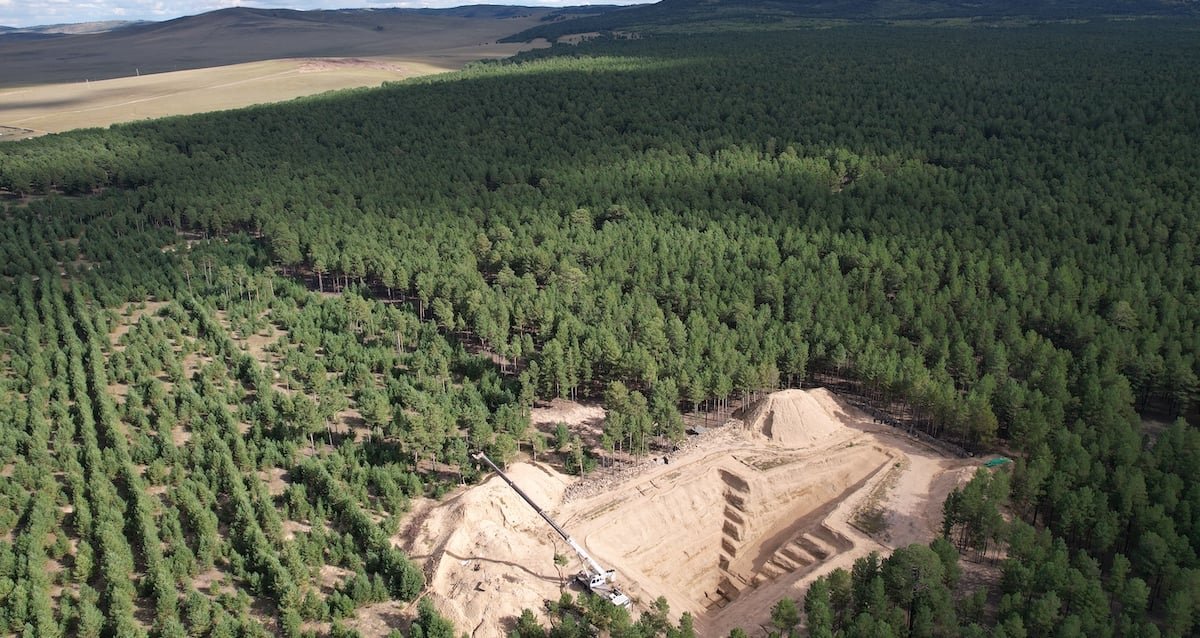
Archaeologists have unearthed the largest Xiongnu tomb ever found in Mongolia, located at the Duurlig Nars cemetery in the eastern steppes. The structure spans 240 feet in length and reaches a depth of 50 feet, marking a significant discovery for the study of ancient Eurasian steppes civilizations. The tomb dates back to the late 1st century or early 2nd century C.E., a period during which the Xiongnu empire was beginning to decline in regional power.
Construction and Dimensions of the Burial Site
The tomb is characterized by an elaborate construction method involving nine layers of stone and two nested burial chambers. The excavation, a joint effort between the National Museum of Korea, the Institute of Archaeology of the Mongolian Academy of Sciences, and the National Museum of Mongolia, revealed that the builders used a stepped digging process to reach the central wooden coffin.
Key physical specifications of the site include:
- Total length: Approximately 240 feet, including the entrance path.
- Maximum depth: 50 feet below ground level.
- Construction materials: Multiple stone layers and a central wooden coffin.
Global Trade and Artifacts Found
Researchers recovered 413 artifacts from the site, providing evidence of the Xiongnu’s extensive trade networks and diplomatic ties. The collection includes items from diverse origins, including China, Korea, and possibly the Roman Empire.
International Influence and Material Culture
The artifacts highlight the Xiongnu’s role as intermediaries in ancient trade routes. Notable finds include:
- Roman Influence: A handled glass vessel, which chemical analysis is expected to confirm as Roman in origin.
- Korean Ties: Silver decorations for horse harnesses, whose style matches artifacts found in Korea.
- Chinese Influence: 15 ornate jade discs. While similar to those found in Han Dynasty burials, these discs feature more detailed engravings and different shapes, suggesting the Xiongnu adapted Chinese customs to their own cultural preferences.
Additionally, a lacquer-coated carriage was discovered just above the central chamber, further indicating the high social status of the interred individual.
Political Shift and Cultural Decline
The tomb’s design reflects a pivotal political shift. While the overall footprint is massive, the central burial chamber is significantly shallower than those found in central Mongolia. One comparable tomb is 25 feet deeper than this discovery. Archaeologists believe this reduction in construction complexity may be linked to the fading strength of the Xiongnu civilization during the late 1st century C.E.
Common Questions About Ancient Tombs
Did archaeologists find Genghis Khan’s tomb?
Despite extensive searches, the location of Genghis Khan’s tomb has not been found. It is widely believed that those who buried him were killed to keep the location secret, and the location remains one of the most significant mysteries of archaeology.
Have they ever found Alexander the Great’s tomb?
While several sites in Egypt have been excavated, the exact location of the tomb of Alexander the Great remains unknown. Historians believe it was moved to Alexandria, Egypt, but its precise position is currently undiscovered.
Future Research and DNA Analysis
Because written records of the Xiongnu are limited, the physical evidence from this tomb provides a critical source of information. The team of archaeologists is now focusing on DNA analysis of teeth and hair remains recovered from the site. This process aims to identify the person interred here and provide deeper insights into the Xgnu own population genetics and their health as their empire collapsed.