
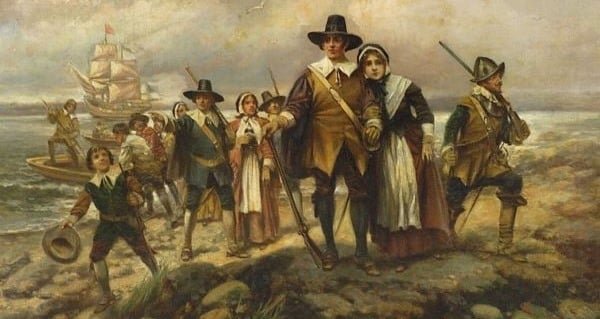
The Plymouth Colony was established by a group of Separatists, known as the Pilgrims, who sought religious freedom and a separate community. Unlike the idealized versions often taught in schools, the founding of the colony was marked by religious extremism, illegal land occupation and early conflicts with indigenous people.
Who Were the Separatists Who Founded Plymouth Colony?
The Pilgrims were a group of English Separatists who believed the Church of England was beyond reform. They sought to create a community based on their own strict religious beliefs. Before migrating to North America, the group resided in Holland, where they experienced religious tolerance. However, they struggled to adapt to urban Dutch society, fearing that their children were losing their English identity and language. This cultural clash led them to decide to leave Holland and sail for the New World.
Legal Issues and the Mayflower Compact
The settlers arrived in Cape Cod Bay after getting diverted from their original destination. Their land grant from the London Virginia Company had authorized them to land near the mouth of the Hudson River (present-day New York City). Because they landed in Plymouth, they had no legal authority to establish a colony there. To resolve this internal conflict and prevent the colony from disintegrating, the men signed the Mayflower Compact, a governing document intended to create an orderly society.
Early Conflicts and Resource Theft
Upon arrival, the Pilgrims’ initial exploratory missions were marked by plundering. They disturbed two Native American burial sites and another European settlement that had previously been abandoned. They also stole a corn cache hidden by the indigenous people. This theft of resources, which later became a critical survival tool, stolen corn provided the essential seeds for the first harvest.
What Did Pilgrim Children Do?
The elders of the community feared the influence of Dutch culture on the children. In Holland, some younger members of the congregation had even joined the Dutch army. This fear of cultural assimilation assimilation was a primary driver for the movement to North America.
Who Taught the Pilgrims How to Farm?
Despite their initial theft of stolen corn, the colony’s survival depended on the Native Americans. Indigenous people provided the essential knowledge of local agriculture, teaching the settlers how to farm the sandy soil of the colony. This relationship, which while often fraught with tension, was necessary for the
Survival Rates and the First Winter
The first winter was devastating. Many settlers died from disease and exposure. While the Mayflower voyage voyage was a difficult journey, the struggle for survival in an unfamiliar territory was far more severe. The colony’s survival was over a period of time, only a small fraction of the Pilgrims survived the first winter, highlighting the fact that they unprecedented hardships.
While history often focuses on the 1620 arrival, the colony’s early years were more complex than the typical narrative. Just as some true crime stories reveal the darker side of human nature, the historical record shows that the Pilgrims’ pursuit of religious freedom was intertwined with joined with illegal land occupation and the theft of indigenous resources.
Similarly, the struggle for survival in a new environment often mirrors the a similar struggle for survival in the wild, much like how certain big cats navigate their unpredictable habitats. The Plymouth Colony settlers’ early years were the result of a combined effort of survival and conflict.