
In the realm of true crime, few stories are as chilling and intricate as that of Danny Rolling, known infamously as the “Gainesville Ripper.” His brutal acts of violence not only left a community in fear but also inspired significant cultural phenomena, notably the iconic film series Scream. This article delves deeply into the life of Rolling, exploring the complex factors that shaped his dark path and the impact of his heinous crimes.
Childhood abuse and its lasting impact on Danny Rolling
Rolling’s early life was marked by turmoil and trauma, elements that would later manifest in his violent behavior. Born in 1954 in Shreveport, Louisiana, he was thrust into a dysfunctional family dynamic. His mother, Claudia, was just 19 years old, while his father, James, a decorated Korean War veteran, struggled with the aftereffects of war, potentially suffering from post-traumatic stress disorder (PTSD) and mental illness.
James’s volatile temperament and violent tendencies made life unbearable for young Danny and his brother, Kevin. The father frequently engaged in verbal and physical abuse, a pattern that deeply affected Rolling’s psyche.
Seeking escape, Rolling turned to creative outlets like art and music. His receipt of a guitar at age 15 stands out as one of the few bright spots in his adolescence. However, he also began to develop multiple personalities as a coping mechanism to deal with his traumatic home life, a precursor to the psychological issues that would later emerge.
The descent into crime: armed robberies and incarceration
Rolling’s troubled youth paved the way for a life of crime. In 1972, he was discharged from the Air Force for drug possession, which marked the beginning of a downward spiral. Seeking refuge with his grandfather, he initially found solace in religion and married O’Mather Halko, with whom he had a daughter. However, he soon replicated the abusive patterns he had experienced, leading to the dissolution of his marriage.
After his divorce, Rolling’s behavior escalated dangerously. He became involved in voyeurism and committed several armed robberies across the Southern United States. In 1979, he was incarcerated in Jackson, Georgia, but this was only the beginning of a series of criminal activities that would culminate in murder.
The 1980s saw Rolling moving in and out of jails in Alabama and Mississippi. His time outside prison was spent stealing and assaulting women. A tragic incident in November 1989 saw him murder Julie Grissom, her young nephew Sean, and her father Tom, echoing his later, more infamous killings.
The Gainesville murders: a spree of terror
In August 1990, Rolling unleashed a wave of terror upon Gainesville, Florida, as students returned to the University of Florida for the fall semester. He set up camp in a wooded area near the campus, where he began his chilling murder spree.
- August 24: Rolling broke into the home of freshmen Christina Powell and Sonja Larson, brutally stabbing and raping both.
- August 25: He targeted Christa Hoyt, a student at Santa Fe Community College, decapitating her and positioning her head on a shelf.
- August 27: He killed UF students Manuel Toboada and Tracy Paules, with Toboada putting up a fight but ultimately succumbing.
Each murder was marked by brutality and a chilling signature style, leaving the community in a state of panic. The media frenzy surrounding these events would later influence the horror genre, particularly in the Scream franchise, which reflected societal fears of masked killers.
Investigation and arrest: connecting the dots
Despite the horror of the murders, Rolling managed to evade capture for almost two years. As the community sought answers, a task force was formed, initially focusing on a UF student who exhibited erratic behavior. However, this lead proved fruitless, as the student was found to be battling severe mental health issues.
In September 1991, Rolling’s fate took a turn when he was arrested for robbing a Winn-Dixie grocery store in Ocala, Florida. It was during this incarceration that authorities began to connect him to the Gainesville murders through DNA evidence obtained from his extracted tooth.
By June 1992, Rolling was formally charged with the five murders while already serving multiple life sentences for his earlier crimes. This marked a significant turning point in the investigation, as the evidence against him solidified.
The psychological aspects: the ‘Gemini’ personality
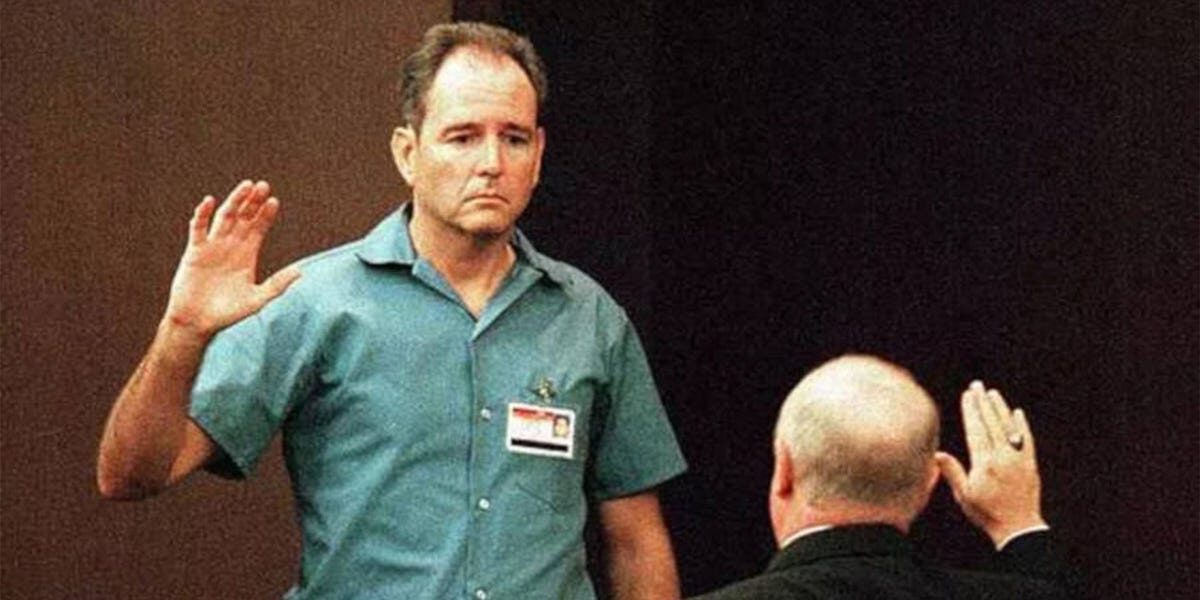
During his time in prison, Rolling began to explore his complex psychological landscape. He corresponded with journalist Sondra London, who would help him compile his thoughts into a book titled The Making of a Serial Killer. Despite pleading not guilty, Rolling claimed that an alternate personality, dubbed “Gemini,” drove him to commit his heinous crimes.
In February 1994, just before his trial, Rolling changed his plea to guilty. The trial brought forth testimonies from his mother and several psychiatrists. These professionals discussed Rolling’s traumatic upbringing and the existence of his alternate personality, suggesting that it played a significant role in his violent actions.
The jury ultimately found him guilty on all counts of first-degree murder, and in April 1994, he was sentenced to death. His case became a focal point in discussions about mental illness and criminal behavior, raising questions about accountability and the influence of childhood trauma on adult actions.
The end of a criminal saga
After years of appeals that ultimately failed, Danny Rolling faced execution on October 25, 2006, at Florida State Prison. In a final twist, he used his last moments to perform a religious hymn for the witnesses present, a stark contrast to the violence he had inflicted on so many.
Rolling’s life story is a chilling reminder of the complexities of human behavior. His journey from a troubled childhood to becoming one of the most notorious serial killers in American history has left an indelible mark on both criminal psychology and popular culture.
Through its haunting echoes in films like Scream, Rolling’s legacy continues to serve as a cautionary tale about the consequences of untreated trauma and the darkness that can reside within the human psyche.