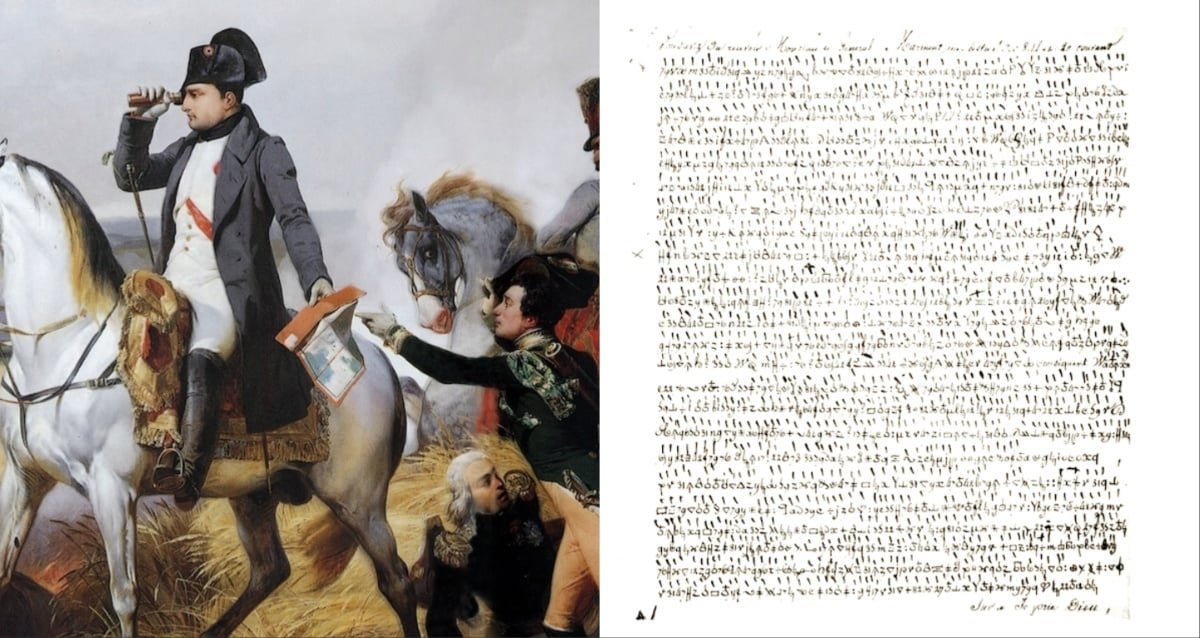
An AI engineer has successfully decoded a 217-year-old encrypted message sent by Napoleon Bonaparte in March 1809. Using the OpenAI GPT-6 Astra system, Carter Church, an AI engineer at SentinelOne, solved the cipher in just six hours, revealing the contents of a strategic military communication intended for General Auguste de Marmont.
Military Context of the 1809 Correspondence
The letter was written during a period of high tension on the eve of war with the Austrian Empire. In February 1809, Austria decided to launch an offensive, leveraging the fact that many of Napoleon’s elite troops were occupied in Spain. Archduke Charles of Austria had spent three years assembling a massive army of hundreds of thousands of soldiers to strike the French Empire.
Napoleon, recognizing the imminent threat, needed to communicate securely with General Marmont, who was stationed in modern-day Croatia across the Adriatic Sea. Because Austrian territory lay between Paris and Marmont’s position, Napoleon utilized a complex encryption method to ensure the message remained secret if intercepted.
The Complexity of the Napoleon Cipher
The original message consisted of 24 lines of code following a single opening line in plain French. The encoded portion contained approximately 1,300 characters, including a mix of numbers, letters, and invented symbols. For over two centuries, the cipher remained unsolved because the original answer key had been lost to history.
The decoding process employed by Carter Church involved a streamlined workflow where the AI model performed transcription and analysis simultaneously. The GPT-6 Astra system used a trial-and-error process to determine the most logical placement of symbols based on the smoothness of the French language and cross-referenced the results with historical evidence from Marmont’s later memoirs.
Strategic Instructions and Historical Outcome
The decoded text reveals that Napoleon was providing urgent military intelligence regarding the locations and statuses of the French and Austrian armies. In the letter, Napoleon instructs Marmont:
“Austria will be attacked at once on every side. She is consequently hastening toward her ruin. When you receive the order to march, you must not allow yourself to be intimidated by a few troops or a gathering of rabble.”
General Marmont followed these instructions, marching his troops out of Croatia to support Napoleon’s forces. This movement proved critical in achieving victory at the Battle of Wagram, leading to Marmont’s elevation to the rank of marshal.
The Later Betrayal of General Marmont
Despite his early success, Marmont’s historical reputation is marked by a betrayal in 1814. As enemy forces closed in on Paris, Marmont and two other marshals reached a secret agreement to surrender, an act that forced Napoleon to abdicate his throne. Following this, Marmont served the Bourbon King Louis XVIII and later attempted to quell the July Revolution of 1830 in Paris, only to be questioned by King Charles X regarding his history of betrayal.