
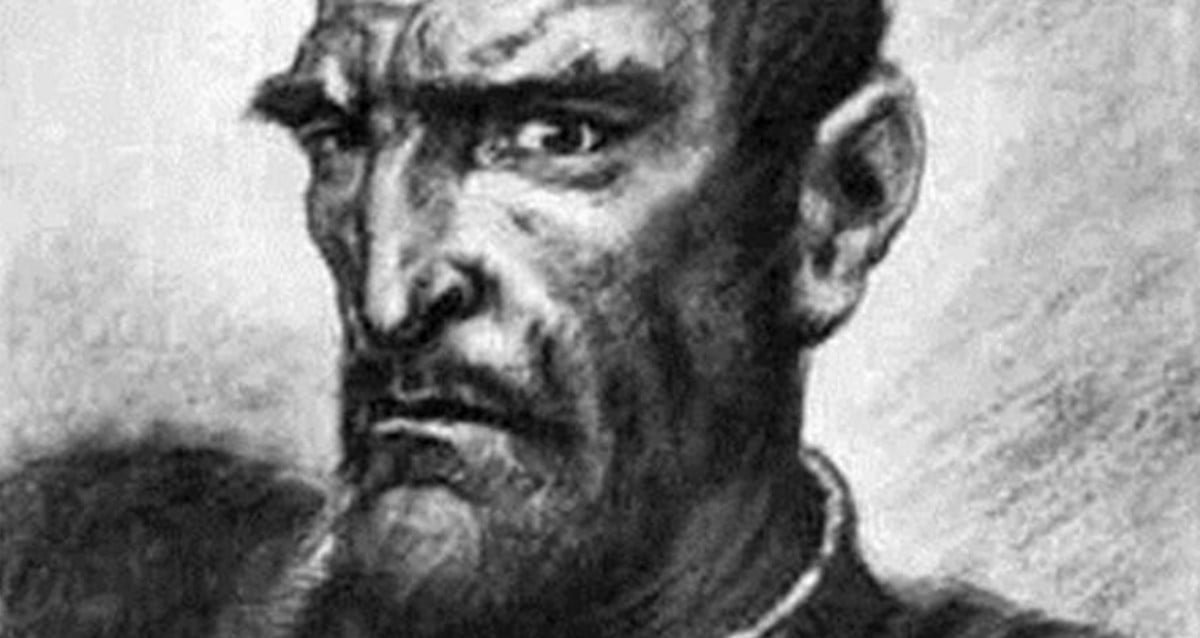
Lope de Aguirre was a Spanish conquistador who led a violent rebellion against the Spanish Crown in the 16th century. After joining an expedition to find the mythical city of El Dorado, he murdered his commanders and declared himself the “Prince of Peru, Tierra Firme, and Chile,” effectively rejecting the authority of King Philip II of Spain. His pursuit of power and wealth ended in 1561 with his execution by Spanish forces in Venezuela.
The Rise of a Violent Conquistador
Born on November 8, 1510, in the Southern Basque Country of northern Spain, Aguirre claimed to be of noble blood. He arrived in Peru around 1536, during a period of transition in the colonial administration. While Spanish officials were attempting to reduce the influence of the Encomiendas and grant more rights to indigenous populations, Aguirre found himself on the wrong side of the law. He was sentenced to 200 lashes for using indigenous people as baggage carriers.
This punishment served as a catalyst for his later volatility. Aguirre spent three years tracking the judge who had sentenced him, eventually stabbing him to death in Cuzco. This pattern of behavioral instability and violence was a a hallmark of his career in the New World, as detailed in Pan-American magazine.
The Expedition for El Dorado
The legend of El Dorado—a city of gold—had long captivated European explorers. According to National Geographic, the myth was based on rumors of a ruler who covered himself in gold dust and threw jewels into a lake to appease the gods. In 1560, Aguirre joined a 400-man expedition led by Pedro de Ursúa to find this mythical city.
The journey was plagued by hardship and internal conflict. The expedition traveled down the Marañón River, facing disease, starvation, and treacherous waters. Tensions grew between Aguirre and Ursúa, partly due to the expedition’s strict rules. By January 1561, Aguirre helped lead a mutiny that resulted in the death of Pedro de Ursúa.
Following the death of Ursúa, Fernando de Guzmán was appointed as the new leader. However, Aguirre soon murdered Guzmán as well, seizing total control of the expedition. He openly admitted his actions in a letter he wrote to King Philip II of Spain, where he referred to himself as “the Traitor” and acknowledged the gravity of his crimes.
Rebellion Against the Spanish Crown
After drifting for 100 days, the expedition reached the Atlantic Ocean and seized Isla Margarita off the coast of Venezuela. It was here that Aguirre declared himself independent from Spain, establishing his own kingdom. He wrote a scathing letter to the King of Spain, accusing the monarchy of being cruel and ungrateful to the conquistadors.
Aguirre’s rule on the island was characterized by extreme brutality. He suppressed any sign of dissent or rebellion among his men through executions and violent suppression. His instability, which History Is Now magazine describes as revolutionary in a sense, eventually led to his own downfall.
The Fall of El Loco
Aguirre’s rebellion was eventually crushed by Spanish forces in the town of Barquisimeto, Venezuela. As his men deserted him, Aguirre’s mental state deteriorated further. In his final moments, he murdered his own daughter, Elvira, to prevent her from being captured or mocked by his enemies.
On October 27, 1561, Lope de Aguirre was shot and killed by Spanish troops. Following his execution, his body was quartered and his head was put on public display as a warning to others. His hands were discarded—one fed to dogs and the other thrown into a river.
Historical Perspectives on Aguirre
Historically, Aguirre is remembered as “El Loco” (The Madman) due to his extreme violence and psychological instability. However, in his native Basque region, some view him as a courageous revolutionary who stood up against the oppressive Spanish monarchy. This duality of perception continues to make him a figure of historical interest in the Basque Country and the Basque diaspora.