
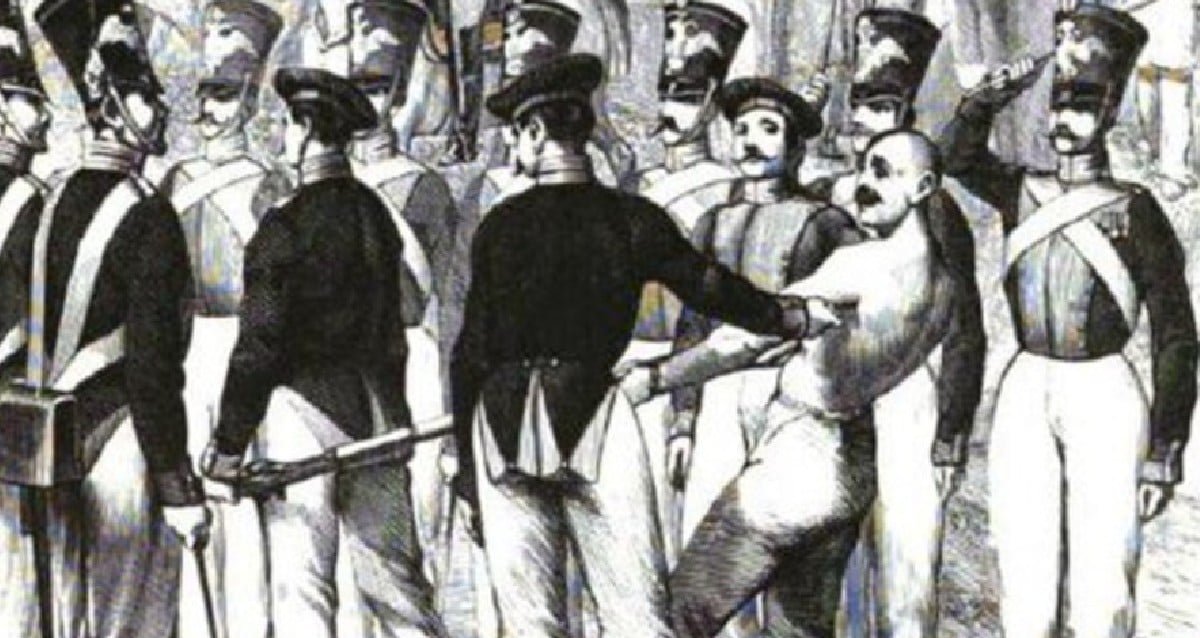
Running the gauntlet is a modern idiom meaning to face a series of difficult challenges or sharp criticism. However, its origins lie in a brutal form of military corporal punishment where an offender was forced to run between two rows of people armed with weapons, receiving strikes from both sides. This practice was utilized by various militaries and cultures throughout history to maintain discipline and punish captives.
Where did the term gauntlet come from?
The phrase originates from the Swedish word gatlopp, which is a combination of gata (lane) and lopp (running). English soldiers during the Thirty Years’ War (1618 to 1648) adopted the term and the practice from the Swedish Army. Over time, the English spelling evolved from gantelope or gantlope to gauntlet, likely due to the similarity to the French-derived word for an armored glove.
The Military Use of Corporal Punishment
Various European militaries employed versions of this punishment to enforce order. In ancient Rome, while not identical to running the gauntlet, the military used fustuarium, where soldiers were beaten with blunt weapons until death. In 16th-century Germany, the Landsknecht mercenaries used a system known as the Spießrutenlauf, or running of the gauntlet, within their judicial system called the Court of Pikes. For the Landsknecht, this was often a death sentence. As detailed in the History of the Germans podcast, the condemned soldier would run through a corridor called die Gasse (the alleyway) formed by pikemen.
The British Royal Navy also adopted the practice until it was abolished in 1806. Unlike the German mercenaries, the British used it for minor offenses, such as failing to return to the ship on time or leaving quarters messy. Sailors were required to run the gauntlet a set number of times across the deck while being hit by fellow crew members with makeshift whips. In some cases, sailors would purposefully deliver light blows as a form of protest against the punishment.
Running the Gauntlet and Captives of Native Americans
The practice was not limited to Europe. Native American tribes also used running the gauntlet as a method of torture and punishment for captives. For example, the Jesuit Isaac Jogues described being a prisoner of the Iroquois in 1641, recounting how he and other Frenchmen were forced to run between two lines of armed youth armed with clubs and iron rods.
In 1755, Charles Stuart, a prisoner of the Lenape warriors during the Great Cove massacre, described being forced to run the gauntlet through two rows of approximately 200 warriors armed with axes, tomahawks, and hoop poles. Similarly, John Stark, captured by Abenaki warriors, recounted in his memoir that he fought back during the process, which impressed the Abenaki, leading to their decision to adopt him into their tribe.
What does the idiom run the gauntlet mean today?
Since the 19th century, the punitive use of running the gauntlet has largely vanished from official military records. However, the term persists in modern language as a figurative expression. Today, it describes the experience of facing a series of trials, tribulations, and extenuating circumstances. It is often used when someone is facing intense scrutiny or a series of difficult obstacles.
Modern Applications in Sports and Tradition
The concept of running the gauntlet is now found in sports and martial arts. In some sports, a gauntlet is a training drill where players are blocked or checked by teammates in a row. In Brazilian jiu-jitsu, a belt ceremony involves a student being promoted to a higher belt and running through two rows of classmates who hit them with their belts. In modern military contexts, it is often performed as a rite of passage rather than a punishment, focusing on team building and training rather than physical harm.
Distinctions from Similar Phrases
It is important to distinguish running the gauntlet from other similar-sounding phrases. While run the gamut refers to the entire range of something, and throw down the gauntlet refers to issuing a challenge, running the gauntlet is specifically tied to the history of corporal punishment and violent physical trials.
Common Misconceptions and Related Terms
The military history of this phrase is often confused with the term gauntlet meaning an armored glove. While the word gauntlet (the glove) and gauntlet (the punishment) originate from different linguistic roots—one from French and the French word for armored glove, and the word for the punishment coming from Swedish gatlopp—they converged in English spelling over time.
In the mid-20th century, there accounts of prisoners and protesters in the communist Polish People’s Republic being forced into what the government called the path of health or welcome parades, which were versions of running the gauntlet used as a form of torture.
Overall, the transition of the term from a literal, violent military punishment to a figurative idiom has reflected the shift in global military discipline and the overall evolution of human rights and corporal punishment laws.