
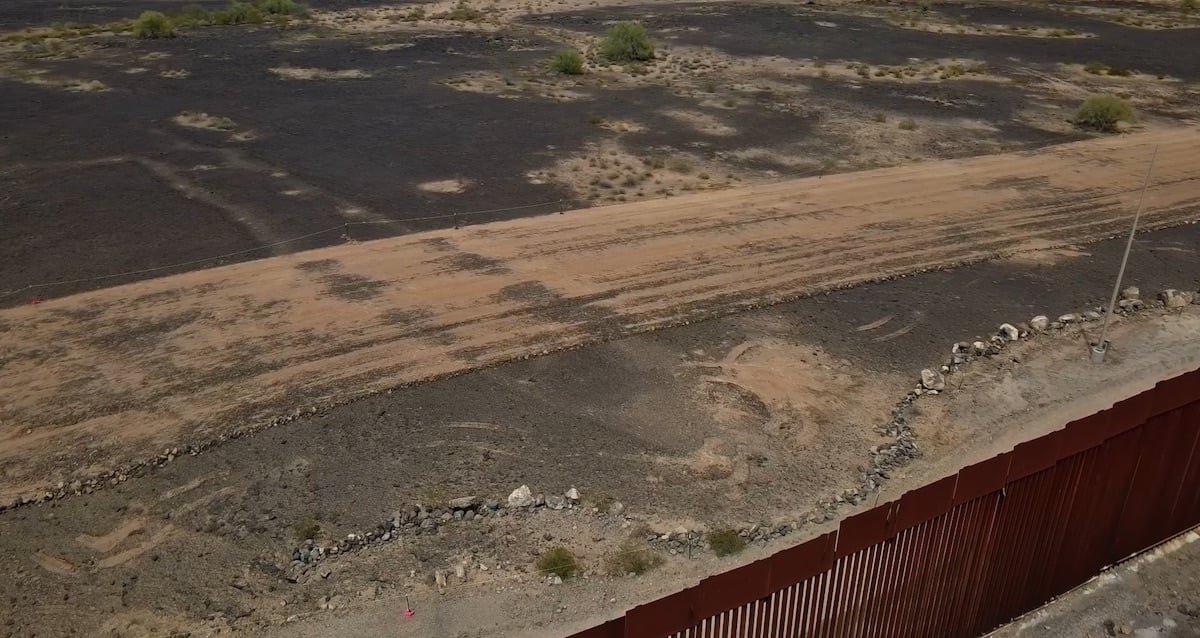
In April 2026, heavy machinery used for the construction of a border wall in Arizona’s Sonoran Desert caused significant damage to the Las Playas Intaglio, a prehistoric geoglyph created by the Tohono O’odham people. The equipment tore a 50-foot swath through the ancient fish-shaped carving, effectively severing the head from the body and damaging approximately 30 percent of the site.
The Age and Significance of the Las Playas Intaglio
The Las Playas Intaglio is a massive ground carving measuring 272 feet across. While researchers previously estimated the site to be 1,000 years old, recent findings published in The SAA Archaeological Record indicate the carving is approximately 6,500 to 7,000 years old. This discovery establishes it as the oldest known geoglyph in the Americas, predating both Stonehenge and the Egyptian pyramids.
Scientists determined the age of the Las Playas Intaglio carving by analyzing the natural varnish layers on rock samples. These layers form over time on the surface, providing a chronological record of how long the rock has been exposed to the air. Archaeologists David Whitley and Ronald Dorn note that these types of intaglios—geoglyphs etched into desert floors—were integral to the religious rituals of ancient Indigenous populations.
Location and Environmental Context
The carving is situated on the ancestral lands of the Tohono O’odham tribe within the Cabeza Prieta National Wildlife Refuge in Arizona. This refuge encompasses more than 800,000 acres of wilderness. The site was part of a larger interconnected protected landscape that includes:
- The El Pinacate and Gran Desierto de Altar Biosphere Reserve in Mexico.
- The Organ Pipe Cactus National Monument.
Controversy Over Site Destruction
The destruction of the geoglyph occurred despite warnings from local tribal representatives, who had informed contractors that the land was sacred. According to a report by the Tucson Sentinel, the site was desecrated even though it had been previously identified by a cultural protection monitor as an area the contractor should avoid.
Russ McSpadden of the Center for Biological Diversity, who documented the damage, described the event as a permanent scar on human history. The statement put out by the Center for Biological Diversity highlighted the lack of caution among contractors and the risk to other public lands.
Official Response and Current Status
A spokesperson for U.S. Customs and Border Protection stated to Outside that the agency has since secured the remaining portion of the site, which is now being protected in place. However, advocates argue that this measure is insufficient given the irreversible nature of the damage.
Broader Impact on Indigenous Heritage
The damage to the Las Playas Intaglio is not an isolated incident. Conservationists point to a pattern of destruction related to border wall construction, including the 2020 blasting of Monument Hill, a sacred burial ground for the O’odham Tribe in the Organ Pipe Cactus National Monument. Furthermore, in 2025, the U.S. Department of Homeland Security attempted to waive environmental, cultural, and public health laws to accelerate construction in southern Arizona.
Experts warn that without stricter protections and increased accountability, further enhancements to the border wall could lead to the loss of more irreplaceable archaeological sites. There are ongoing calls for Congress to demand testimony and records to determine who authorized the work and why existing safeguards failed to protect the Las Playas Intaglio geoglyph.