
Archaeologists from the Constanța Museum of National History and Archaeology have uncovered a rare, sealed Roman-era sarcophagus containing the remains of a young child. The discovery was made at a necropolis near the ancient city of Tomis, located along the Black Sea coast in present-day Romania. The tomb, which dates back approximately 1,800 years, was found sealed with lead clamps and mortar, preserving the contents inside in a remarkable state of conservation.
Burial Goods and Artifacts
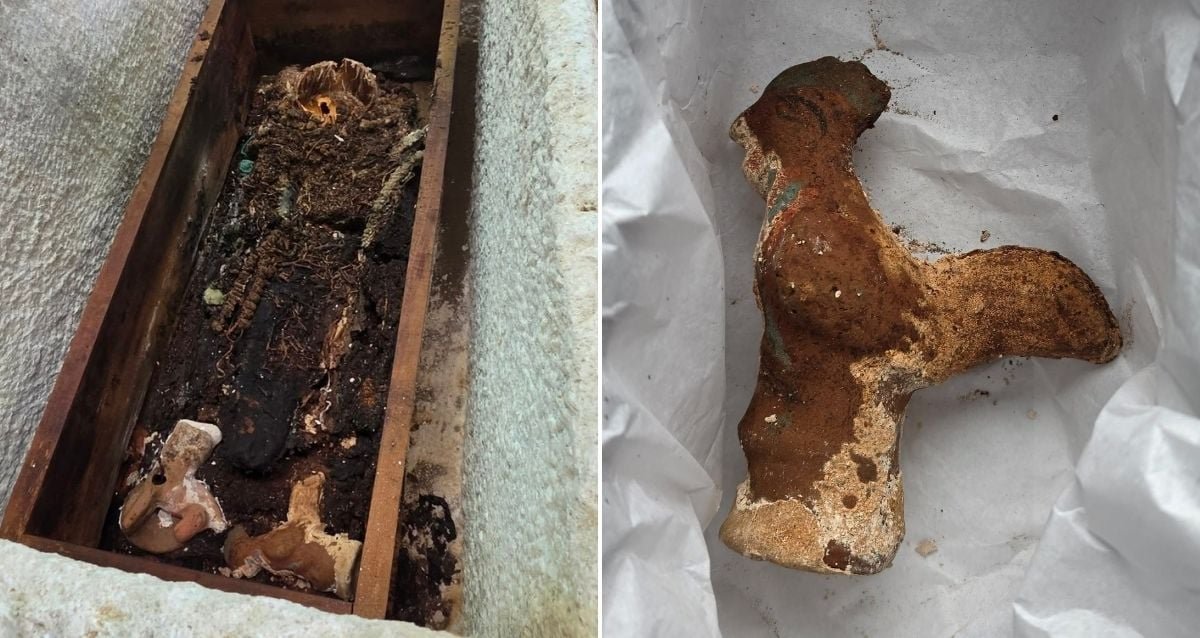
Due to the fragile state of the tomb, the research team opened the box within the controlled environment of the museum. Inside, they found the skeletal remains of a child encased in a well-preserved wooden coffin. The burial was accompanied by a variety of grave goods that provide insight into the child’s life and the family’s social status.
- Clay Toys: Two distinct clay toys were recovered, including a horse on wheels and a rattling toy shaped like a rooster.
- Protective Amulets: Two bulla pendants were found, which were traditionally worn by freeborn Roman boys to protect them from evil spirits.
- Floral Offerings: Plant remains, including individual leaves, were found intact, suggesting the use of flower garlands during the funeral rites.
- Currency: A single coin was also recovered from the site.
The Significance of the Tomis Necropolis
The necropolis in Tomis was active during the second and third centuries C.E. The find is considered exceptional by archaeologist Constantin Bajenaru, as detailed in a report by Agerpres. The location of the tomb was approximately one mile from the city center, along an ancient road leading toward Histria.
Social Status and Identity
The high quality of the stone sarcophagus and the presence of intricate grave goods suggest that the child belonged to a wealthy or prominent family within the city. The bulla pendants are particularly significant, as they were typically associated with Roman citizenship and worn by freeborn children rather than enslaved individuals. While the bulla pendants suggest the child may have been a boy, scientific analysis of the skeletal remains is currently ongoing to confirm the biological sex and exact age.
Historical Context of Tomis
Tomis was originally founded in the sixth century B.C.E. by Greek colonists and later became a prominent center of commerce on the Black Sea. By the late first century B.C.E., the city fell under Roman control and served as a key trade hub for the empire. This discovery provides a new window into the childhood and familial connections of the inhabitants of the inhabitants of the Roman city.
Future Research and Analysis
Archaeologists are continuing to study the burial context, the construction techniques of the wooden coffin, and the the same artifacts recovered. The research team expects that further analysis will reveal more about the funerary practices of the Roman society in Romania, specifically regarding the treatment of the child’s toys and the accompanying floral offerings.