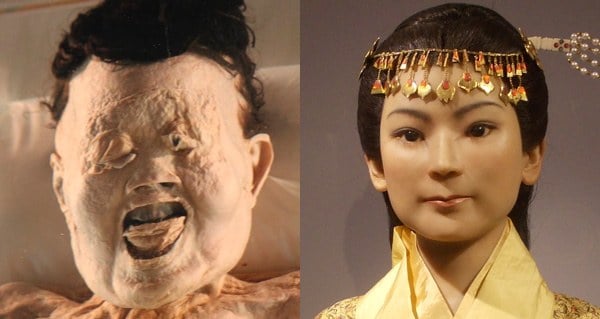
Time travel to ancient China? Well, not exactly, but we can get pretty close. There’s a remarkable story hidden within the tomb of Xin Zhui, also known as Lady Dai, a Han dynasty noblewoman whose life and death unfolded over 2,000 years ago. Her remains, remarkably well-preserved due to the ingenious construction of her tomb, offer us a fascinating glimpse into the past. Imagine finding soft skin, original hair, intact organs, and even blood still present in her veins!
This extraordinary discovery has given rise to the title of best preserved mummy in the world. It’s as if she stepped out of history and into our modern world. Xin Zhui’s story is a testament to both the ingenuity of ancient Chinese burial practices and the enduring mysteries that surround human life and death.
Her tomb, a complex structure with four coffins within each other, was designed to shield her remains from the ravages of time. Layers of silk fabric wrapped her body, while an acidic liquid containing magnesium traces acted as a preservative. The meticulous attention to detail, including charcoal lining the floor to absorb moisture and a clay seal to prevent water intrusion, demonstrates a deep understanding of the natural world’s impact on decomposition.
Lady Dai: A Han Dynasty Enigma
While her incredible preservation offers us a glimpse into the past, much about Xin Zhui’s life remains a mystery. We know she was married to Li Cang, the Marquis of Dai, and died at the age of 50. Her tomb, unearthed in 1971, provided valuable clues about her status and lifestyle. Over 1,000 artifacts were found within, including makeup, toiletries, lacquerware, and even wooden figures depicting her servants. These items paint a picture of a woman accustomed to luxury and comfort, but they remain silent on the specific details of her daily life, her passions, or her relationships beyond her marriage.
Her tomb’s contents hint at a complex social structure and intricate rituals surrounding death in the Han dynasty. The sheer number of artifacts suggests both wealth and a belief in providing for the deceased’s continued needs in the afterlife. Yet, despite the wealth evident in her burial, Xin Zhui’s personal story remains elusive, leaving us to piece together fragments of her life from the clues left behind.
Perhaps future discoveries or archaeological analysis will shed more light on this fascinating woman and her time. Until then, Lady Dai stands as a poignant reminder of the enduring power of history to captivate our imaginations and leave us yearning for deeper understanding.
The Incredible Preservation of Xin Zhui
What truly sets Xin Zhui apart is the exceptional preservation of her remains. Imagine discovering a body with soft skin, original hair throughout, intact organs, and even blood still present in her veins! This level of detail is unheard of in most ancient remains, leading experts to consider her the best preserved mummy ever discovered.
The secret lies in the ingenious design of her tomb. It was a multi-layered fortress against decay, beginning with four coffins nested within each other. She was wrapped in layers of silk fabric, further protected by an acidic liquid containing traces of magnesium that acted as a natural preservative. Charcoal lining the floor absorbed moisture, and a clay seal prevented water intrusion. This remarkable combination of factors created an airtight environment that effectively halted decomposition, allowing Xin Zhui’s body to remain remarkably intact for over two millennia.
Understanding how this feat was accomplished has provided invaluable insights into ancient Chinese burial practices and their profound understanding of preservation techniques. It’s a testament to their ingenuity and dedication to honoring the deceased in a way that transcends time.
Artifacts and Insights into Ancient Life
Besides the remarkably preserved xin zhui mummy itself, her tomb yielded a treasure trove of artifacts that shed light on daily life during the Han dynasty. Over 1,000 objects were found within, offering glimpses into Xin Zhui’s lifestyle and the customs of her time.
Among the most intriguing items were makeup palettes and toiletries, revealing a fascination with beauty and personal care even in ancient China. Lacquerware items, intricately decorated and highly valued, showcased the artistry and craftsmanship of the era. Wooden figurines depicting servants carrying out various tasks provided insights into social structures and daily routines. These artifacts, each telling its own story, painted a vivid picture of a society steeped in tradition, meticulous attention to detail, and a desire for comfort and luxury.
Examining these objects allows us to step back in time and experience the Han dynasty through Xin Zhui’s eyes. We see not just a noblewoman but a woman who enjoyed the finer things in life, took pride in her appearance, and was surrounded by those who served her needs.
A Glimpse into Her Final Days
While her life story remains largely a mystery, Xin Zhui’s death offers some intriguing clues about her final days. The remarkable preservation of her body allowed medical experts to determine the cause of death: a heart attack likely brought on by a combination of conditions. Evidence suggests she suffered from gallstones, high cholesterol, high blood pressure, and liver disease – all factors that contributed to her demise at the relatively young age of 50.
It’s fascinating to consider how these chronic ailments might have impacted her life in the years leading up to her death. Did she experience pain or discomfort? Were there changes in her lifestyle or diet as a result of her health? While we may never know for sure, her case provides a unique window into the health challenges faced by even those of high social standing in ancient China.
Her xin zhui mummy serves not only as a marvel of preservation but also as a reminder of the human experience across time – the joys, challenges, and ultimately, the fragility of life itself.
Unraveling the Mystery of a Well-Preserved Past
The story of Xin Zhui continues to fascinate researchers and the public alike. Her remarkably preserved remains offer a unique opportunity to learn about ancient Chinese life, burial practices, and even the medical conditions prevalent in that era. Each artifact unearthed from her tomb provides another piece of the puzzle, helping us to piece together a more complete picture of who she was and how she lived.
As technology advances, we can expect even more insights to emerge from Xin Zhui’s preserved body and belongings. Future analysis may reveal further details about her diet, genetic makeup, and even the specific cause of death. The ongoing research promises to deepen our understanding of not only xin zhui mummy but also the broader context of ancient Chinese civilization.
Ultimately, Xin Zhui’s story serves as a powerful reminder that history is more than just dates and facts – it’s about real people with lives, experiences, and stories waiting to be discovered. Her extraordinary preservation allows us to connect with the past in a deeply personal way, bridging the gap between centuries and reminding us of our shared human journey.