History is full of fascinating inventions, and some of the most intriguing are undoubtedly those designed for warfare. While swords and shields have long been staples on the battlefield, human ingenuity has always sought out unconventional solutions. This exploration delves into a realm of weird weapons – those that stand apart from the conventional arsenal due to their unusual designs, sometimes even bizarre functionalities.
From ingenious contraptions to unsettlingly sinister concepts, this list will take you on a journey through time, showcasing 21 historical arms that are as fascinating as they are unexpected. We’ll encounter everything from the Vespa 150 TAP, a motorcycle armed with a deadly payload, to the chilling story of Operation Acoustic Kitty, a program that aimed to weaponize trained cats.
Prepare to be amazed by the creativity and often unsettling ingenuity behind these unusual tools of war.
Unconventional Designs: From Vespas to Bat Bombs
Some of history’s most bizarre weapons took inspiration from unexpected places. Take, for instance, the Vespa 150 TAP – a seemingly innocuous scooter transformed into a mobile weapon platform during World War II. Italian soldiers mounted machine guns and grenades onto these civilian vehicles, turning them into agile and deadly combatants on the streets of Europe.
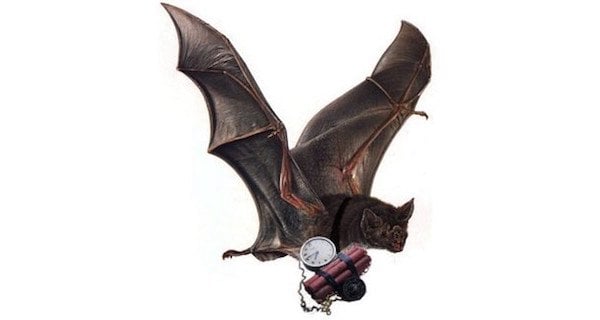
Then there’s the Bat Bomb, a concept that sounds straight out of a comic book but was seriously considered by American military strategists during World War II. These bombs consisted of small explosive charges attached to bats, intending to release them over Japanese cities for nighttime raids. While ultimately deemed impractical, the idea illustrates the lengths to which ingenuity (and perhaps desperation) can lead in times of conflict.
These examples showcase the surprising ways that even mundane objects could be repurposed into weird weapons when necessity demanded it.
Sinister Concepts: Espionage & Assassination Tools
The realm of espionage and assassination often lends itself to the creation of truly unsettling weapons. Take, for example, Operation Acoustic Kitty, a top-secret CIA project in the 1960s that aimed to train cats as living spies. These felines were fitted with miniature microphones and transmitters, intended to be deployed in Soviet embassy buildings to gather intelligence. While intriguing on paper, the program ultimately proved too difficult to control, leaving behind more anecdotes than successful missions.
Then there’s the chilling tale of The Habakkuk, a specialized assassination tool used by Israeli agents during the 1960s and 70s. This sophisticated weapon disguised itself as a harmless umbrella but concealed a hidden firing mechanism capable of delivering a lethal dose of cyanide. Such tools highlight the dark side of ingenuity, where the line between invention and sinister intent can be blurred.
These stories about espionage and assassination illustrate how sometimes, the most weird weapons are not necessarily the most visible or destructive, but those that operate in secrecy, leaving behind unsettling questions about their true purpose and impact.
Historical Firearms: Innovations in Warfare
While some of the entries on this list delve into the realm of the bizarre, history is also filled with fascinating examples of unconventional firearms that pushed the boundaries of military technology. The Paris Gun, a massive siege weapon used by Germany during World War I, stands as a testament to this ingenuity. Capable of launching high-explosive shells over 80 miles, it terrorized Paris and demonstrated the increasing destructive power of artillery.
Another example is the Krummlauf Curved Rifle, a German weapon developed during World War II. As its name suggests, this rifle featured a uniquely curved barrel designed to fire grenades at short range, offering an alternative to traditional infantry weaponry in close-quarters combat. These historical firearms showcase how the constant quest for military advantage often led to innovative designs, some of which became iconic symbols of their respective conflicts.
The development and use of these weird weapons not only reflect the evolving nature of warfare but also serve as reminders of the enduring human capacity for both invention and destruction.
Unique Weapons: From the Claw of Archimedes to Exploding Dogs
Stepping outside the realm of gunpowder and conventional weaponry, we encounter tools that belong more to the realm of myth and legend. The Claw of Archimedes, a legendary weapon attributed to the ancient Greek mathematician, is said to have been a gigantic crane capable of lifting and crushing enemy ships. While its actual existence remains debated, the concept captures the imagination and showcases how human ingenuity has always sought to exploit physics for military advantage.
Then there’s the chilling story of Operation KROKODIL, a Soviet program that trained dogs to carry explosives on their bodies and detonate them upon contact with enemy targets. These “exploding dogs” were intended as a terrifying weapon, but fortunately, they were never deployed in combat.
The sheer variety of these entries highlights just how diverse the world of weird weapons truly is, ranging from fantastical inventions to unsettlingly real strategies that push ethical boundaries.
The Future of War?: Modern Technological Advancements
The concept of “weird weapons” continues to evolve as technology advances at an unprecedented pace. Modern warfare increasingly relies on sophisticated drones, autonomous vehicles, and cyberwarfare tactics, blurring the lines between what once seemed unimaginable and the realities of modern conflict.
Take, for example, the EXACTO Device – a rifle system that utilizes laser guidance to ensure pinpoint accuracy, eliminating the need for traditional aiming. This technology raises questions about the future of combat, where human intervention may become increasingly limited in favor of autonomous systems. The development of such weird weapons prompts us to consider not only their military implications but also the broader ethical and societal consequences they may bring.
As we move forward, it’s crucial to engage in thoughtful discussions about the responsible development and deployment of these advanced technologies, ensuring that they are used ethically and for the betterment of humanity rather than its detriment.