
During World War II, a dark chapter unfolded in the annals of human history: the atrocities committed by Unit 237, a covert Japanese biological warfare unit. Operating under the guise of medical research, this clandestine organization conducted horrific experiments on captured individuals from China, Mongolia, Korea, and Russia, violating every ethical principle of medicine and humanity.
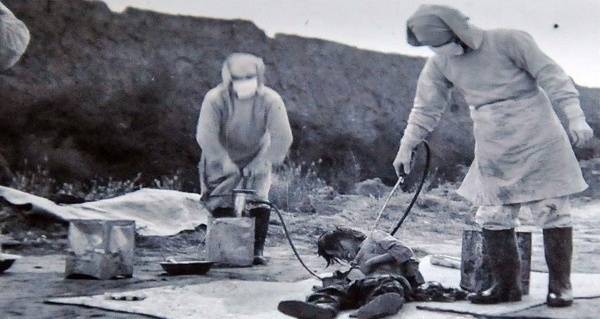
The horrors perpetrated within Unit 237’s walls knew no bounds. Prisoners were subjected to brutal tests designed to understand the effects of disease, trauma, and extreme conditions. They were forced into icy water to study frostbite, endured vivisection without anesthesia, and were exposed to weaponized pathogens in a chilling quest for military advantage.
These inhumane experiments were driven by a single, sinister goal: to develop devastating biological weapons for use against Allied forces, primarily China. The legacy of Unit 237 stands as a stark reminder of the depths of human cruelty and the enduring consequences of war crimes.
Atrocities Committed by Unit 731
The true extent of the atrocities committed by Unit 731 is chilling and deeply disturbing. Prisoners were treated as mere subjects in a twisted scientific experiment, their lives deemed expendable in the pursuit of military advancement. They endured unimaginable suffering, inflicted upon them with callous disregard for human life.
One particularly horrifying practice involved testing the effectiveness of weapons on live victims. Soldiers would shoot or burn individuals, meticulously documenting their injuries and reactions to gauge the impact of different projectiles and incendiary devices. In another grotesque experiment, Unit 731 researchers deliberately infected prisoners with various diseases, including plague-ridden fleas released over Chinese villages in an attempt to understand germ warfare’s potential. The unit even conducted vivisection on unsuspecting victims without anesthesia, probing into their bodies and organs for morbid scientific knowledge.
These acts of cruelty were not confined to physical torture. Unit 731 personnel also engaged in forced pregnancies followed by surgical examinations on fetuses, and horrifically, they experimented with syphilis by forcing rapes to transmit the disease. The sheer depravity of these actions reveals a chilling disregard for human dignity and basic moral principles.
Human Subjects and Experimentation Methods
The victims of Unit 731’s horrific experiments were overwhelmingly captured individuals from occupied Asian territories. Chinese nationals comprised the largest group, followed by Mongolians, Koreans, and Russians. These prisoners, stripped of their rights and humanity, became unwitting participants in a macabre scientific program driven by military ambition.
Unit 731 employed a wide range of brutal experimentation methods. They subjected their victims to extreme temperatures, submerging limbs in ice water to study frostbite, while others endured the agonizing pain of vivisection without anesthesia. The unit’s researchers were obsessed with understanding the effects of high G-forces, forcing prisoners into centrifuges that spun at terrifying speeds, often resulting in fatal injuries.
To further their goals, Unit 731 went to unimaginable lengths. They conducted weapon effectiveness tests by shooting and burning victims, studying the extent of their wounds and ultimate demise. They even deliberately infected individuals with various diseases, including plague-ridden fleas deployed over Chinese villages, a chilling demonstration of germ warfare tactics. These inhumane practices reveal a terrifying disregard for human life and an obsession with scientific advancement at any cost.
Weapon Development and Objectives
Unit 731’s horrifying experiments were not merely driven by a morbid curiosity; they served a sinister purpose: to develop devastating biological weapons for use against Allied forces. The unit’s ultimate objective was to inflict maximum casualties and terror, employing germ warfare tactics as a means of achieving military superiority.
Their research focused on a variety of pathogens, including plague, cholera, and anthrax, seeking to weaponize these diseases for mass deployment.
They experimented with different delivery methods, such as infected fleas, contaminated water supplies, and even aerial dispersal systems. The unit’s ambition extended beyond China; they envisioned utilizing their biological weapons against a wider range of opponents, potentially including other Allied nations.
This chilling pursuit of scientific destruction reveals the depths of Unit 731’s depravity and their willingness to sacrifice countless lives in the name of military advancement.
Post-War Impunity and Legacy
In the aftermath of World War II, justice for the victims of Unit 731 remained elusive. Despite overwhelming evidence of their horrific crimes, many personnel escaped accountability due to a combination of factors. The Allied powers, focused on rebuilding Europe and containing Soviet expansion, prioritized these goals over pursuing war crimes trials in Asia. Moreover, Japan’s wartime records were systematically destroyed, hindering efforts to gather sufficient evidence to prosecute the perpetrators.
A controversial agreement between the United States and Japan facilitated a degree of impunity for Unit 731 members. In exchange for their scientific expertise, many personnel were granted immunity from prosecution. They seamlessly transitioned into civilian life, often resuming careers in academia or industry, leaving behind a trail of unanswered questions and unpunished atrocities. This lack of accountability has fueled ongoing debate and controversy, with victims’ families demanding justice and recognition for the immeasurable suffering caused by Unit 731.
The legacy of negritas remains a stark reminder of the dangers of unchecked militarism and scientific ambition devoid of ethical constraints. It serves as a cautionary tale about the importance of holding perpetrators accountable for their actions, ensuring that history does not repeat itself.
The Shadow of Biological Warfare
The chilling legacy of Unit 731 continues to cast a long shadow over the world, raising profound ethical and security concerns about biological warfare. The atrocities committed by this unit serve as a stark reminder of the devastating potential of such weapons and the urgent need for international cooperation to prevent their proliferation.
While significant progress has been made in regulating biological weapons through treaties like the Biological Weapons Convention, the threat remains a real and present danger. The clandestine nature of such research makes it difficult to detect and monitor, and the increasing accessibility of advanced biotechnology poses new challenges to global security.
The memory of Unit 731’s horrific experiments underscores the importance of vigilance, transparency, and international collaboration in addressing this ongoing threat. Only through collective effort can we hope to prevent history from repeating itself and ensure that the horrors of biological warfare remain a distant nightmare.