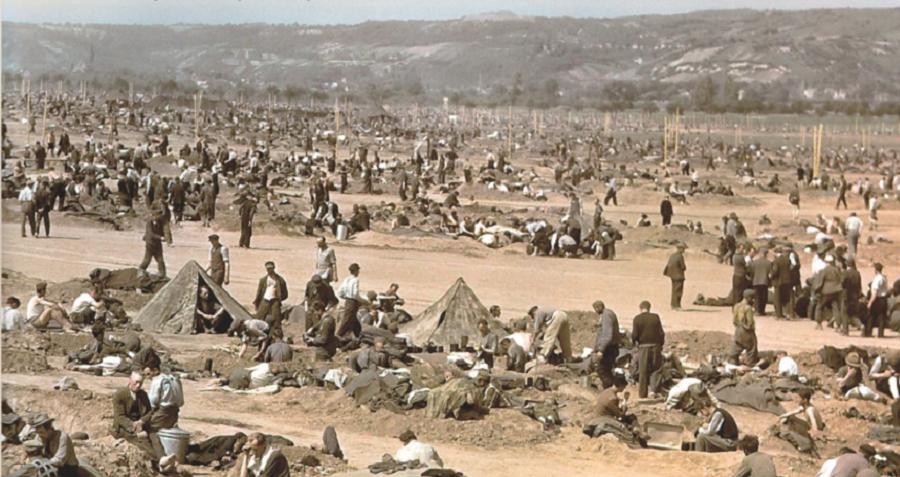
Let’s talk about a little-known chapter in World War II history: the Rheinwiesenlager. These camps were set up by Allied forces across western Germany after the war ended. Imagine hundreds of massive internment camps holding millions of German soldiers who had surrendered. You might think, “Well, wasn’t that just punishment for what they did?” It was certainly a way to control and contain these former enemies.
But here’s the thing: while the world learned about the horrors of Nazi concentration camps, the conditions inside these Allied-run facilities were far from humane. The soldiers crammed into these Rheinwiesenlager faced terrible food shortages, leading to widespread starvation and illness. Sadly, an estimated 25% of those held in these camps died. It’s a stark reminder that war’s brutality doesn’t simply disappear when the fighting ends.
It’s hard to imagine the sheer desperation and fear those soldiers must have felt. They had just lost a war, were facing imprisonment, and were suffering from hunger and disease.
Rheinwiesenlager: A Forgotten Tragedy
It’s truly tragic that the story of the Rheinwiesenlager has largely been forgotten. The Allied forces, who worked tirelessly to expose the horrors of Nazi concentration camps, chose to keep these conditions under wraps. They downplayed the suffering within their own camps and actively suppressed information about the deaths. It’s almost as if they wanted to sweep this dark chapter under the rug.
You might wonder why this happened. Well, there are a few possible explanations. Some historians believe that the Allies didn’t want to further tarnish their image after the war. Others argue that they simply lacked the resources to properly address the humanitarian crisis unfolding in these camps. Whatever the reason, the result was devastating for the thousands of German soldiers trapped within those barbed wire fences.
Theirs is a story that deserves to be told, though it’s a difficult one. It reminds us that the consequences of war can linger long after the fighting has ceased. It also highlights the importance of remembering all victims of conflict, regardless of their side or nationality.
Life Behind Barbed Wire: Conditions in the Camps
Life inside the Rheinwiesenlager was a constant struggle for survival. Imagine being crammed into overcrowded tents with thousands of other men, with little to no privacy or space to move around. The conditions were filthy, with inadequate sanitation facilities and rampant disease spreading through the camps like wildfire.
Food was scarce and often unpalatable. Soldiers received meager rations that barely kept them alive, leading to widespread malnutrition and hunger. You can only imagine the physical and mental toll this took on them. They were exhausted, hungry, and desperate for even a glimmer of hope. Some managed to find solace in small acts of camaraderie, sharing stories or singing songs together to pass the time.
The ever-present threat of illness loomed over the camps. Simple colds could quickly turn into something much more dangerous due to weakened immune systems and lack of proper medical care. The absence of basic necessities like clean water and soap made things even worse. It was a grim reality that these men faced day in and day out, highlighting the devastating impact war has on human lives.
Starvation, Disease, and Death within the Internment Camps
The combination of starvation and disease proved to be a deadly cocktail within the camps. Those already weakened by malnutrition were more susceptible to infections that spread quickly through the overcrowded conditions. Imagine being so weak that even a minor illness could become fatal.
Sadly, death became a regular occurrence in these Rheinwiesenlager. Thousands perished from preventable illnesses like typhus, dysentery, and pneumonia. The lack of adequate medical care meant those who fell ill had little chance of recovery. It was a heartbreaking reality for both the soldiers trapped within the camps and their families left wondering about their fate.
The sheer scale of suffering in these internment camps is truly staggering. While the world learned about the atrocities committed by Nazi concentration camps, these Allied-run facilities held a dark secret that has largely been forgotten. It’s a stark reminder of the human cost of war and the importance of remembering all victims, regardless of their side or nationality.
The U.S. Government’s Role in Downplaying the Crisis
Now, here’s where things get even more complicated. The U.S. government played a significant role in downplaying the crisis unfolding within these Rheinwiesenlager. They actively suppressed information about the conditions and deaths occurring inside the camps. It’s like they wanted to avoid any negative publicity that might tarnish their image after the war.
You might wonder why they would do such a thing. Perhaps they were afraid of public outcry, or maybe they simply didn’t want to acknowledge the full extent of their responsibility for these soldiers’ suffering. Whatever the reason, their actions had devastating consequences for those trapped within the camps. By silencing the truth and minimizing the scale of the tragedy, the U.S. government effectively allowed a humanitarian crisis to fester unchecked.
It’s important to remember that while the Allied forces fought against Nazi atrocities, they weren’t always perfect themselves. This dark chapter in history serves as a reminder that even those fighting for justice can sometimes make mistakes or turn a blind eye to suffering. It highlights the need for transparency and accountability, especially when dealing with sensitive situations like war and its aftermath.
Echoes of a Hidden History
The story of the Rheinwiesenlager has largely faded from public memory. It’s a forgotten tragedy overshadowed by the more widely known atrocities committed by Nazi Germany. But just because it’s been silenced doesn’t mean it shouldn’t be remembered. Those who suffered and died in these camps deserve to have their stories told, their sacrifices acknowledged.
Think about it: there are survivors out there who lived through this unimaginable ordeal. They carry the scars of that experience both physically and emotionally. And their families, who lost loved ones within those barbed wire fences, continue to mourn their absence. It’s our responsibility to honor their memories by keeping their stories alive, ensuring that history doesn’t forget them.
Sharing these forgotten narratives helps us understand the full complexity of war and its aftermath. It reminds us that even in victory, there can be darkness and suffering. It also highlights the importance of critical thinking and asking tough questions about historical events. By refusing to let these stories fade into obscurity, we can learn from the past and work towards a more just and compassionate future.