When it comes to the captivating world of big cats, few animals evoke as much fascination as leopards and jaguars. With their stunning coats and similar physical attributes, these two species are often mistaken for one another. However, beneath their shared beauty lies a wealth of distinctions that set them apart. Understanding these differences not only enhances our appreciation for these magnificent creatures but also sheds light on their unique adaptations and roles in their respective ecosystems.
The distinction between leopards and jaguars
Leopards and jaguars may share a superficial resemblance, but they are distinct species with unique characteristics. The primary factor that differentiates them is their geographic distribution. Jaguars are native to the Americas, with a range that stretches from Mexico to Argentina, while leopards inhabit the Old World, covering various regions in Africa, the Middle East, and parts of Asia.
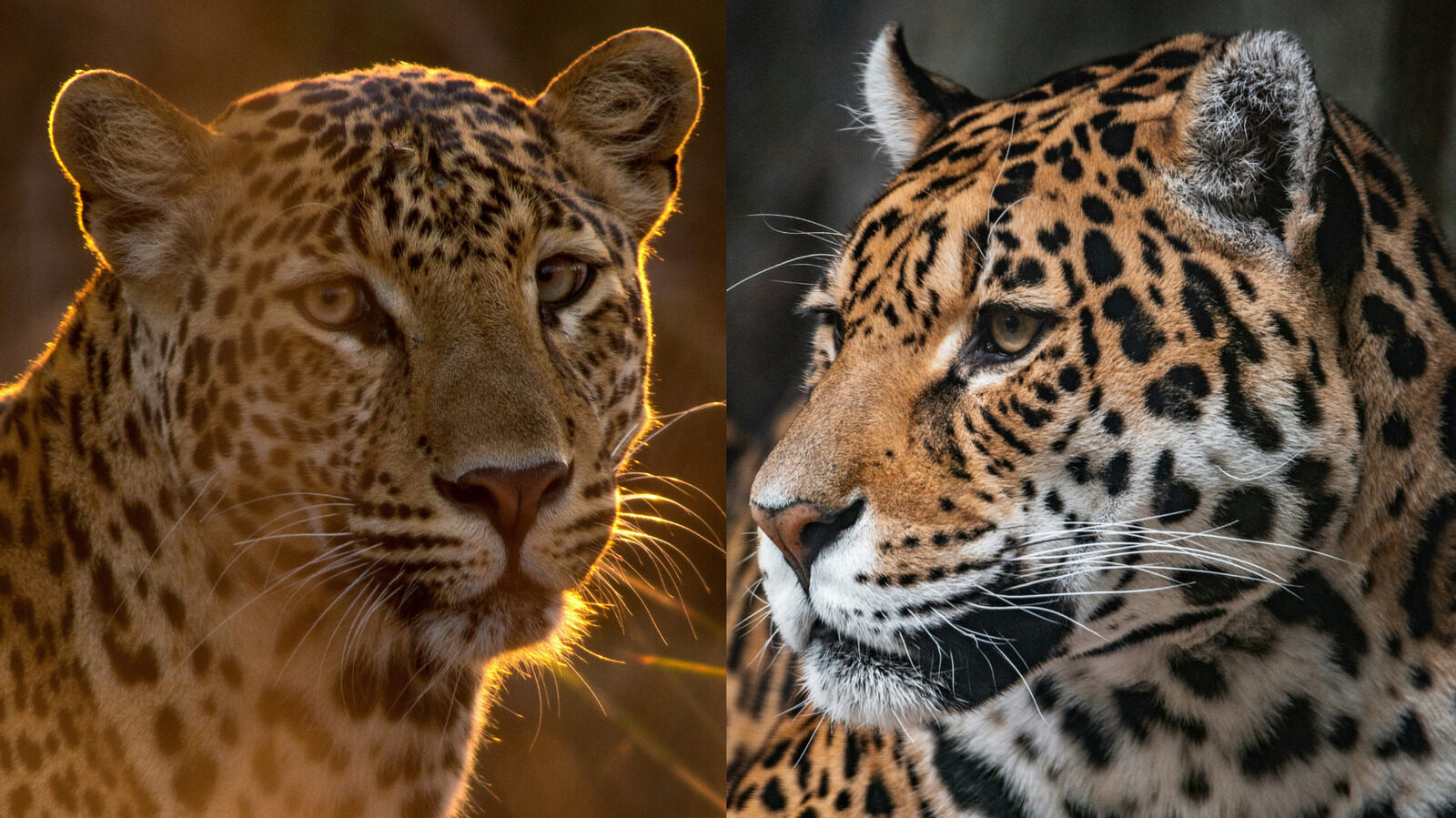
One striking way to differentiate these big cats is by examining their fur patterns. Both species feature rosettes—rose-shaped spots—but there are key differences:
- Leopard Rosettes: Leopards have more filled-in rosettes, with fewer markings inside.
- Jaguar Rosettes: Jaguar rosettes are typically larger and have smaller dots within them, giving them a more intricate appearance.
Beyond their patterns, size and physical build are additional indicators. Jaguars are generally larger and stockier than leopards, boasting broader heads and more muscular bodies. An adult jaguar can weigh up to 350 pounds, while leopards typically max out around 200 pounds.
Identifying leopards and jaguars in the wild
When trying to identify these cats in their natural habitats, consider these helpful tips:
- Habitat: Jaguars are often found near water bodies, as they are excellent swimmers and enjoy hunting in aquatic environments. Leopards prefer drier habitats and are more adaptable to various terrains.
- Behavior: Jaguars have a powerful bite, allowing them to crush the skulls of their prey, while leopards are known for their ability to drag heavy kills into trees to safeguard them from scavengers.
- Social Structure: Both species are solitary hunters, but jaguars tend to be more territorial and may be found in more secluded areas compared to leopards.
Understanding these behaviors can enhance wildlife watching experiences, providing insight into the lives of these elusive felines.
The evolutionary journey of jaguars and leopards
The evolutionary paths of leopards and jaguars are as fascinating as their physical forms. Both belong to the Panthera genus, which includes lions and tigers. However, jaguars diverged from a common ancestor with leopards and lions around 3 million years ago. This divergence allowed jaguars to adapt to the conditions of the Americas, where they developed unique traits suited to their environment.
Some compelling aspects of their evolution include:
- Strongest Bite: Jaguars possess the strongest bite relative to their size among big cats, allowing them to pierce the armor of turtles and the skulls of larger prey.
- Adaptability: Leopards are known for their incredible adaptability, thriving in diverse habitats ranging from savannas to mountainous regions.
- Convergent Evolution: Their similar appearances are a result of convergent evolution, where unrelated species develop similar traits to adapt to comparable environments.
This evolutionary backdrop not only highlights their adaptability but also emphasizes the importance of their conservation, as habitat loss and poaching threaten both species.
The myth of the black panther
The term “black panther” is often used to describe both leopards and jaguars that exhibit melanism, a genetic mutation resulting in darker fur. This phenomenon can lead to some confusion, as the term is not a scientific classification but rather a colloquial one.
It’s essential to recognize that:
- Melanism: This condition occurs in both species, but it does not define a separate species or subspecies.
- Appearance: Black panthers can still be identified by their rosettes, which may be less visible against their dark fur.
- Conservation Status: Both leopards and jaguars face threats due to habitat destruction and poaching, making their conservation a priority.
Significance of leopards and jaguars in ecosystems
As apex predators, both leopards and jaguars play crucial roles in maintaining balance within their ecosystems. They help regulate populations of herbivores, which in turn impacts vegetation and habitat health. Their hunting habits can influence the behavior of prey species, contributing to a dynamic interplay within their environments.
Some of the ecological functions they serve include:
- Population Control: By preying on sick or weak animals, they help maintain healthier populations of prey species.
- Habitat Maintenance: Their hunting patterns can influence the distribution of herbivores, promoting biodiversity within their habitats.
- Indicator Species: The health of leopard and jaguar populations can serve as indicators of broader ecosystem health, affecting conservation strategies.
Understanding their ecological significance reinforces the need for conservation efforts aimed at protecting their habitats and ensuring their survival for future generations.
Conservation challenges and efforts
Both leopards and jaguars face numerous threats in the wild, primarily stemming from human activities. Habitat loss due to deforestation, urbanization, and agricultural expansion poses significant challenges. Additionally, poaching for their pelts and body parts remains a persistent issue.
Conservation efforts include:
- Protected Areas: Establishing national parks and reserves to safeguard critical habitats.
- Community Engagement: Educating local communities about the importance of these species and fostering coexistence strategies.
- Anti-Poaching Initiatives: Implementing measures to combat poaching and illegal wildlife trade.
Through concerted conservation efforts, there is hope for the future of these majestic big cats, ensuring they continue to thrive in their natural habitats.