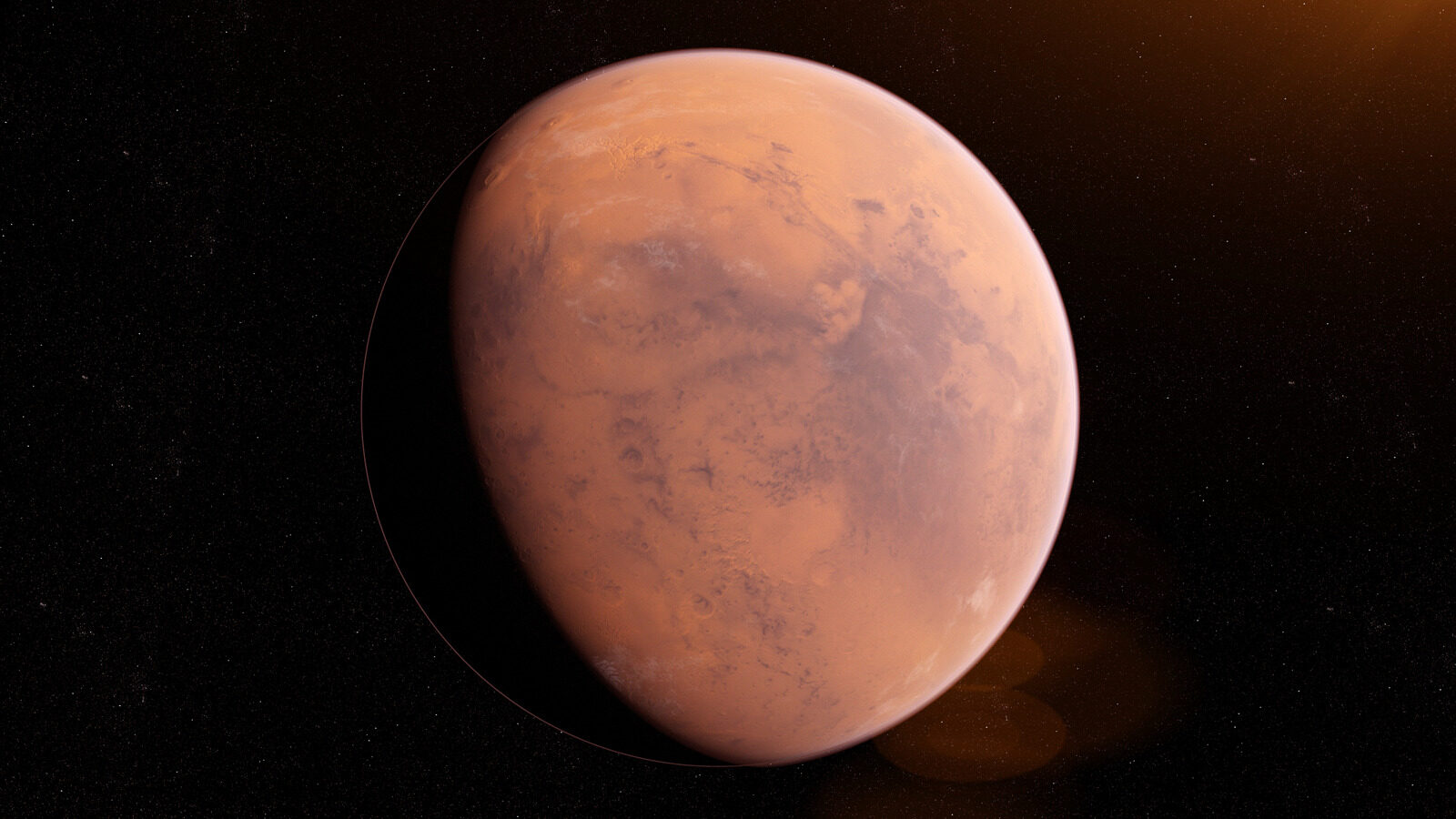
Mars, often dubbed the “Red Planet,” has intrigued humanity for centuries. Its rocky landscapes and mysterious features evoke both wonder and curiosity. Recent discoveries by various space missions have unveiled extraordinary phenomena that challenge our understanding of this celestial neighbor. From peculiar formations resembling flowers to enigmatic magnetic anomalies, the findings on Mars offer a glimpse into its geological history and potential for past life. Let’s explore some of the most fascinating discoveries that have emerged from our explorations of Mars.
Tiny Martian formations that resemble flowers
In a captivating discovery made on February 24, 2022, the Curiosity rover identified tiny mineral formations within Gale Crater. These formations bear a striking resemblance to delicate flowers or coral structures, igniting excitement among scientists and space enthusiasts alike. Although they may appear botanical in nature, these “flowers” are, in fact, mineral deposits that provide insights into Mars’ watery past.
Each of these formations is smaller than a penny, yet they reveal significant information about Mars’ geological history. This discovery suggests that liquid water once flowed abundantly on the planet’s surface, leaving behind these intricate mineral deposits. Previous findings by the Opportunity rover in 2004 had already hinted at the presence of similar spherical mineralized structures, affectionately dubbed “blueberries.” The existence of these formations indicates that Mars may have had a more dynamic and life-sustaining environment than previously thought.
A surreal rock formation resembling a doorway
On May 7, 2022, Curiosity captured an intriguing image while traversing the Greenheugh Pediment. The photo revealed a nearly rectangular shape carved into the Martian rock, prompting speculation about a potential “doorway” to another realm. However, this formation is a natural geological feature resulting from erosion rather than a portal into the unknown.
Measuring less than three feet in height, the formation is unlikely to serve as an entryway for anything substantial. It is more plausible that a boulder collapsed, creating this door-like appearance along existing fractures in the rock. The surrounding area shows evidence of rock debris, supporting the theory of natural erosion rather than extraterrestrial architecture.
Mineral structures that might mimic ancient life
On January 2, 2018, Curiosity took a photograph near Mount Sharp, capturing elongated, tubelike structures that sparked heated debate among scientists. Some speculated that these formations could be fossilized remnants of ancient burrowing organisms, indicating that Mars once harbored life. However, the prevailing belief is that these structures are crystallized minerals resulting from past water activity on Mars.
The challenge in definitively classifying these structures is compounded by the limitations of the Curiosity rover’s tools, which cannot conduct the detailed analyses needed to establish their origin conclusively. As scientists continue to investigate, they remain cautious, acknowledging the complexities of differentiating between biological and non-biological formations on Mars.
Dust devils in an aerial showdown
On January 25, 2025, Perseverance rover recorded a breathtaking event: two dust devils engaging in a dramatic aerial encounter in Jezero Crater. This short video depicted the larger of the two dust devils, measuring 210 feet tall, overtaking its smaller counterpart, which stood only 15 feet high.
Dust devils are relatively common phenomena on Mars, first documented by NASA’s Viking orbiters in the 1970s. These swirling vortices form when warm air rises from the surface and interacts with cooler atmospheric conditions, lifting dust and debris. Observing such natural events not only provides insights into Martian weather patterns but also allows scientists to analyze the planet’s atmospheric dynamics in real-time.
A peculiar rock resembling spider eggs
On March 13, 2025, Perseverance directed its Mastcam-Z camera at a rock formation known as St. Pauls Bay, which appeared strikingly different from its surroundings. While neighboring rocks were flat and tawny, St. Pauls Bay was gray and covered in globular formations that evoked imagery of spider egg clusters.
Although the initial impression suggested a connection to ancient Martian life, further analysis revealed that these formations are likely the result of erosion and sedimentation processes. The unique texture and coloration of St. Pauls Bay hint at a complex geological history, but its origins remain a mystery, classified as a “float rock” due to its uncertain provenance.
A heart-shaped geological feature on Mars
In a curious twist, Mars appears to have a heart-shaped geological formation located on the eastern flank of the Alba Patera volcano. Captured by the Mars Global Surveyor in June 1999, this formation, known as a graben, measures approximately 1.4 miles wide. Rather than a romantic sentiment, this heart-shaped pit resulted from tectonic activity and lava flows.
Grabens form when tectonic forces or molten rock create fractures in the bedrock, leading to subsidence and the formation of pits. This geological feature adds to the growing list of anthropomorphic formations on Mars, which includes the well-known “Happy Face Crater.” These discoveries inspire both scientific inquiry and imaginative interpretations of the Martian landscape.
Unusually strong magnetic anomalies on Mars
In a significant find, NASA’s InSight spacecraft discovered magnetic patches on Mars that are ten times stronger than any found on Earth. These anomalies, remnants of a bygone magnetic field that ceased functioning billions of years ago, have intrigued scientists as they explore the implications for Mars’ geological history.
The magnetic patches are believed to originate from iron-rich rocks buried deep in the Martian crust, some dating back over 3.9 billion years. These findings offer valuable data about the planet’s past and how it lost its protective magnetic shield. The fluctuations in strength and frequency of these magnetic fields raise further questions about the planet’s geological activity and atmospheric evolution.
Spiders of the Martian surface
Since 2003, curious formations on Mars have been likened to giant spiders due to their long, branch-like structures. These formations, known as araneiform terrain, can extend for miles across the Martian landscape. While they might evoke thoughts of extraterrestrial arachnids, they are, in fact, the result of unique geological processes involving carbon dioxide ice.
The Kieffer Model explains how these structures form through the sublimation of carbon dioxide ice, creating fissures that branch out in a spider-like pattern. Despite the absence of analogous processes on Earth, researchers continue to investigate these formations to better understand the Martian environment.
The process of water loss on Mars
Understanding Mars’ transition from a potentially habitable environment to its current arid state is a complex puzzle. NASA’s MAVEN orbiter revealed that the planet lost its atmosphere and liquid water through a process known as “sputtering.” This phenomenon occurs when energetic particles collide with the atmosphere, stripping away atoms and molecules.
As Shannon Curry, the principal investigator for MAVEN, aptly describes, sputtering resembles a cannonball splashing water in a pool. The implications of this process are profound, as it provides insights into how Mars transformed from a watery world to the barren landscape observed today. Unraveling the mysteries of this atmospheric loss could inform future missions aimed at uncovering the planet’s potential for life.
Leopard-like rock formations hinting at life
On July 18, 2024, NASA’s Perseverance rover captured an intriguing image of a rock formation dubbed “Cheyava Falls.” While it may appear unremarkable at first glance, the rock features distinctive white patches surrounded by black rings, reminiscent of leopard spots. Scientists are excited by the possibility that these markings could indicate biological activity.
In terrestrial environments, similar patterns can arise from chemical reactions involving hematite and microbial life. The discovery of carbon-based molecules on Cheyava Falls adds to the intrigue, suggesting the potential for ancient Martian life. As researchers delve deeper into the mysteries of this formation, they aim to uncover the intricate relationship between geology and biology on the Red Planet.
A vast water reservoir beneath Mars’ surface
In a groundbreaking discovery, NASA’s InSight lander detected a substantial reservoir of water located 7 to 13 miles beneath Mars’ surface. This hidden reservoir is believed to contain enough water to cover the entire planet to a depth of one mile, raising exciting possibilities for the existence of life on Mars.
Mathematical models used to identify water deposits on Earth have proven effective on Mars, suggesting that life might still thrive in these subterranean environments. However, the depth at which this water resides poses significant challenges for exploration. NASA initially planned to investigate this reservoir by 2026, but budget constraints have delayed the timeline to 2040. Nevertheless, there is optimism that private companies may expedite the search for Martian life.
The iconic “face” on Mars
One of the most famous images related to Mars is the “face” captured by NASA’s Viking 1 Orbiter on July 25, 1976. This eerie formation, resembling a human face, sparked widespread speculation about ancient Martian civilizations. However, it is now understood that this formation is a natural rock structure shaped by erosion.
The “face” is approximately one mile wide and results from the interplay of light, shadow, and geological features. This phenomenon, known as pareidolia, is a psychological tendency for humans to perceive familiar shapes in random objects. While the image may not reveal ancient artifacts, it captures the imagination and curiosity of those who gaze upon it.
Black streaks on Mars that defy explanation
The Martian surface is marked by mysterious black streaks known as slope streaks or recurring slope lineae (RSLs). Initially believed to be caused by subsurface water, these streaks were first documented by the Viking 1 Orbiter in the 1970s. Recent advancements in artificial intelligence have revealed that these features are likely the result of dry processes, rather than liquid water.
These streaks form as layers of fine dust shift and move, creating temporary discolorations on the surface. While they are visually striking, their significance in the geological processes shaping Mars is still being explored. Understanding the mechanics behind these streaks could provide further insights into the planet’s environmental history.