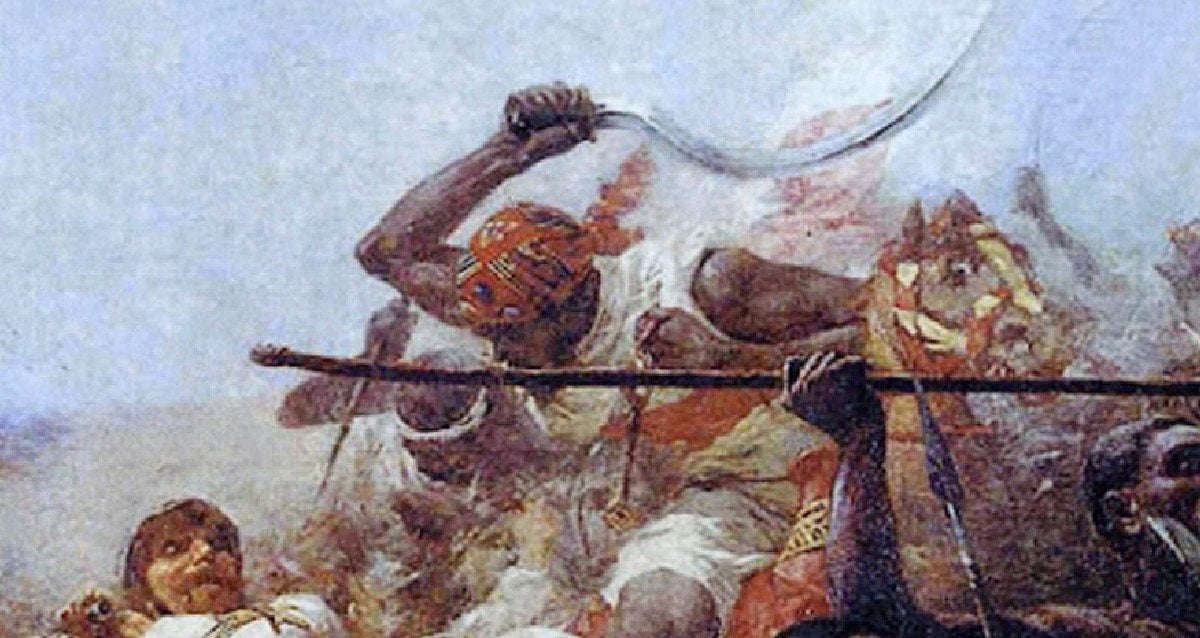

The shotel stands as a captivating symbol of Ethiopian history and military prowess. This unique double-edged, curved blade, reaching approximately 40 inches in length, has been wielded by Ethiopian warriors for centuries, leaving an indelible mark on the nation’s cultural landscape. Its origins trace back to the Dʿmt civilization as early as 980 B.C.E., highlighting its enduring relevance throughout millennia.
The shotel’s design is both distinctive and formidable. With a heavy blade and a comparatively small handle, it demanded exceptional skill and wrist control from its wielder.
Ethiopian warriors, known as meshenitai, employed the shotel weapon in sweeping motions, targeting vital organs with devastating accuracy. This unique fighting style, combined with the shotel’s formidable weight and curvature, made it a truly fearsome instrument on the battlefield.
While initially favored by both cavalry and infantry, the shotel’s popularity began to wane after European contact in the late 15th century. With the advent of new weaponry influenced by European designs, the shotel was seen as less practical on the modern battlefield. Despite this decline, the shotel continued to hold a significant place within Ethiopian culture, evolving from a battlefield tool into a symbol of status and prestige.
Origins and Early Usage
The story of the shotel begins in ancient Ethiopia, long before written history fully emerged. Evidence suggests its use as early as 980 B.C.E. during the Dʿmt civilization, a powerful kingdom that controlled much of present-day Eritrea and northern Ethiopia. While few artifacts from this period have survived, archaeological findings point to widespread use of curved bladed weapons similar to the shotel. This early adoption suggests the shotel evolved organically as a practical tool for both hunting and warfare in the challenging Ethiopian terrain.
During the Aksumite Empire, which flourished between the 1st and 7th centuries C.E., the shotel continued to be an important weapon in the hands of Ethiopian warriors. Known for its military prowess, the Aksumite Empire engaged in frequent conflicts with neighboring kingdoms. The shotel’s effectiveness in close combat likely contributed to their success on the battlefield.
Over the centuries, the shotel underwent refinements and variations, adapting to changing warfare strategies and cultural preferences. By the 14th century, under the rule of Amda Seyon I, the shotel reached its peak prominence. This powerful ruler incorporated skilled shotel-wielding warriors into his elite military force known as the Axurarat Shotelai. This unit became legendary for its tactical brilliance and devastating battlefield performance, cementing the shotel’s place in Ethiopian military history.
The Shotel’s Design and Combat Style
The shotel’s distinctive design was more than just a matter of aesthetics; it was meticulously crafted to be both lethal and practical in combat. Unlike many swords with a balanced weight distribution, the shotel featured a heavy blade concentrated towards the tip, paired with a relatively small handle. This unique configuration demanded exceptional skill and wrist control from its wielder, allowing for swift, powerful swings that could cleave through enemy lines.
Ethiopian warriors employed the shotel weapon in a distinctive combat style characterized by sweeping arcing motions. Instead of relying on thrusting or straight-line attacks, masters of the shotel used the blade’s momentum and weight to deliver devastating blows aimed at vulnerable areas like joints, limbs, and vital organs. The curved shape of the blade allowed for wide arcs, covering a significant area around the wielder and making it difficult for opponents to anticipate their attacks.
This combination of heavy blade, small handle, and sweeping combat style made the shotel a truly formidable weapon in the hands of skilled warriors. Its effectiveness was evident on the battlefield, where Ethiopian armies utilizing the shotel often achieved decisive victories against their adversaries.
Rise of the Axurarat Shotelai
As the shotel’s popularity grew throughout Ethiopian history, it reached new heights of prominence under the reign of Emperor Amda Seyon I in the 14th century. Recognizing the weapon’s exceptional potential, Amda Seyon established a specialized military unit known as the Axurarat Shotelai – a force composed entirely of elite warriors trained exclusively in the art of wielding the shotel.
These fearless soldiers were renowned for their rigorous training, unmatched discipline, and tactical brilliance. The Shotelai’s reputation spread far and wide, becoming synonymous with Ethiopian military power and strategic prowess. They served as Amda Seyon I’s personal guard, participating in numerous campaigns that expanded the empire’s borders and solidified its dominance across Ethiopia.
The Axurarat Shotelai’s success cemented the shotel’s place as a symbol of national strength and cultural identity. Their unwavering loyalty to the emperor and their unparalleled combat skills made them a formidable force to be reckoned with, inspiring awe and fear among both allies and enemies. This elite unit became a defining element of Ethiopian military history, forever associated with the shotel weapon’s legendary power.
Decline and Legacy
With the arrival of European powers in Africa during the late 15th century, new military technologies and tactics began to reshape the landscape of warfare. Firearms and swords influenced by European designs gradually gained popularity, pushing aside traditional weapons like the shotel. While initially effective against enemies who relied on less sophisticated weaponry, Ethiopian warriors found themselves at a disadvantage against adversaries wielding these newer technologies.
Despite this shift in battlefield dynamics, the shotel never completely disappeared from Ethiopian culture. It continued to be used as a symbol of status and prestige within society. Skilled artisans crafted ceremonial shotels for wealthy landowners and nobles, showcasing their craftsmanship and solidifying the weapon’s association with power and authority. Moreover, the shotel retained a place in folklore and storytelling, becoming a reminder of Ethiopia’s rich history and martial heritage.
Today, the shotel serves as a captivating artifact displayed in museums around the world. It stands as a testament to the ingenuity and skill of Ethiopian artisans and warriors throughout centuries past. Although relegated to a historical relic, its legacy continues to inspire awe and fascination, reminding us of the enduring power of tradition and the evolution of warfare through history.
From Weapon to Cultural Icon
As the shotel’s use on the battlefield declined with the introduction of new weaponry, it transitioned into a symbol of status and cultural significance within Ethiopian society. The heavy, ornate shotels crafted for wealthy landowners and nobles became prized possessions, demonstrating their wealth and influence. These ceremonial shotels were often passed down through generations as heirlooms, carrying with them a weight of history and family tradition.
Beyond its association with elite status, the shotel also embodied qualities admired within Ethiopian culture: strength, capability, and desirability. Skilled artisans continued to create intricately decorated shotels, incorporating traditional motifs and symbols that reflected these values. Owning a finely crafted shotel became a mark of respect and admiration within communities, signifying a connection to Ethiopia’s rich martial heritage.
The shotel’s metamorphosis from a battlefield weapon into a cultural icon illustrates its enduring influence on Ethiopian identity. It serves as a reminder of the nation’s complex history, where traditions and innovations have intertwined over centuries, shaping a unique and vibrant culture.