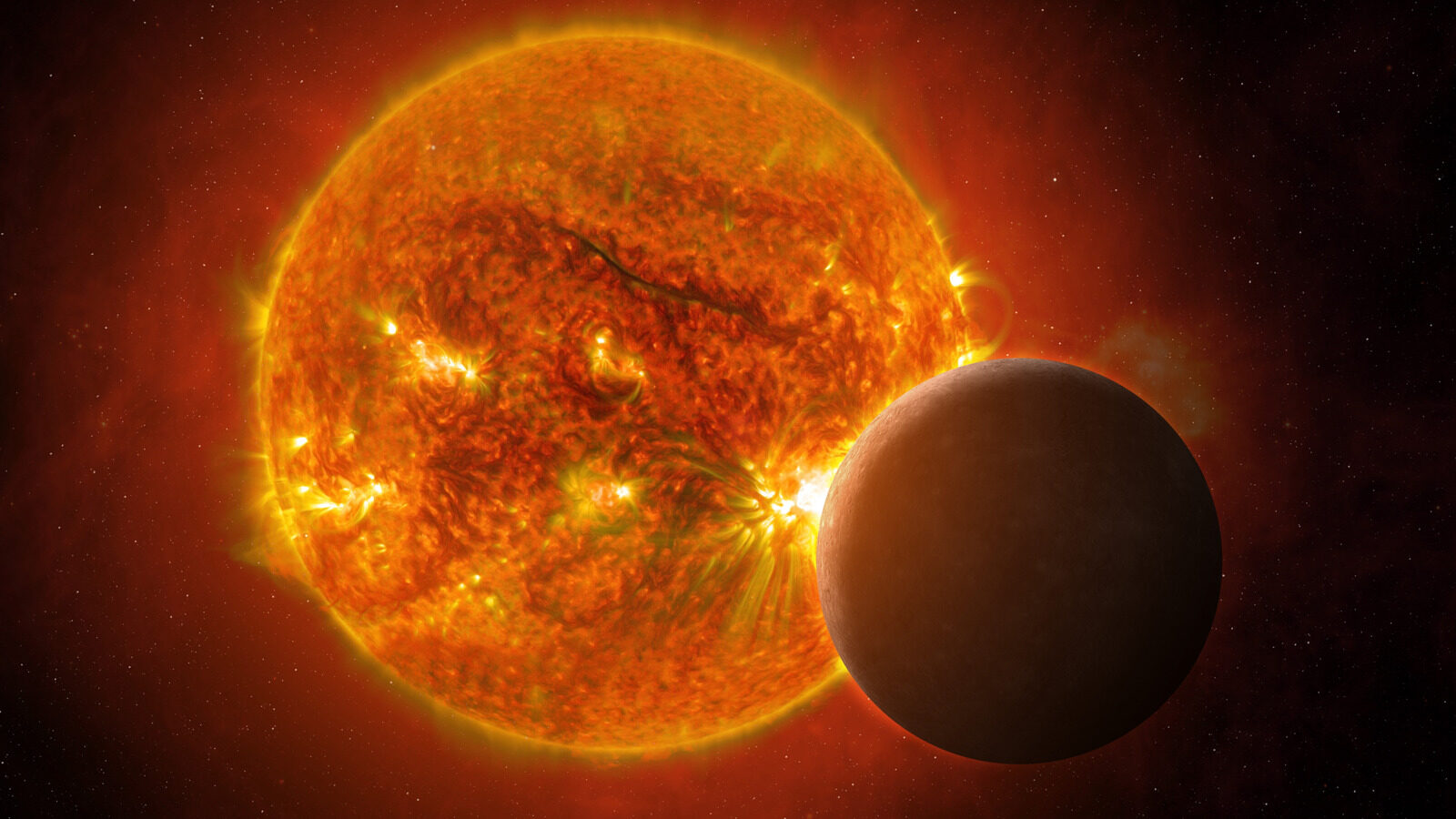

The vastness of space offers mysteries and wonders that both intrigue and terrify us. Among the celestial bodies that orbit our sun, Mercury stands out not just for its proximity, but for its extreme and inhospitable conditions. Have you ever wondered what it would be like to set foot on this planet? The experience would be harrowing, with death looming almost instantly. Let’s explore the terrifying realities of existence on Mercury.
The extreme temperatures of Mercury’s surface
Mercury, being the closest planet to the sun, experiences some of the most extreme temperatures in our solar system. With no substantial atmosphere to regulate heat, the temperatures on this planet can fluctuate dramatically.
If you were to step onto the sunlit surface of Mercury, you would face a blistering heat of up to 800 degrees Fahrenheit (427 degrees Celsius). This immense heat is due to the planet’s lack of atmosphere, which means it cannot retain the solar heat it receives. Consequently, standing in the sunlight would lead to almost instantaneous death as your body would rapidly lose water and burn to ashes.
Interestingly, despite being the closest planet to the sun, Mercury is not the hottest planet in our solar system; that title belongs to Venus. Venus’s thick atmosphere traps heat, creating a runaway greenhouse effect. Yet, this does not diminish the lethal nature of Mercury’s environment.
- Temperatures can reach up to 800°F (427°C) in sunlight.
- The absence of a significant atmosphere allows rapid heat loss at night.
- The sun appears more than three times larger than it does from Earth.
- Sunlight intensity is about seven times brighter than on Earth.
The frigid darkness of Mercury
While the sunlit side of Mercury is a furnace, the dark side presents a chilling contradiction. As Mercury rotates slowly, one side is perpetually scorched by the sun, while the opposite side plunges into extreme cold.
On the dark side, temperatures can drop to a bone-chilling minus 290 degrees Fahrenheit (-179 degrees Celsius). Without an atmosphere to insulate it, Mercury loses heat quickly, leading to these frigid conditions. The stark contrast between the two sides illustrates just how inhospitable Mercury can be.
As Jennifer Glass, an associate professor in Earth and Atmospheric Sciences, noted, dying on the cold side of Mercury would be akin to dying in the vacuum of space. In mere minutes, a human would succumb to the extreme cold, but likely not before suffering from hypoxia due to the lack of breathable oxygen.
- The dark side experiences temperatures as low as -290°F (-179°C).
- Without an atmosphere, heat dissipates quickly once sunlight fades.
- Survivability is limited by the lack of oxygen, resulting in a swift death.
The lethal combination of heat and lack of oxygen
One of the most horrifying aspects of Mercury is that regardless of which side you find yourself on, survival is nearly impossible. If it were somehow possible to withstand the extreme temperatures, the lack of oxygen would still seal your fate.
Mercury’s exosphere is incredibly thin, composed mostly of oxygen, sodium, hydrogen, helium, and potassium. However, the concentration of these gases is far too low to support human life. Without the ability to breathe, a person would find themselves gasping for air in mere moments.
In the harsh conditions of Mercury, the body would react rapidly to the lack of oxygen. Symptoms like dizziness, confusion, and loss of consciousness would set in quickly. Ultimately, death would occur before the effects of extreme temperatures could take their toll.
Survival factors on Mercury
For those curious about the conditions necessary for survival, it’s important to note that even advanced technology and suits designed for space travel would struggle to provide adequate protection against Mercury’s elements. Key challenges include:
- Heat Resistance: Any space suit would need to withstand extreme temperatures during the day.
- Insulation: To deal with frigid conditions at night, suits would require advanced insulation technology.
- Oxygen Supply: A constant supply of breathable air would be essential; hence, closed-loop life support systems would be necessary.
- Radiation Protection: Mercury is exposed to high levels of solar radiation due to its thin atmosphere, necessitating additional shielding.
The psychological toll of an inhospitable planet
Envisioning a visit to Mercury also brings forth the psychological implications of confronting such an inhospitable environment. The stark landscape, with its craters and barren terrain, would likely evoke feelings of isolation and despair.
Factors such as the intense heat, frigid cold, and the constant reminder of mortality would weigh heavily on anyone attempting to explore the planet. The knowledge that each moment spent on this desolate world could lead to a terrifying and swift demise would serve as a constant psychological barrier.
Conclusion
While the exploration of our solar system remains a tantalizing possibility for the future, Mercury stands as a stark reminder of the limits of human endurance. Its extreme environments—both scalding and freezing—make it a place that no human should ever attempt to inhabit.
The lessons learned from contemplating life and death on Mercury not only deepen our understanding of planetary science but also highlight the incredible challenges that lie in the quest for space exploration. As we continue to push the boundaries of human capability, it is crucial to remember that some worlds may be better left unexplored.