
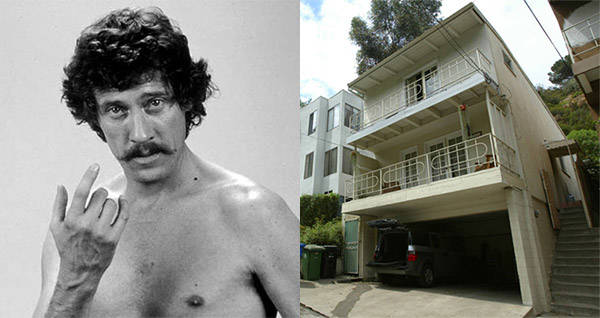
Let’s take a deep dive into one of the most notorious unsolved cases in California history: the Wonderland Murders House massacre. Picture this: it’s July 1st, 1981, and a quiet Laurel Canyon home at 8763 Wonderland Avenue becomes the scene of unimaginable brutality. Four members of a group known as the Wonderland Gang – Ron Launius, Billy DeVerell, Joy Miller, and Barbara “Butterfly” Richardson – are found murdered in their own residence. It’s a shocking event that quickly spirals into a tangled web of suspicion, double-crossing, and questionable motives.
The victims were part of a notorious group involved in various shady dealings, including drug trafficking and theft. Just days before the murders, they had pulled off a daring heist at the home of Eddie Nash, a known rival drug dealer. This connection immediately thrust Nash into the spotlight as a prime suspect, fueling speculation that he might have orchestrated the killings as revenge.
The case quickly captured national attention, drawing in investigators and armchair detectives alike. The murders became synonymous with the dark underbelly of Hollywood’s golden age, highlighting the dangerous world of drugs, power, and violence lurking beneath the glittering surface.
The Wonderland Gang & Their Crime
The Wonderland Gang wasn’t your typical group of friends hanging out and watching movies. They were a tight-knit crew involved in a variety of illicit activities, from drug dealing to theft. Ron Launius, the self-proclaimed leader, was known for his charisma and ruthlessness. Billy DeVerell, as the second-in-command, was fiercely loyal but also prone to violence. Joy Miller, Launius’ wife, played a more behind-the-scenes role, managing finances and connections within their criminal network. Then there was Barbara “Butterfly” Richardson, David Lind’s girlfriend, who often found herself caught in the crossfire of their dangerous world.
This group operated out of the infamous Wonderland house, a sprawling Laurel Canyon property that became synonymous with debauchery and danger. It was a place where drugs flowed freely, wild parties raged late into the night, and shady deals were constantly being made. The gang’s main source of income seemed to be robbing drug dealers and other high-profile targets, believing they could outsmart the authorities and live a life of luxurious crime.
Their audacity reached new heights when they targeted Eddie Nash, a notorious drug lord who controlled much of the LA underworld. This daring heist proved to be their undoing, setting in motion a chain of events that ultimately led to the tragic murders that shocked the nation.
Suspects: Eddie Nash & John Holmes
The investigation into the Wonderland Murders quickly turned towards Eddie Nash, a figure who loomed large over LA’s criminal underworld. Nash had long been involved in drug trafficking and violence, making him a prime suspect in the eyes of many. The fact that the gang had robbed his home just days before the murders fueled this suspicion even further. It seemed plausible that Nash might have sought revenge for the heist, ruthlessly eliminating those who dared to cross him.
John Holmes, an adult film star with connections to both Nash and the Wonderland Gang, also found himself in the spotlight. Holmes was known to frequent the Wonderland house and allegedly helped facilitate the robbery of Nash’s home. Initially charged with four counts of murder, he later walked free after refusing to testify against either Nash or any members of his own circle. This refusal only added fuel to the fire, leaving many convinced that Holmes held crucial information about the murders.
While Nash was eventually brought to trial for planning the killings, a hung jury ultimately saved him from conviction. He later admitted in a plea deal for a separate case that he had ordered his men to recover stolen items from the Wonderland house on the night of the murders. However, he never confessed to ordering the actual killings, leaving this crucial piece of the puzzle unsolved.
Trial & Acquittal of John Holmes
John Holmes, the adult film star with ties to both Eddie Nash and the Wonderland Gang, found himself at the center of a dramatic legal battle. Charged with four counts of murder, he quickly became a media sensation, his high-profile status adding another layer of intrigue to an already complex case. The prosecution painted a picture of Holmes as a willing participant in the murders, claiming he had intimate knowledge of the events and actively helped orchestrate the killings.
However, Holmes’ defense team argued that he was merely caught in the crossfire of a brutal power struggle between rival drug dealers. They maintained that he had no direct involvement in the actual murders and was being used as a scapegoat by those seeking to cover their tracks. The trial captivated the public, with every twist and turn scrutinized by reporters and viewers alike.
In the end, the jury decided they couldn’t be certain of Holmes’ guilt beyond a reasonable doubt. He was acquitted on all charges, despite mounting evidence linking him to the scene of the crime. This dramatic outcome left many feeling unsatisfied, with questions lingering about his true role in the Wonderland Murders house massacre.
Unresolved Case and Ongoing Theories
Despite numerous investigations, a mountain of evidence, and high-profile trials, the Wonderland Murders remain officially unsolved to this day. The case has become a chilling reminder that sometimes, even with overwhelming clues and compelling suspects, justice can be elusive. It continues to fascinate true crime enthusiasts and fuel endless debates about who was truly responsible for those brutal killings.
Over the years, various theories have emerged, each attempting to piece together the puzzle and shed light on the dark events of July 1st, 1981. Some believe that Eddie Nash ultimately ordered the killings, seeking revenge against the gang for robbing him. Others point fingers at John Holmes, suspecting he played a more active role than initially revealed. Then there are those who argue that the truth is far more complex, involving a web of deceit, double-crosses, and hidden motives that may never be fully exposed.
The Wonderland Murders house stands as a somber testament to this unsolved mystery. It serves as a reminder that sometimes, even in a world obsessed with uncovering the truth, certain secrets remain buried forever.
Echoes of Violence in Laurel Canyon
The Wonderland Murders cast a long shadow over Laurel Canyon, a once-peaceful haven for artists and musicians that became synonymous with Hollywood’s darker side. The idyllic image of the canyon, nestled amidst lush greenery and boasting stunning views, was irrevocably tainted by the violence that unfolded within its borders.
News of the murders sent shockwaves through the community, shattering the illusion of safety and revealing a hidden underbelly lurking beneath the surface. Whispers of drug deals, secret parties, and dangerous personalities circulated among residents who had once felt secure in their secluded haven. The case served as a stark reminder that even seemingly idyllic enclaves could harbor secrets and violence.
Though time has passed and Laurel Canyon has largely recovered from the trauma of the Wonderland Murders, the events of 1981 continue to resonate with those who remember the darkness that descended upon their community. It serves as a poignant reminder that even in places of beauty, tragedy can strike, leaving lasting scars on both individuals and landscapes.