The story of Sandra Herold and her chimpanzee Travis is a tragic tale of human-animal connection gone wrong. Herold’s life was forever altered after the deaths of her daughter and husband, leading her to adopt Travis in 1995. She treated him like a son, sharing her daily life with him from bathing to meals. However, as time passed, Travis’ behavior became increasingly erratic and unsettling.
The once playful chimp grew agitated and detached, displaying concerning actions such as escaping his car during drives and even lashing out at passersby. He seemed deeply affected by the loss of his “dad,” exhibiting signs of mourning that only heightened Herold’s concerns. It was against this backdrop of escalating tension that tragedy struck in 2009 when Travis attacked Charla Nash, a close friend of Herold who had come to help contain him.
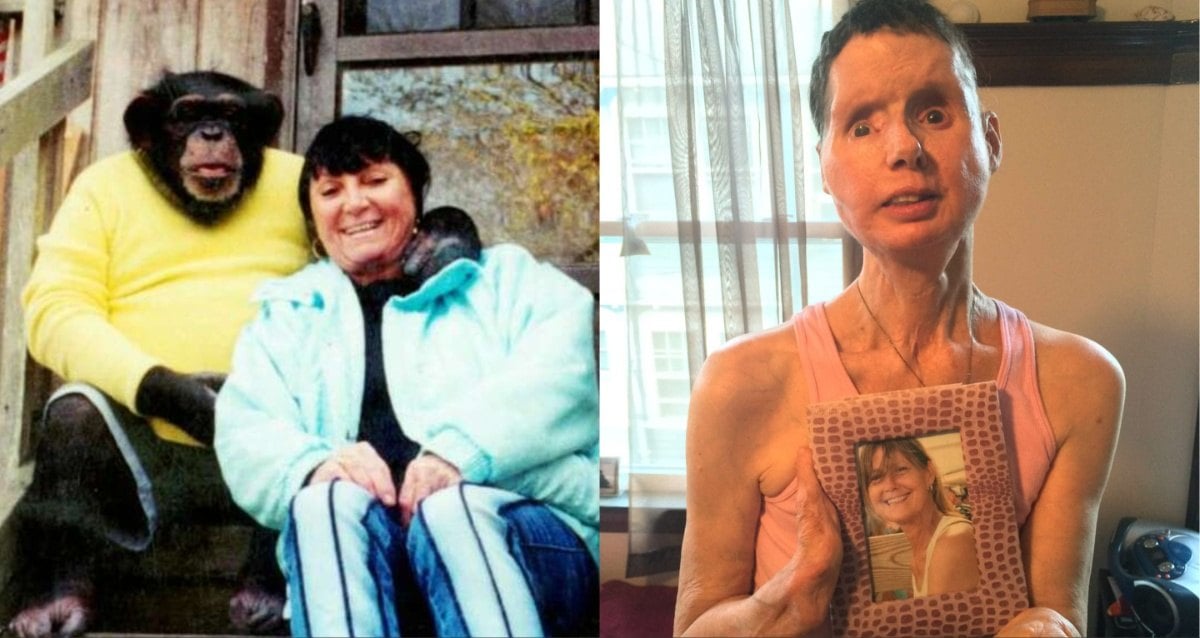
In a horrifying turn of events, Travis brutally mauled Nash, tearing off parts of her face and body. Herold bravely intervened by stabbing Travis, but the chimpanzee continued his attack before ultimately dying from a gunshot wound inflicted by police. The aftermath saw Herold facing public scrutiny and legal action from Sandra Herold’s daughter, adding another layer of pain to an already devastating situation.
A Family Bond with Travis
Despite the inherent dangers of keeping a chimpanzee as a pet, Sandra Herold treated Travis more like a son than an animal. She deeply cared for him, showering him with affection and integrating him into her daily life. Photos from that era capture a seemingly idyllic picture: Herold and Travis laughing together, sharing meals, even sleeping in the same bed.
For Herold, Travis was a source of comfort and companionship after the loss of her daughter and husband. Their bond grew stronger over time, with Herold believing she understood Travis’ needs and emotions. She believed they had a special connection, one that transcended the typical human-animal relationship.
While many might find it difficult to fathom such an arrangement, for Herold, Travis was family. She defended his place in her life fiercely, often brushing off concerns about potential danger. In her eyes, their bond was genuine and unbreakable, a testament to her capacity for love and compassion even in the face of immense personal tragedy.
The Tragedy Unfolds: Charla Nash Attacked
The sunny afternoon of February 16, 2009, took a horrifying turn when Travis’s unpredictable behavior escalated beyond anything Sandra Herold could have anticipated. As the chimpanzee grew increasingly agitated, Herold reached out to her friend Charla Nash, hoping for help in calming him down. Little did she know that this seemingly innocent request would lead to unimaginable tragedy.
Nash arrived at Herold’s home, unaware of the danger she was walking into. Travis, driven by an unknown force, suddenly lashed out with violent ferocity. He attacked Nash without warning, ripping off parts of her face and body in a gruesome display of savagery. The attack was swift and brutal, leaving Nash severely injured and fighting for her life.
Herold, witnessing the horrifying scene unfold, bravely intervened to try and stop Travis. She stabbed him in an attempt to defend her friend, but the chimpanzee remained relentless. The horrific incident would forever change the lives of all involved, leaving a lasting scar on both Herold and Nash.
Aftermath and Public Scrutiny
In the aftermath of the brutal attack, Sandra Herold found herself thrust into the center of a media storm. Public opinion was divided, with some condemning her for keeping a dangerous animal as a pet while others expressed sympathy for her loss and trauma. Herold faced intense scrutiny from both the public and legal system, grappling with the weight of the tragedy she had endured.
She was sued by Charla Nash, who sought compensation for her horrific injuries. The case sparked a national debate about the ethics of keeping exotic animals as pets and the responsibility of owners to ensure public safety. Herold, already deeply affected by the loss of Travis, found herself further isolated by the public backlash and legal battles.
Despite the immense pressure, Herold tried to move forward with her life. She sought solace in grieving for Travis and finding strength through her faith. Sadly, Herold’s journey was cut short in 2010 when she passed away from a ruptured aortic aneurysm leaving behind a story of love, loss, and tragic consequences that continues to resonate today.
Living With Loss and Trauma
The tragic events surrounding Travis left an indelible mark on Sandra Herold’s life. Though she found solace in raising another chimpanzee named Chance, the pain of losing Travis and facing public scrutiny weighed heavily upon her. The once vibrant woman retreated from social circles, becoming more reclusive as she struggled to cope with the overwhelming grief and trauma.
For Herold, life after the attack became a constant battle against the echoes of that fateful day. She carried the weight of guilt for not being able to fully protect Charla Nash and the sorrow of losing Travis, her beloved chimpanzee companion. The media attention and public scrutiny only exacerbated her pain, leaving her feeling isolated and misunderstood.
Her story serves as a poignant reminder of the profound impact trauma can have on individuals, highlighting the enduring power of grief and the challenges of navigating loss and public scrutiny.
The Lasting Impact of a Chimpanzee Tragedy
The story of Sandra Herold and Travis remains a haunting reminder of the complexities and potential dangers of human-animal relationships. It sparked a national conversation about responsible pet ownership, particularly concerning exotic animals, and the need for greater awareness of their capabilities and unpredictable nature.
While some may argue that Herold’s actions were misguided, it’s essential to remember the deep emotional bond she shared with Travis, a connection forged in the aftermath of personal tragedy. Her case highlights the human tendency to seek companionship and comfort in unconventional ways, even when faced with significant risks. The Sandra Herold daughter tragedy serves as a cautionary tale, urging us to approach interspecies relationships with careful consideration, respect for animal welfare, and an understanding of the potential consequences that can arise from such intimate connections.
It also raises important questions about public perception and media portrayal of individuals involved in such incidents. Despite the tragedy, Herold’s story ultimately offers a glimpse into the human capacity for love, loss, and resilience in the face of unimaginable adversity.