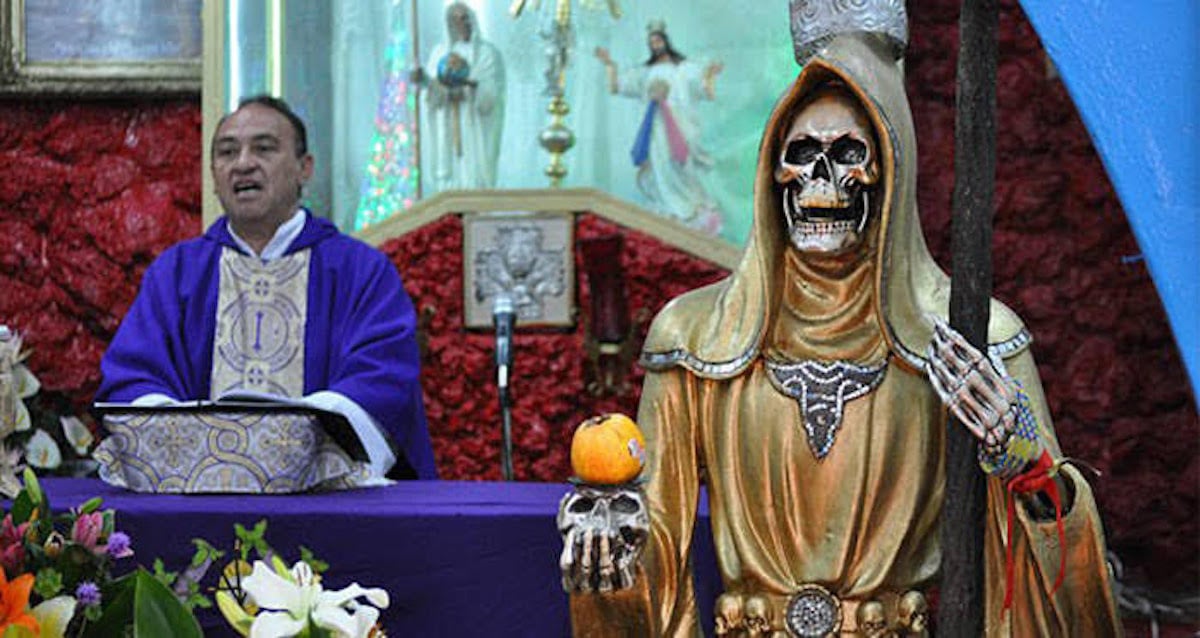
In the heart of Mexico, a unique figure emerges from the shadows, captivating hearts and minds with her enigmatic presence. She is Santa Muerte, also known as the Bony Lady, a folk saint who personifies death in Mexican Catholicism. Her origins are deeply rooted in the rich tapestry of Mexican culture, weaving together threads of Spanish and indigenous beliefs to create a compelling icon.
Santa Muerte’s story is not simply about death; it’s a tale of acceptance, solace, and even defiance. Imagine a young woman facing hardship, abandoned by society and struggling to survive. She might turn to Santa Muerte for comfort, finding in her skeletal form a representation of the shared vulnerability of life and death. For some, her presence offers a sense of security and protection from the harsh realities of their world.
While she may appear unsettling to outsiders, understanding Santa Muerte requires looking beyond the surface. She embodies the complex relationship Mexicans have with mortality, acknowledging its inevitability while celebrating life’s precious moments. This unique blend of reverence and acceptance has led her to become a powerful symbol for millions, offering them a sense of belonging and hope even in the face of adversity. It is this profound connection that fuels the enduring popularity of the mexican death goddess, making her a truly fascinating figure in contemporary Mexican culture.
The Origins and Evolution of Santa Muerte
Tracing Santa Muerte’s origins takes us back centuries, to a time when indigenous beliefs about death intertwined with Spanish Catholic traditions brought by colonizers. She emerged as a fusion of these distinct worlds, absorbing elements from Aztec and Maya deities associated with death and the underworld. Think of it like a cultural melting pot where ancient rituals and modern faith blended together, giving rise to this unique figure.
While Santa Muerte remained relatively obscure for many years, her popularity surged in the early 21st century. Several factors contributed to this rise, including the escalating violence of the Mexican Drug War, which left many feeling vulnerable and seeking solace beyond traditional institutions. Social media also played a role, allowing devotees to connect and share their experiences with Santa Muerte, further spreading her influence.
This newfound prominence brought both admiration and controversy. Some view Santa Muerte as a symbol of hope and resilience in the face of adversity, while others condemn her association with crime and the supernatural. Regardless of one’s stance, there’s no denying that she represents a significant cultural phenomenon, illustrating the complex ways people grapple with death and their search for meaning in life. It’s within this context that we understand the enduring power of the mexican death goddess, a figure who continues to captivate and challenge our perceptions of faith, mortality, and society itself.
Rise in Popularity: Social Factors and Cultural Impact
The 21st century witnessed a dramatic surge in Santa Muerte’s popularity, fueled by a confluence of social factors and cultural shifts. The escalating violence of the Mexican Drug War left many individuals feeling disillusioned with traditional institutions and seeking alternative sources of comfort and protection. Santa Muerte offered solace to those who felt marginalized and forgotten, providing a sense of acceptance and community regardless of their circumstances. Think of it as a beacon of hope in times of darkness, attracting those seeking refuge from the harsh realities of their world.
Social media played a pivotal role in amplifying Santa Muerte’s reach, allowing devotees to connect, share stories, and spread awareness about her teachings. Online platforms became virtual sanctuaries, fostering a sense of belonging and shared identity among her followers. Images of her skeletal figure adorned profiles, tattoos, and merchandise, further normalizing her presence in mainstream society. This digital visibility helped shed light on a previously marginalized belief system, sparking both curiosity and controversy.
The rise in Santa Muerte’s popularity also reflects a broader cultural shift towards embracing alternative spiritualities and challenging traditional norms. Her unconventional practices and association with death have captivated imaginations, making her a symbol of rebellion against societal expectations. In many ways, she embodies the spirit of change and adaptation, demonstrating how religious beliefs evolve to meet the needs of a changing world.
Santa Muerte’s Followers: A Diverse Community
Santa Muerte’s followers represent a diverse tapestry of individuals from all walks of life, united by their shared experiences and search for solace. Contrary to common misconceptions, her devotees are not a homogenous group defined solely by criminal affiliations or marginalized identities.
Among Santa Muerte’s most vocal adherents are those who feel ostracized or forgotten by mainstream society. This includes drug traffickers seeking protection and guidance, sex workers navigating dangerous livelihoods, LGBTQ+ individuals facing discrimination, migrants enduring perilous journeys, and street children longing for belonging and support. For these individuals, Santa Muerte represents a beacon of acceptance, offering unconditional love and understanding without judgment.
Her appeal extends beyond those marginalized communities, however. Many devout followers are simply seeking comfort in her presence during times of grief, illness, or personal struggle. They view her as a compassionate guide who offers solace and strength in the face of adversity. Ultimately, Santa Muerte’s diverse following reflects the universality of human need for connection, support, and hope, demonstrating that even within darkness, there exists a yearning for light and guidance. This inclusivity is what makes the mexican death goddess such a powerful and enduring figure in contemporary Mexican culture.
Controversy and Condemnation: Church vs. Cult
Santa Muerte’s rise in popularity hasn’t been met with universal acceptance. The Catholic Church vehemently condemns her as blasphemous and anti-religious, viewing her worship as a dangerous deviation from true faith. They argue that associating death with veneration disrespects the sanctity of human life and undermines traditional religious doctrines. Think of it like two opposing forces clashing: one representing established institutions and conservative values, the other embodying a more fluid and unconventional approach to spirituality.
The Church’s concerns extend beyond theological disagreements. They also warn against Santa Muerte’s association with crime and violence, fearing that her image could be exploited by criminal organizations for nefarious purposes. They urge followers to abandon their devotion, emphasizing the importance of seeking guidance from ordained priests and embracing authentic Catholic practices.
The debate between the Church and Santa Muerte’s followers highlights the complexities surrounding religious freedom and cultural expression. While some view Santa Muerte as a harmless folk tradition, others perceive her as a dangerous threat to established social norms and religious authority. This ongoing clash underscores the evolving nature of faith in modern society, where traditional boundaries are increasingly challenged by diverse beliefs and practices.
Santa Muerte’s Enduring Legacy
Despite facing condemnation from religious institutions and skepticism from some segments of society, Santa Muerte has cemented her place as a significant cultural icon in Mexico and beyond. Her enduring legacy lies not just in the number of devoted followers she commands, but also in her ability to spark conversations about death, faith, and social justice.
Think of it like this: Santa Muerte has become a symbol of resilience, representing the human capacity to find meaning even in the face of adversity. She embodies the complexities of Mexican culture, where ancient traditions intertwine with modern realities, giving rise to unique and often unconventional beliefs. This blend of tradition and innovation ensures that her story continues to captivate and inspire generations to come.
Ultimately, Santa Muerte’s enduring legacy lies in her ability to connect with people on a deeply personal level. Whether seeking solace, guidance, or simply a sense of belonging, her devotees find comfort and acceptance within her skeletal embrace. This profound human connection ensures that the mexican death goddess will continue to be a fascinating figure for years to come, reminding us of the enduring power of faith, hope, and the human spirit.