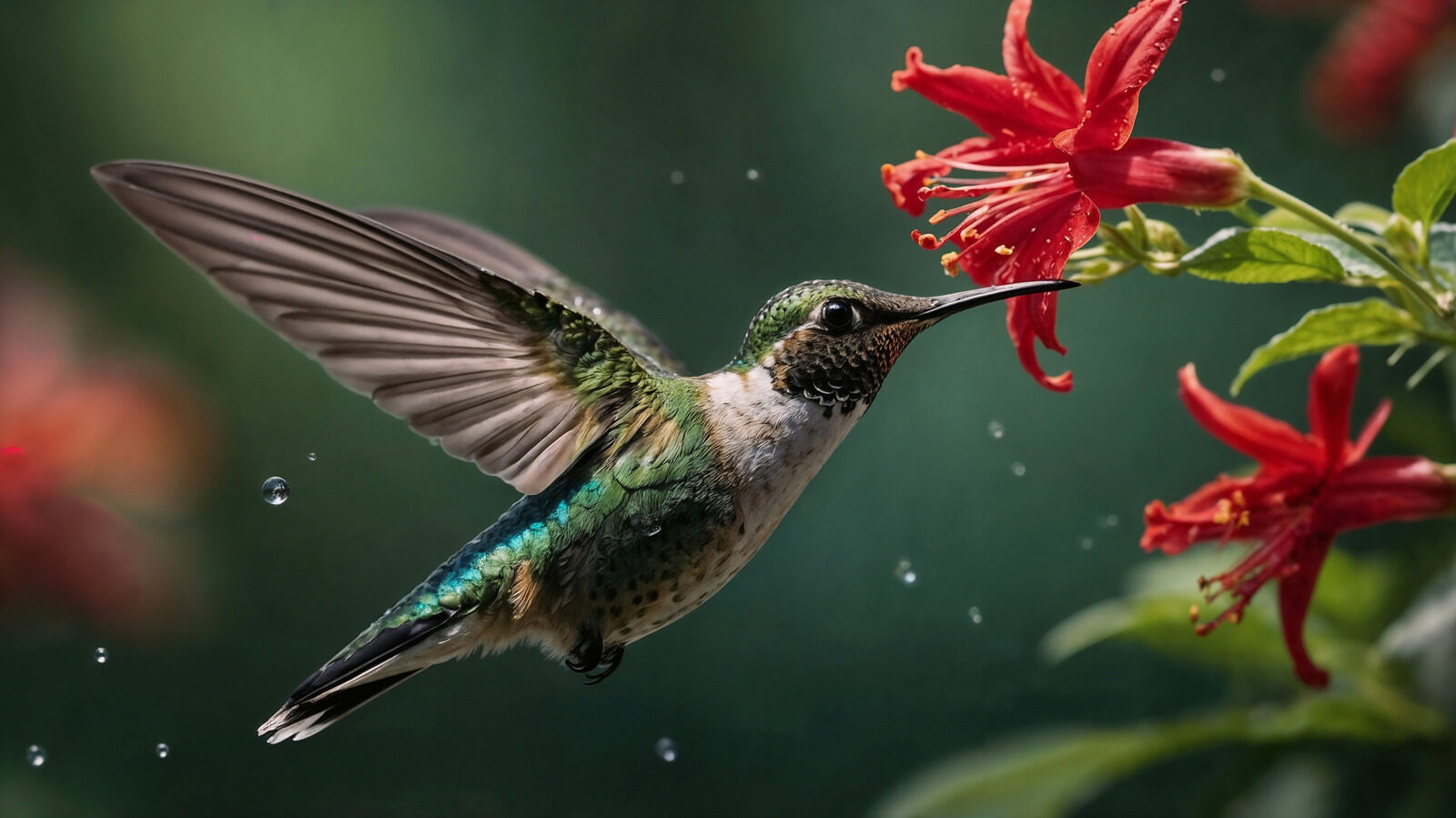
Hummingbirds are among the most fascinating creatures on Earth. Known for their remarkable flying abilities and vibrant colors, these small birds have captivated the interest of researchers and bird watchers alike. One of the more intriguing aspects of hummingbird behavior is their apparent attraction to the color red. But what lies behind this preference? Is it simply a matter of aesthetics, or is there a deeper ecological significance at play?
In this exploration, we delve into the reasons why hummingbirds exhibit a strong affinity for red flowers, examining various theories and studies that seek to unravel this colorful mystery.
Understanding the Unique Feeding Habits of Hummingbirds
Hummingbirds are remarkable for their specialized feeding habits. With the unique ability to hover in mid-air, they can feed on nectar from flowers with incredible precision. Their wings beat at an astonishing rate of 60 to 80 times per second, which translates to a staggering 720 to 5,400 beats per minute. This high-energy lifestyle demands a substantial intake of food, primarily nectar that is rich in sugar.
In addition to nectar, hummingbirds also consume small insects and spiders to supplement their diet with protein and nutrients. This combination of food sources is vital for maintaining their energy levels, particularly during migration periods, where they can travel long distances in search of food.
Investigating the Color Preference of Hummingbirds
The color red is widely considered to play a significant role in attracting hummingbirds to specific flowers. A 2012 study published in Plant Species Biology explored this phenomenon. Researchers observed hummingbird behavior concerning flowers of various colors, specifically the Mimulus aurantiacus, which has blooms that range from yellow to red.
- The study found that hummingbirds showed less interest in the yellow blossoms.
- Conversely, they exhibited a marked preference for orange flowers.
- Interestingly, while they favored flowers with red pigments, the reddest flowers did not attract them the most.
This complex relationship indicates that while hummingbirds may prefer red flowers, the underlying reasons are still not fully understood. The evidence suggests that their attraction to red is not an innate bias but rather influenced by various ecological factors.
Other Pollinators May Influence Hummingbird Color Preference
Research suggests that the visual preferences of hummingbirds might not be solely their own. Instead, it could be a reflection of the colors of nearby flowers that produce the most nectar. Hummingbirds have excellent color vision, which allows them to distinguish between different hues effectively. A 2017 study published in PLOS One pointed out that the birds’ experiences with colors could significantly affect their choices.
For instance, hummingbirds foraging near red-flowered plants, such as the Ribes speciosum, tended to favor red feeders, while those near yellow-flowered plants, like Nicotiana glauca, preferred yellow feeders. This suggests that their color preference is closely tied to the availability of nectar, rather than a simple attraction to a specific color.
How Competitive Relationships Shape Color Preferences
Interestingly, the plants themselves may have evolved to attract hummingbirds while deterring other pollinators, particularly bees. A 2011 study in the Journal of Experimental Biology revealed that while hummingbirds are frequently associated with red flowers, they also visit white flowers regularly. However, the study highlighted that bees showed a preference for UV-reflecting flowers, which could explain why some flowers evolved to be red: to reduce competition for nectar.
- Hummingbirds are less likely to consume pollen compared to bees, making them more effective pollinators.
- Plants may have adapted their colors to attract hummingbirds while avoiding bees, fostering a mutually beneficial relationship.
This suggests that the evolutionary trajectory of both hummingbirds and the flowers they pollinate is intertwined, shaping their preferences through a complex interplay of competition and adaptation.
The Role of Flower Color Evolution
Some studies propose that the evolution of flower colors has played a crucial role in determining hummingbird preferences. As flowers evolved, they may have developed certain colors as a strategy to attract specific pollinators. Through natural selection, plants that successfully attracted hummingbirds with red flowers could pass on their traits to future generations, leading to a predominance of red blooms in environments frequented by these birds.
Research in the journal Evolutionary Ecology supports the notion that bees struggle to identify red flowers among green foliage, suggesting that the evolution of red flowers may serve to attract hummingbirds while discouraging bee visitation. This hypothesis posits that as bees become less attracted to red flowers, hummingbirds capitalize on this opportunity, reinforcing their preference for these blooms.
Conclusion: Hummingbirds and the Complexity of Color Preference
In summary, the attraction of hummingbirds to the color red is a multifaceted phenomenon influenced by their feeding habits, ecological relationships, and the evolutionary adaptations of flowers. While they may appear to have a strong preference for red, this attraction is shaped by a variety of factors, including the competition with other pollinators and the evolutionary strategies of plants.
Understanding how these elements interact not only enhances our knowledge of hummingbird behavior but also illustrates the intricate web of life that connects species in shared ecosystems. As research continues, we may uncover even more layers to this vibrant story, revealing the interconnectedness of color, attraction, and survival in the natural world.