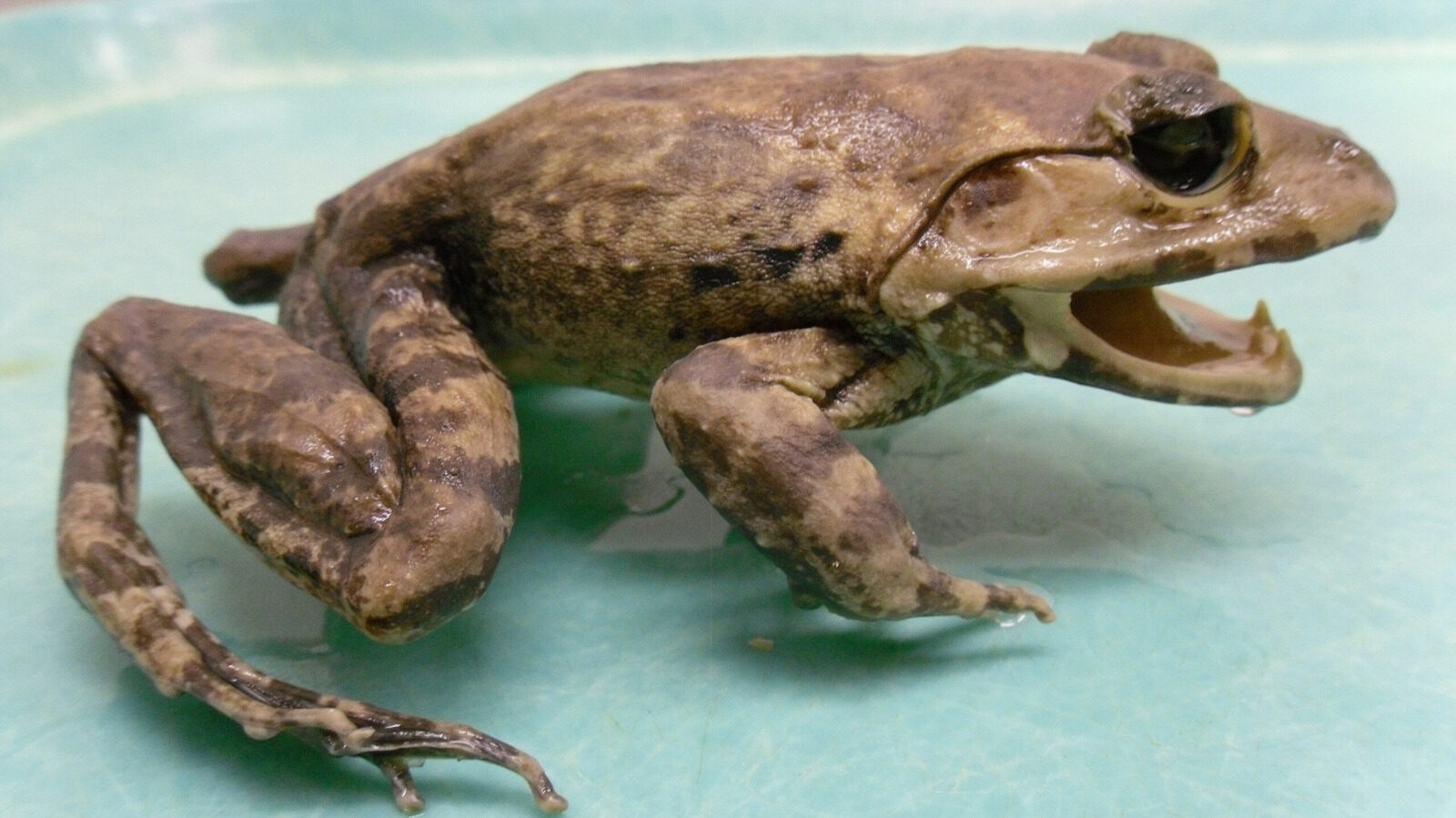
Every year, the natural world surprises us with new discoveries that challenge our understanding of biodiversity. In 2024, one such revelation emerged from the depths of the Philippine island of Luzon: a newly identified species of fanged frog, known scientifically as Limnonectes cassiopeia. This remarkable finding not only adds to the growing catalog of amphibian species but also highlights the intricacies of evolutionary biology.
Published in the journal Ichthyology & Herpetology, the research conducted by a team from the University of Kansas sheds light on the unique traits that distinguish this species from its relatives. The work of these researchers underscores the importance of genetic studies in uncovering hidden diversity among seemingly similar organisms.
New species discovered: Limnonectes cassiopeia
The story of Limnonectes cassiopeia began during a broader genetic survey focused on fanged frog species in Luzon. Led by Mark Herr, a doctoral student at the Biodiversity Institute and Natural History Museum at the University of Kansas, the team was tasked with exploring the genetic relationships within these fascinating amphibians. What they uncovered was a surprising revelation: a previously unrecognized species that had been misidentified for years.
This fanged frog is characterized by two distinct features that set it apart from its close relative, Limnonectes macrocephalus: smaller, white, unpigmented toe pads and a significantly larger head that develops more rapidly than its body. This discrepancy in morphology allows for easy identification in the wild, as one can simply observe the frog’s feet to distinguish it from other species.
Why was Limnonectes cassiopeia overlooked?
Despite its unique traits, Limnonectes cassiopeia went largely unnoticed for many years. This situation is not uncommon in the scientific community, where new species often remain hidden due to their superficial resemblance to known counterparts. The case of L. cassiopeia is particularly interesting because:
- It was initially mistaken for juvenile L. macrocephalus due to physical similarities.
- Genetic analysis was not available during earlier collections, leading to misidentification.
- Researchers had only relied on physical descriptions to categorize these species.
Herr’s investigation utilized modern genetic sequencing techniques to reevaluate the relationships among these fanged frogs. This approach revealed that L. cassiopeia represents a distinct evolutionary branch, highlighting the significant role of genetics in species classification.
Characteristics of Luzon fanged frogs
The fanged frogs of Luzon, named for the prominent bony protrusions in the males’ lower jaws, exhibit fascinating features. Both males and females possess these fangs, although the males’ are more prominent. While their function remains somewhat enigmatic, researchers speculate that these adaptations may serve a role in territorial disputes or mating rituals. Some key characteristics of Luzon fanged frogs include:
- Large, bony protrusions resembling fangs in males.
- Smaller fangs present in females, indicating potential sexual dimorphism.
- Behavioral scars on their heads, suggesting interactions with other frogs.
These traits provide insight into the evolutionary pressures faced by the species and add complexity to our understanding of their behavior and ecology in the wild.
Significance of genetic research in amphibian discovery
The discovery of Limnonectes cassiopeia underscores the crucial role of genetics in modern taxonomy. In the past, many species were classified based solely on morphological characteristics, which could lead to errors in identification. The advent of genetic techniques has revolutionized the field of biology, enabling researchers to:
- Uncover hidden species diversity
- Clarify evolutionary relationships among taxa
- Inform conservation strategies by identifying distinct lineages
This shift in methodology is particularly important in regions like Southeast Asia, which is recognized as a biodiversity hotspot. The ongoing genetic analysis of amphibians has led to the identification of over 20 new species of Limnonectes frogs since 2020 alone.
Broader implications for biodiversity conservation
The identification of new species like Limnonectes cassiopeia has broader implications for conservation efforts. As habitats face increasing threats from human activity, understanding the full extent of biodiversity is critical. This knowledge allows conservationists to:
- Prioritize areas for protection
- Allocate resources effectively to safeguard species
- Develop strategies to mitigate habitat loss
Moreover, acknowledging the existence of species that have gone unnoticed can foster greater public interest in biodiversity and environmental stewardship. Engaging local communities in conservation efforts is essential for the preservation of unique ecosystems like that of Luzon.
Future research directions
The discovery of Limnonectes cassiopeia opens up exciting avenues for future research. Scientists are now more motivated to explore the genetic diversity of amphibians in under-studied regions. Some potential areas of focus include:
- Investigating the ecological roles of newly identified species
- Studying the impact of climate change on amphibian diversity
- Exploring the interactions between different frog species in shared habitats
As techniques in genetic sequencing continue to evolve, we can expect to uncover even more hidden biodiversity, enriching our understanding of the natural world and the intricate web of life it supports.