

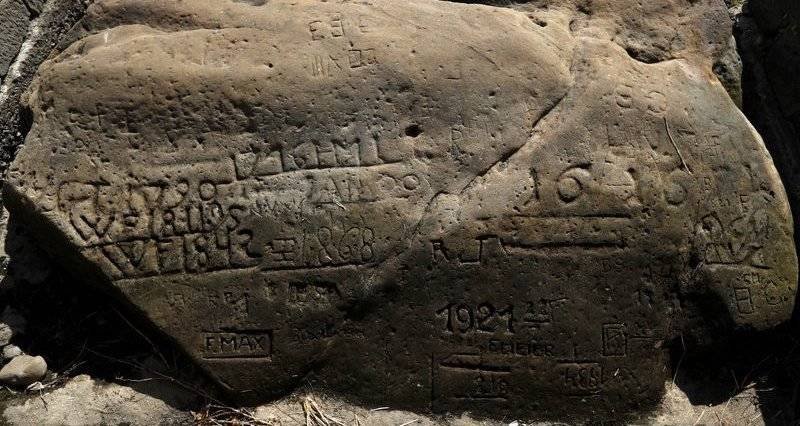
Severe drought conditions in Central Europe have uncovered several historic carvings known as hunger stones in the town of Dçécin, Czech Republic. These boulders, located in the Elbe River, resurface only when water levels drop to critical levels, serving as ancient hydrological landmarks that have warned populations for centuries about impending food shortages and economic hardship.
What were the Hunger Stones?
Hunger stones are large boulders etched with dates and warnings. In the past, when the river’s water levels receded enough to expose these rocks, locals would carve the current date into the stone to mark the event. These markers served as a hydrological record of extreme drought, providing a tangible record of historical climate patterns.
What do the Hunger Stones say?
The carvings are not merely dates; they are expressions of the fear and anxiety surrounding the same environmental crises. A 2013 study on droughts in the Czech Republic indicates that some stones describe how droughts brought bad harvests, lack of food, and high prices, specifically affecting the poor. One particularly grim carving, written in German, explicitly warns: “When you see me, weep.”
Are the Hunger Stones visible today?
Yes, the stones have become visible due to the Elbe River reaching its lowest levels in over half a century. In early August, the river was just centimeters away from its lowest recorded level ever. While the damming of the area in 1926 has increased the frequency of their appearance, the current exposure is driven by prolonged dry spells. This phenomenon has attracted significant tourism to Dçécin, as reported by NPR.
Historical Drought Markers
Before the 20th century, these stones were marked numerous times, reflecting a period of intense climatic instability. The following years are commemorated on the stones as periods of extreme drought:
- 1417, 1616, 1707, 1746, 1790
- 1800, 1811, 1830, 1842, 1868, 1892, 1893
Related Archaeological Discoveries
The receding water levels across Europe have led to other startling discoveries. In the Elbe River, several unexploded World War II bombs were found. Elsewhere, extreme heat and dry temperatures in Ireland revealed a 4,500-year-old Irish Henge and the outline of the house that may have been the childhood home of St. Oliver Plunkett.
These hunger stones remain a stark reminder of the relationship between water levels and human survival, providing a documented history of environmental crises that continue to beveal themselves as the climate changes.