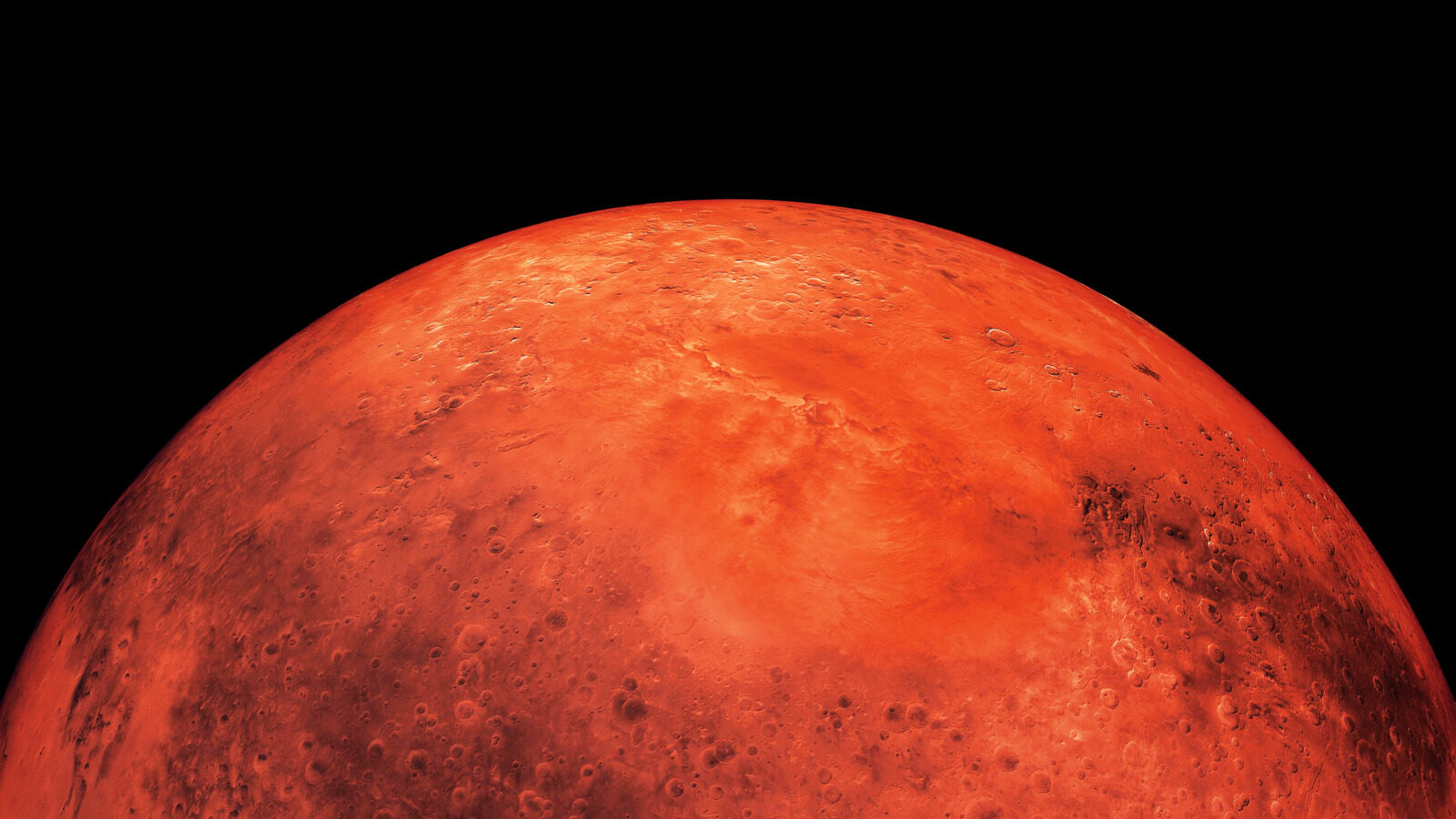

Imagine standing on the surface of Mars, surrounded by a landscape unlike any other. The harsh conditions and thin atmosphere would not only challenge your ability to breathe but also significantly alter how sounds travel in this alien environment. Have you ever wondered what your voice would sound like on the red planet? Let’s explore the fascinating acoustics of Mars and how they compare to our everyday experiences on Earth.
Sound travels differently on Mars
When we think of sound, we often consider it an everyday experience, but sound propagation is heavily influenced by the surrounding environment. On Earth, sound waves travel through the air, reaching us clearly and quickly. However, Mars presents an entirely different scenario.
The Martian atmosphere is approximately 100 times thinner than that of Earth, composed mainly of carbon dioxide, with only traces of other gases like nitrogen and argon. This drastic difference in density plays a crucial role in sound transmission. In essence, the weaker atmosphere on Mars means sound waves have fewer particles to interact with, resulting in diminished volume and clarity.
Additionally, the speed at which sound travels varies according to the medium. On Earth, sound moves at about 760 miles per hour (mph), while on Mars, sound travels at significantly slower speeds depending on the frequency:
- High-pitched sounds: approximately 559 mph
- Low-pitched sounds: around 537 mph
This variation means that even fundamental aspects of how we perceive sound would be altered by the Martian environment.
We would sound a lot quieter on Mars
In 2020, NASA’s Perseverance rover embarked on a mission to Mars, equipped with two microphones to capture sounds on the planet’s surface. These recordings have provided unprecedented insights into the Martian soundscape, allowing scientists to analyze how our voices would resonate in such conditions.
According to NASA’s findings, if you were to speak on Mars, your voice would be significantly quieter and more muffled compared to Earth. The reasons for this are twofold:
- Atmospheric Density: With fewer air particles, sound waves struggle to travel effectively.
- Sound Wave Propagation: The lower density causes sound vibrations to lose energy more rapidly.
As a result, conversations would be much harder to hear, making communication challenging. Imagine trying to talk to a friend just a few feet away, only to have your words barely audible!
High-pitched sounds are mostly inaudible on Mars
The Martian atmosphere’s composition presents unique challenges for sound perception. Specifically, high-frequency sounds—like those produced by whistles, bells, or even some human voices—would be difficult, if not impossible, to hear on the red planet.
This phenomenon occurs because Mars’ atmosphere is predominantly composed of carbon dioxide, which absorbs many high-frequency sounds. In contrast, lower-frequency sounds are less affected and can travel more effectively. Here are some implications of this:
- High-pitched sounds would be rendered nearly inaudible, altering how we communicate.
- Environmental sounds like bird songs would be significantly muted, limiting our auditory experience.
- The duration it takes for sound to reach our ears would be slightly longer due to the atmospheric conditions.
Consequently, the auditory landscape on Mars would be a quieter and more subdued version of what we experience on Earth, challenging our ability to engage in regular conversations.
Effects of temperature on sound
Temperature is another critical factor influencing sound travel. The average surface temperature on Mars hovers around -81 degrees Fahrenheit, a stark contrast to Earth’s more temperate climate. Cold air is denser than warm air, and this density affects the speed at which sound can propagate.
On a colder planet like Mars, sound travels slower than on Earth, as indicated by the following:
- Sound speed on Mars: 537-559 mph
- Sound speed on Earth: 760 mph
This temperature-related delay would be imperceptible over short distances, but it may become noticeable during longer conversations or when trying to communicate across vast landscapes.
Implications for potential human exploration
As space agencies like NASA and private companies plan for future human missions to Mars, understanding the planet’s unique acoustics becomes increasingly important. These insights hold implications for:
- Communication: Astronauts would need to adapt their methods of communication, possibly using technology to amplify their voices.
- Safety Protocols: In environments where sound is muffled, warning signals or alerts could be less effective.
- Social Interaction: The altered sound environment may impact how astronauts interact with one another, affecting morale and teamwork.
Exploring these factors will be essential for ensuring a successful human presence on Mars, paving the way for future research and potential colonization.
Real-world comparisons of Martian sound
To better understand how sound behaves on Mars, scientists have conducted experiments on Earth that simulate Martian conditions. These experiments often involve:
- Creating low-pressure chambers to mimic Mars’ thin atmosphere.
- Using sound equipment to analyze how different frequencies travel in these conditions.
- Studying various materials found on Mars to see how they affect sound propagation.
By conducting these experiments, researchers gain valuable insights into how our voices would be perceived and how sound would travel in Martian conditions.
The future of sound research on Mars
As technology advances, we can expect more sophisticated missions to Mars that will further explore sound and its implications for life on the planet. Future rovers and landers may be equipped with enhanced audio technology that can provide even clearer recordings of the Martian soundscape, allowing scientists to:
- Gain deeper insights into how sound behaves in various Martian environments.
- Explore the possibility of detecting natural sounds from Martian geology or meteorological phenomena.
- Enhance our understanding of how sound could be used for communication in future missions.
These advancements not only contribute to our knowledge of Mars but will also help shape the strategies we employ when establishing human presence on the planet.