
The world of tunneling has seen significant advancements over the years, particularly with the introduction of modern tunnel boring machines (TBMs). Understanding how these intricate machines work can shed light on their importance in construction and urban planning. In this article, we will explore their history, functionality, and the challenges they face, particularly regarding their decommissioning.
The history of tunnel boring machines
The concept of tunneling is not new; it dates back thousands of years. However, the engineered approach to tunnel boring began to take shape in the early 19th century. As cities expanded and the need for efficient transportation increased, traditional methods of excavation proved insufficient.
In 1818, engineer Marc Brunel designed the first tunneling shield, a precursor to modern TBMs. His invention allowed workers to dig beneath the River Thames in London without the dangers posed by flooding. Inspired by the shipworm, which creates tunnels in wood, Brunel’s design aimed to provide structural support as workers excavated the earth.
- Brunel’s tunneling shield consisted of an iron framework.
- Workers excavated small sections of earth and reinforced them with bricks.
- The first major project using his design took 18 years to complete.
Despite its limitations, Brunel’s invention paved the way for future developments in tunneling technology, leading to the creation of modern TBMs that have transformed urban infrastructure.
Understanding modern tunnel boring machines
Modern TBMs are vastly more efficient than their predecessors, capable of excavating up to 50 feet of earth in a single day. They consist of several key components that work in harmony to facilitate safe and effective tunneling:
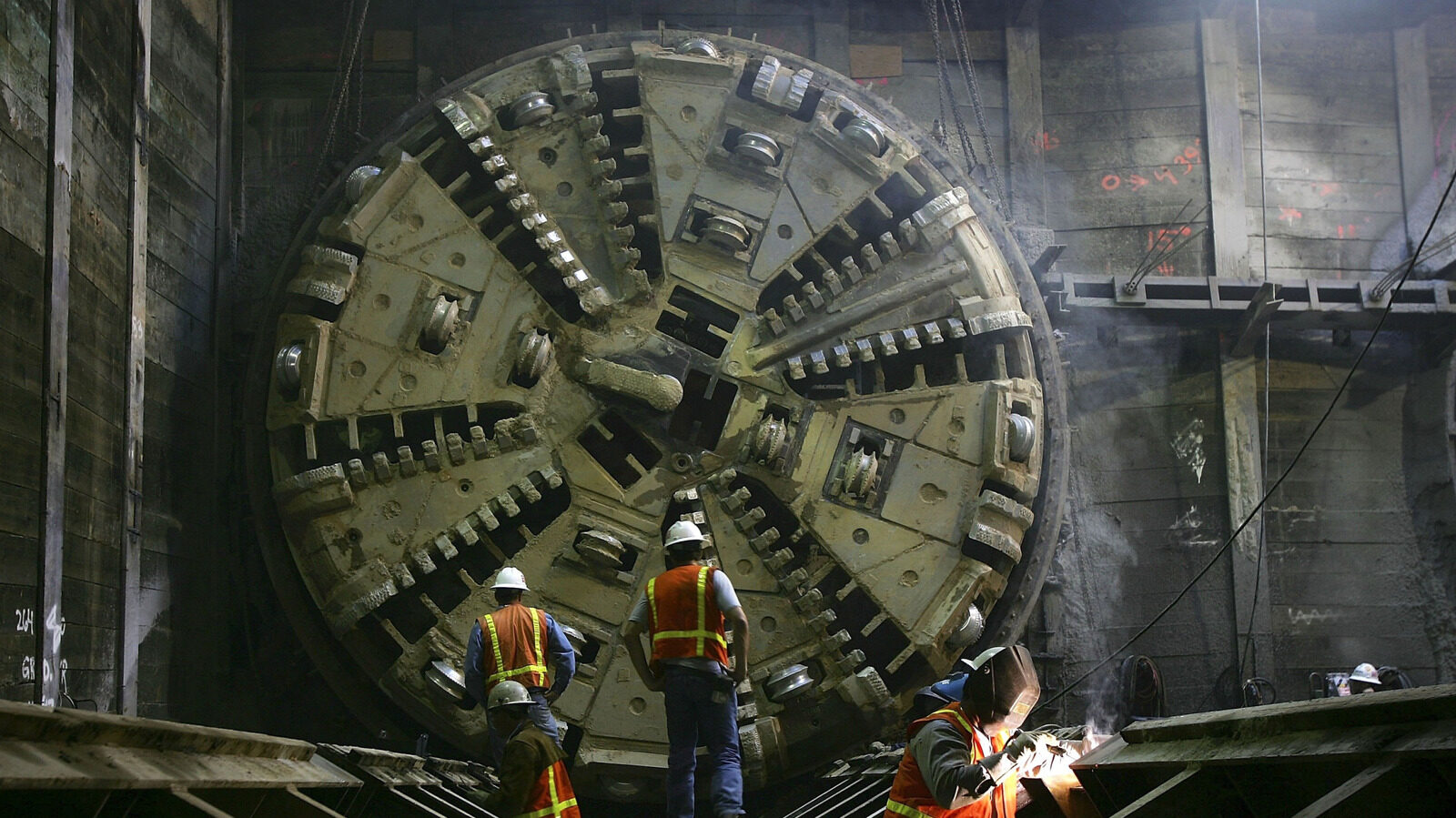
- Cutter head: The rotating front of the TBM, equipped with sharp blades, that breaks through the earth.
- Conveyor system: Transports the excavated material away from the tunnel.
- Segment erector: Lays down prefabricated concrete segments to reinforce the newly created tunnel.
As the TBM advances, it creates a clean tunnel with minimal disruption to the surface above. Workers operate the machine from within, monitoring its progress and making real-time adjustments. For instance, the TBM named Bertha, used in Seattle, weighed 6,700 tons and was 57.5 feet in diameter, showcasing the scale and complexity of these machines.
The challenges of decommissioning TBMs
Once a TBM has completed its project, it faces significant challenges during decommissioning. Retrieving these large machines is not as straightforward as simply reversing their operation. Instead, they must be disassembled and removed in segments, particularly the cutter head, which is often too large to extract intact.
- The cutter head is usually cut into smaller pieces for removal.
- The machine’s outer casing, or skin, becomes part of the tunnel wall and cannot be taken out.
- Some companies opt to leave the TBM underground due to the high costs of removal.
For example, in 2011, a TBM used for train tunnels beneath New York’s Grand Central Terminal was left buried underground due to the prohibitive cost of extraction, which was estimated to exceed $9 million. This illustrates the economic factors that can influence the decision to abandon these machines.
Environmental impact and sustainability considerations
As cities continue to grow, the demand for efficient tunneling solutions raises important questions about the environmental impact of TBM operations. While they minimize surface disruption, the energy consumption and resource use associated with these machines are significant.
- TBMs require substantial amounts of electricity and fuel to operate.
- Materials used in construction, such as steel for the cutter head and concrete for lining, have their own carbon footprints.
- Recycling parts of decommissioned TBMs can reduce waste and promote sustainability.
Efforts are being made to develop more energy-efficient TBMs and methods for reusing or recycling parts. These advancements not only address environmental concerns but also help to reduce costs associated with decommissioning.
The future of tunneling technology
With ongoing innovations in engineering and technology, the future of tunnel boring machines looks promising. Researchers are exploring various enhancements that could further streamline operations, increase efficiency, and reduce environmental impact:
- Integration of automation and artificial intelligence for improved control and monitoring.
- Development of TBMs that can operate in a wider variety of geological conditions.
- Research into alternative materials that could reduce the carbon footprint of production and operation.
As urban centers continue to evolve, the role of TBMs in shaping underground infrastructure will undoubtedly remain crucial, paving the way for smarter, more sustainable cities.