
During the late 19th century, a group of powerful industrialists known as robber barons accumulated unprecedented wealth and exerted significant control over the American economy. Figures such as John D. Rockefeller, Andrew Carnegie, J.P. Morgan, Cornelius Vanderbilt, and Henry Clay Frick utilized aggressive business strategies to dominate key sectors, transforming the United States into a global industrial leader while simultaneously creating deep societal divisions.
Industrial Monopolies and Business Tactics
The growth of these magnates was characterized by the formation of monopolies and trusts, which allowed them to eliminate competition and dictate market prices. By controlling the means of production and distribution, they established an environment where smaller competitors were systematically absorbed or forced out of business.
- Market Domination: Use of trusts to consolidate power across entire industries.
- Labor Exploitation: Suppression of unions and low wages for workers to maximize profit margins.
- Economic Inequality: A stark contrast between the lavish lifestyles of the industrial elite and the poverty of the working class living in tenements.
The Standard Oil Empire of John D. Rockefeller
John D. Rockefeller, born in 1839, exemplifies the trajectory of the Gilded Age industrialist. After starting in a commission firm in Cleveland, Ohio, he invested in his first oil refinery in 1863. By 1870, he established the Standard Oil Company of Ohio, which rapidly expanded its reach.
According to the Rockefeller Archive Center reports, the company acquired nearly all refining firms in Cleveland by 1872. This dominance enabled Rockefeller to negotiate preferential shipping rates with railroads and acquire critical pipelines, effectively creating an oil monopoly.
Legal Challenges and Antitrust Legislation
By 1882, the Standard Oil Trust controlled 90 percent of the nation’s oil refineries and pipelines. This level of concentration sparked public outrage and legislative action, leading to the Sherman Antitrust Act of 1890. Despite initial attempts to bypass the law by reforming as Standard Oil of New Jersey, the company faced further scrutiny through investigative journalism by Ida Tarbell between 1902 and 1904.
The legal battle culminated in 1911 when the U.S. Supreme Court ruled that Standard Oil violated antitrust laws, resulting in the company being split into more than 30 separate entities.
Philanthropy and Social Contribution
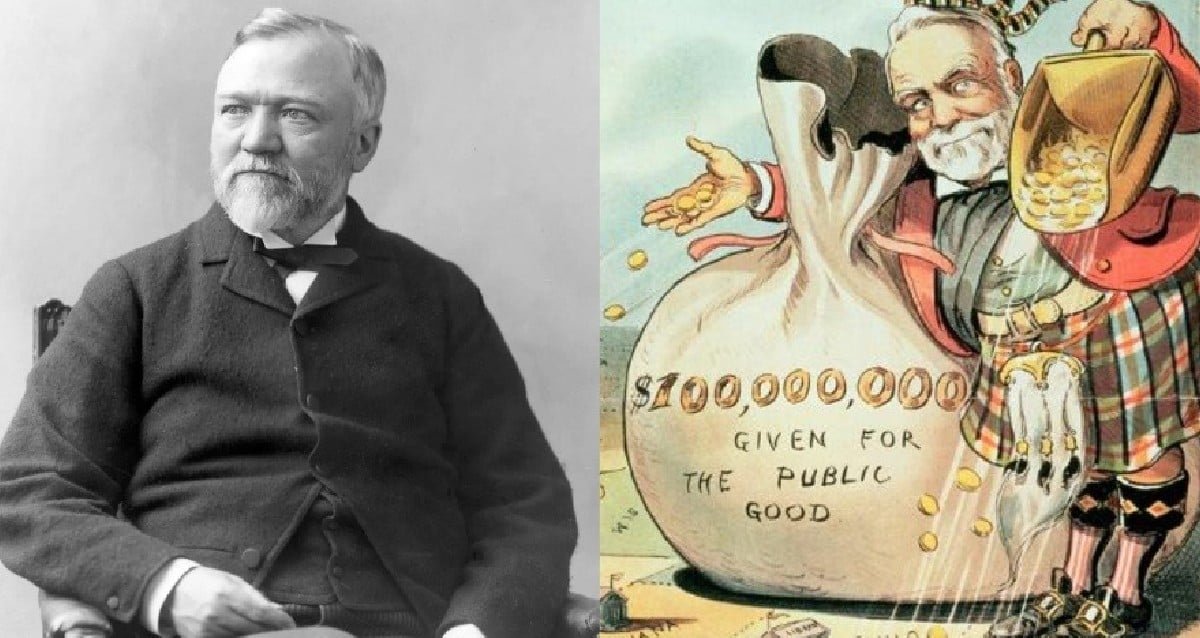
Despite the controversial methods used to amass their fortunes, many robber barons transitioned into large-scale philanthropy. Rockefeller dedicated a significant portion of his wealth to education and health before his death in 1937 at age 97.
His contributions included:
- A donation of nearly $35 million to help establish the University of Chicago.
- The co-founding of Rockefeller University in New York City.
- The creation of the Rockefeller Foundation alongside his son, John D. Rockefeller Jr.
This shift toward organized giving established a model for modern philanthropic foundations, aiming to address systemic social issues through strategic financial investment.