
Russian mathematician Anatoly Fomenko proposes a theory known as New Chronology, which asserts that a significant portion of recorded human history prior to the 17th century was fabricated. Fomenko argues that ancient events were not real occurrences but were instead invented by later historians who mirrored more recent events to create a false historical timeline.
The Foundations of New Chronology
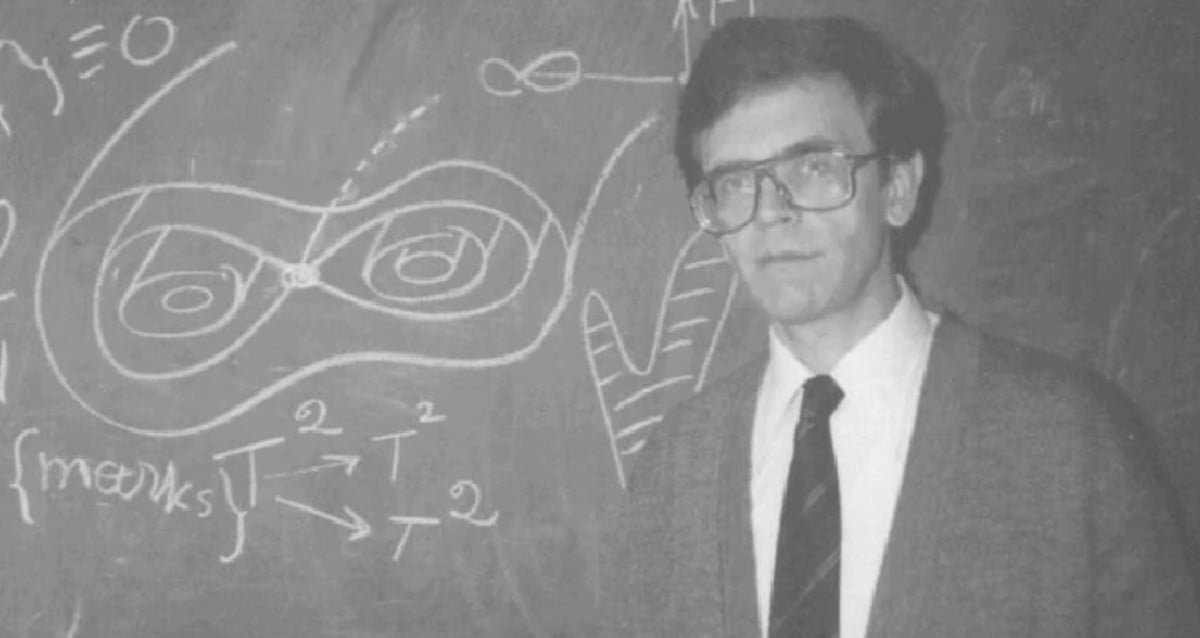
Born on March 13, 1945, in the Soviet Union, Anatoly Fomenko graduated from the Mechanics and Mathematics Faculty of Moscow State University in 1967. His transition from pure mathematics to historical revisionism began in the 1970s after he analyzed celestial events. Fomenko concluded that astronomical data, specifically eclipses, did not align with traditional historical records, leading him to believe there was a 1,000-year discrepancy in the established timeline.
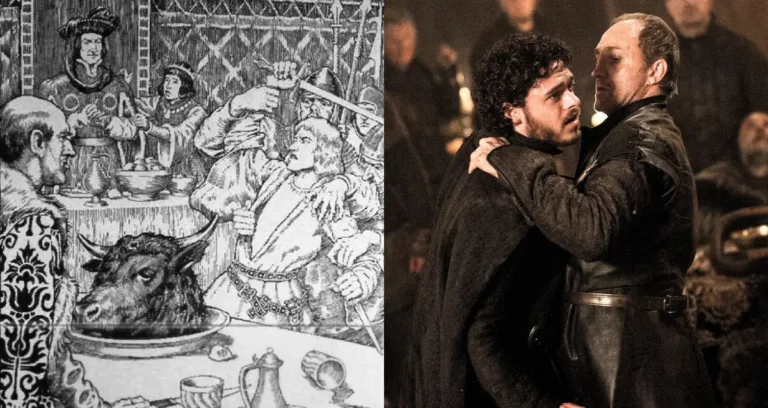
Fomenko utilizes statistical analysis to identify parallels between different eras. He claims that the lengths of reigns for kings of Judah (1st to 5th century C.E.) and German kings (10th to 14th century C.E.) follow nearly identical patterns. To Fomenko, these are not coincidences but evidence that one era was used as a template to manufacture the other.
The Russia-Horde Global Empire
Central to this theory is the existence of a lost civilization called the Russia-Horde. According to Fomenko, this empire was a dominant global power responsible for several major historical milestones, including:
- The construction of the pyramids.
- The founding of Rome.
- The colonization of North America.
He identifies figures such as Genghis Khan (whom he refers to as Danilovichi) and the 14th-century leader Dmitry Donskoy as key figures of this empire. The theory posits that the Russia-Horde conquered most of the known world, yet its existence was systematically erased from the records.
The Alleged Fabrication of History
Fomenko claims that the history of the Russia-Horde was hidden through a massive conspiracy involving the Vatican, the Holy Roman Empire, and the Romanov Dynasty. He suggests that these entities employed scholars, such as the 16th-century French Christian scholar Joseph Scaliger, to rewrite history to align with biblical narratives.
Under this framework, Fomenko reinterprets several prominent historical and religious figures:
- Jesus Christ: Fomenko suggests he was born in Crimea around 1152 C.E. and may have been based on the Byzantine Emperor Andronikos I Komnenos.
- King Solomon: He argues that the biblical king is actually a facsimile of Suleiman the Magnificent, the 16th-century Sultan of the Ottoman Empire.
- Troy and Jerusalem: He posits that these two distinct cities are actually the same location, identified as Constantinople.
- Babylonian Captivity: He claims this biblical event was inspired by the Avignon Papacy, where seven popes resided in France for nearly 70 years.
Fomenko maintains that written records are not definitive proof of reality. He argued that historical accounts are often just repetitions of written sources rather than reflections of actual events, necessitating a rigorous scientific study of how documented history is constructed.
Academic Reception and Counterarguments
While New Chronology has found a following, particularly within Russia, it is largely dismissed by the global academic community. Most historians and scientists consider the theory too fringe for formal rebuttal, citing established scientific methodologies as primary evidence against it.
The most significant challenge to Fomenko’s claims is carbon dating. This scientific process allows researchers to determine the age of artifacts and organic materials with high precision, providing physical evidence that contradicts the shifted timelines proposed by New Chronology. Despite this, proponents of the theory continue to believe that powerful organizations have manipulated the historical record to serve specific political or religious agendas.