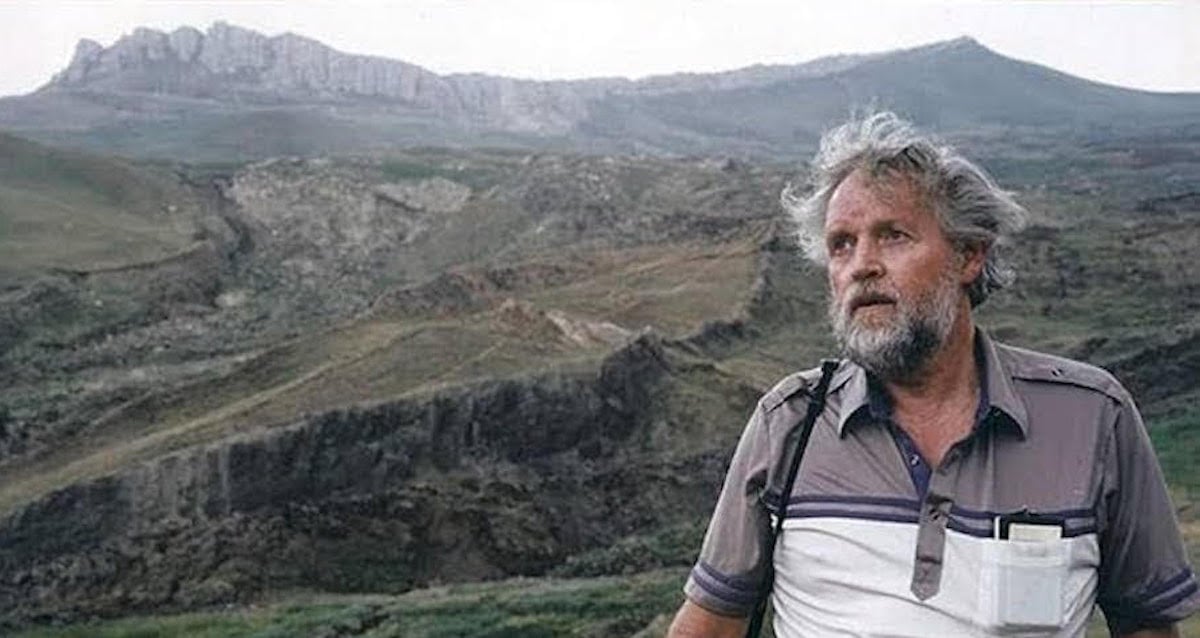
Ron Wyatt was a man driven by an unwavering faith and an insatiable curiosity about the past. A skilled nurse anesthetist by profession, he found himself drawn to the world of archaeology during his free time. Over two decades, this amateur explorer embarked on numerous expeditions across the Middle East, determined to uncover tangible evidence of biblical events and figures.
His quest took him to some of the most sacred sites in history, from the desolate plains where Sodom and Gomorrah are said to have stood to the valleys where Moses may have led the Israelites through the parted Red Sea. Wyatt meticulously documented his findings, presenting photographs and sketches that captured potential remnants of biblical stories. His claims gained widespread attention, catapulting him into the limelight as a controversial figure in both secular and religious circles.
However, Wyatt’s work was met with skepticism from mainstream archaeologists who questioned his methodologies and the authenticity of his ron wyatt discoveries. His findings often lacked the rigorous scientific analysis and independent verification that are standard practice in the field. Nevertheless, Wyatt remained steadfast in his convictions, believing wholeheartedly that he had unearthed irrefutable proof of biblical history.
Ron Wyatt: The Amateur Archaeologist
Despite lacking formal training in archaeology, Ron Wyatt possessed a deep passion for uncovering the past and a remarkable ability to connect with people from diverse backgrounds. He believed that anyone with a genuine curiosity and a willingness to explore could contribute to our understanding of history. Wyatt’s expeditions were often self-funded and conducted with a small team of dedicated volunteers who shared his enthusiasm.
While critics pointed out the lack of academic rigor in Wyatt’s methods, his supporters admired his dedication and perseverance. He meticulously documented his findings through photographs, sketches, and detailed notes, always eager to share his discoveries with anyone willing to listen. Wyatt often presented his work at churches and community centers, captivating audiences with his stories and unwavering belief that he was bringing biblical history to life.
His unconventional approach, fueled by a fervent faith and an unyielding pursuit of truth, ultimately set him apart from the established archaeological community. Wyatt’s legacy continues to be debated, but there’s no denying the impact he had on those who believed in his ron wyatt discoveries.
Biblical Artifacts or Hoax?
Wyatt’s claims ranged from the seemingly plausible to the downright astonishing. He asserted to have found remnants of Noah’s Ark in Turkey, identified what he believed to be Goliath’s sword on a site near Jerusalem, and even presented a sample purportedly containing Christ’s dried blood. These sensational discoveries quickly captured public attention, generating both excitement and skepticism within equal measure.
While some individuals embraced Wyatt’s findings as undeniable proof of biblical events, the scientific community largely dismissed them. Established archaeologists pointed to a lack of credible evidence, rigorous dating methods, and independent verification that would lend weight to his claims. Many criticized Wyatt’s unconventional excavation techniques and his reluctance to share samples with reputable scientific institutions for analysis.
The controversy surrounding ron wyatt discoveries continues to this day. While mainstream archaeology remains unconvinced, a dedicated following of believers persists, drawn to Wyatt’s unwavering faith and the allure of tangible connections to biblical history. The debate ultimately boils down to a question of interpretation: do we view his findings as irrefutable proof or elaborate hoaxes?
Exploring the Claims: Noah’s Ark, the Ark of the Covenant, and More
Among Wyatt’s most sensational claims were the discoveries of Noah’s Ark and the Ark of the Covenant. He asserted to have located remnants of the biblical ark high in the mountains of Turkey, presenting photographic evidence of wooden structures he believed to be part of the legendary vessel. His supporters hailed this as a monumental discovery, offering tangible proof of Noah’s great flood.
Similarly, Wyatt claimed to have unearthed the Ark of the Covenant in a hidden chamber beneath Jerusalem’s Temple Mount. He described the artifact as a gilded chest containing the Ten Commandments, encased within intricately carved walls. This supposed discovery ignited religious fervor among some believers who viewed it as a powerful symbol of God’s presence and covenant with his chosen people.
Other ron wyatt discoveries included what he claimed to be Goliath’s sword found near Jerusalem, a pool believed to be the site of the Red Sea parting in Egypt, and even the tomb of Jesus Christ. Wyatt meticulously documented each find, presenting sketches, photographs, and detailed accounts to support his claims. While these pronouncements captivated public imagination, the scientific community largely dismissed them as lacking verifiable evidence and rigorous scientific analysis.
Criticism from Scholars and Scientists
Wyatt’s unconventional methods and extraordinary claims naturally drew criticism from established archaeologists and scientists. They questioned his lack of formal training, the absence of independent verification for his findings, and his tendency to present subjective interpretations as objective truths. Many experts pointed out inconsistencies in Wyatt’s accounts, gaps in his research methodologies, and a reluctance to share samples for rigorous scientific analysis.
A common criticism was that Wyatt often relied on visual evidence like seemingly ancient structures or objects without conducting thorough geological surveys or carbon dating to establish their age. His interpretations of biblical texts sometimes stretched accepted historical narratives, leading some scholars to accuse him of cherry-picking evidence to support pre-conceived notions rather than pursuing objective research.
Despite the widespread skepticism, Wyatt remained steadfast in his convictions, maintaining that he was uncovering undeniable truths hidden beneath layers of time and misinterpretation. This impasse between Wyatt’s passionate belief and the scientific community’s demand for empirical evidence solidified his controversial position within the realm of archaeology and history.
The Legacy of Unverified Discoveries
Ron Wyatt’s legacy remains a complex and contested one. While mainstream archaeology largely dismisses his claims as lacking credible evidence, he continues to be revered by a dedicated following who believe in the authenticity of his ron wyatt discoveries. His work sparked public fascination with the possibility of tangible connections to biblical history, fueling debates about faith, science, and the limits of human knowledge.
Wyatt’s impact extends beyond academic circles. His museum in Tennessee houses artifacts he claimed to have discovered, attracting visitors eager to experience the narratives he wove around these objects. His story serves as a reminder that sometimes even the most extraordinary claims can capture the imagination and ignite passionate belief, regardless of scientific validation.
Despite the lack of mainstream acceptance, Wyatt’s legacy endures as a testament to the enduring human fascination with uncovering the past, bridging the gap between faith and history, and seeking tangible evidence to support our deepest beliefs.