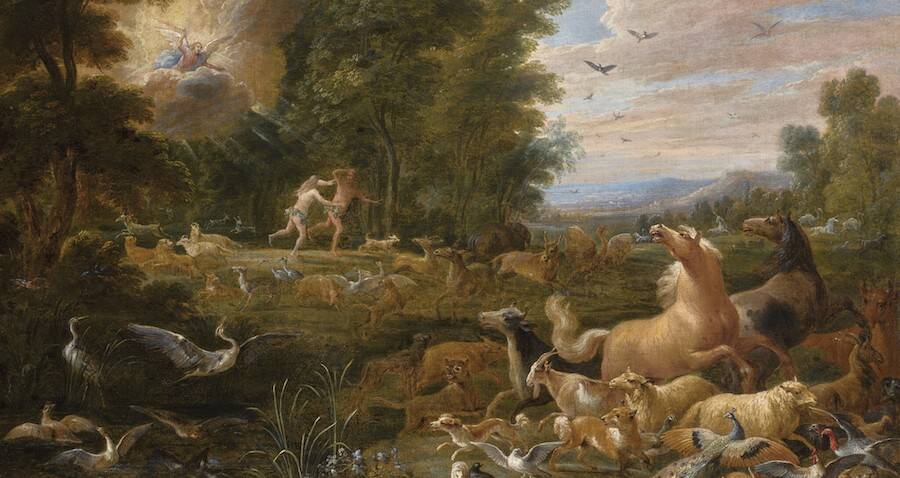

The Garden of Eden, that mythical paradise described in the Book of Genesis, has captivated imaginations for millennia. It’s a place of wonder and beauty, where humanity first walked hand-in-hand with God, living in perfect harmony amidst lush flora and fauna. But beyond its spiritual significance, the Garden of Eden also beckons us with a tantalizing mystery: Where exactly was it located?
This question has spurred countless garden of eden location theories, each attempting to decipher biblical clues and trace back the steps of our earliest ancestors. From the ancient rivers mentioned in Genesis, like Pishon, Gihon, Tigris, and Euphrates, to the potential role of certain geographical features, armchair explorers and scholars alike have pieced together fascinating hypotheses.
Some propose a location in Mesopotamia, pointing to its historical significance and the presence of those biblical rivers, while others suggest Africa, with Ethiopia often cited as a possible haven for humankind’s first home. Even scientific studies have entered the fray, with some suggesting Botswana as a potential origin point based on modern anthropological evidence. The quest to uncover the Garden of Eden’s true location continues to this day, fueled by our enduring fascination with the Bible’s most iconic setting.
Biblical Clues and River References
The Book of Genesis offers tantalizing clues about the Garden of Eden’s location, but they remain shrouded in a veil of mystery. The most prominent hints lie within its descriptions of four rivers: Pishon, Gihon, Tigris, and Euphrates. These names have sparked centuries of debate among scholars and armchair detectives alike, each vying to decipher their significance and geographical connections.
The identification of the Tigris and Euphrates as flowing through Mesopotamia has led many to believe that the Garden of Eden might have resided in this ancient region. However, pinning down the Pishon and Gihon remains a challenge. Some theories suggest they flowed into the Persian Gulf or Red Sea, while others propose more obscure connections to regions beyond Mesopotamia. These uncertainties fuel the ongoing quest to unravel the biblical puzzle.
Despite the challenges of interpreting these ancient texts, researchers continue to analyze the verses meticulously, searching for subtle hints and linguistic clues that might shed light on the Garden of Eden’s true location. Perhaps a deeper understanding of ancient cultures, trade routes, and geographical features could one day unlock the secrets hidden within these biblical verses.
Mesopotamia: A Leading Contender
Mesopotamia, the cradle of civilization nestled between the Tigris and Euphrates rivers, has long been considered a prime candidate for the location of the Garden of Eden. The biblical references to these very rivers flowing through the garden, coupled with Mesopotamia’s rich history and abundant natural resources, have made it a popular choice among scholars and enthusiasts alike.
Imagine vast plains teeming with life, lush gardens bursting with exotic fruits, and towering date palms swaying in the gentle breeze. This idyllic picture aligns beautifully with the descriptions of paradise found in Genesis. Furthermore, archaeological discoveries within Mesopotamia have unearthed ancient cities, temples, and irrigation systems that point to a sophisticated civilization thriving in this region thousands of years ago. Could these remnants be evidence of the Garden of Eden’s existence?
Of course, while Mesopotamia offers compelling evidence, it’s important to remember that the Bible doesn’t explicitly pinpoint a location for the Garden of Eden. The search continues, with alternative theories proposing locations ranging from Africa to even parts of North America. Nonetheless, Mesopotamia remains a strong contender, holding onto its allure as a potential site for humanity’s mythical beginnings.
Alternative Theories: Africa and Beyond
While Mesopotamia often takes center stage in the quest for the Garden of Eden’s location, other compelling theories propose alternative sites across the globe. Africa, with its rich history and diverse landscapes, has emerged as a strong contender. The book of Genesis mentions Cush, often interpreted as Ethiopia, as the homeland of certain biblical figures. This connection has led many to believe that the Garden of Eden might have been nestled within Africa’s fertile plains or along its majestic rivers.
Some theories even suggest the garden could be located in Botswana, a region believed to be home to ancient human settlements and linked to biblical narratives about humanity’s origins. This theory draws on both archaeological findings and linguistic analyses of Genesis, proposing a connection between Africa’s diverse ecosystems and the Garden of Eden’s abundance.
These alternative garden of eden theories demonstrate the enduring fascination with uncovering the true location of this mythical paradise. Each theory offers its own unique perspective, enriching our understanding of ancient cultures, biblical interpretations, and the very origins of humanity.
Scientific Perspectives and Human Origins
The quest to locate the Garden of Eden extends beyond biblical interpretations and delves into the realm of scientific inquiry as well. Researchers studying human origins have proposed fascinating connections between archaeological evidence and biblical narratives, adding another layer to this enduring mystery.
Some scientists point to Botswana as a potential cradle for humanity, aligning with biblical accounts of migration from a central location. Genetic studies and fossil discoveries in this region suggest that early hominids thrived in the area thousands of years ago, supporting the possibility that it could have been a starting point for human expansion across the globe.
While scientific perspectives offer compelling insights into human evolution, they often raise more questions than answers. The exact nature of the Garden of Eden, whether a literal place or a symbolic representation, remains open to interpretation. Regardless of its true form, the search for its location continues to captivate our imaginations and shed light on both our religious beliefs and our scientific understanding of the past.
The Enduring Mystery of Eden’s Location
Despite centuries of speculation and research, the exact location of the Garden of Eden continues to elude definitive answers. The Bible offers tantalizing clues, but their interpretation remains a matter of ongoing debate. Theories range from the fertile plains of Mesopotamia to the lush landscapes of Africa, each with its own supporting evidence and intriguing possibilities.
Perhaps the true location of the Garden of Eden is lost to time, swallowed by cataclysmic events or buried beneath layers of history. Or maybe it was never a physical place at all but rather a symbolic representation of paradise, a concept that transcends geographical boundaries and speaks to our deepest human yearnings for beauty, peace, and connection with the divine.
Whatever the truth may be, the enduring mystery surrounding garden of eden theories continues to spark curiosity and inspire exploration. It reminds us that some questions, even those rooted in ancient texts, may never have simple answers. The search itself becomes a journey of discovery, enriching our understanding of history, geography, and the human quest for meaning.