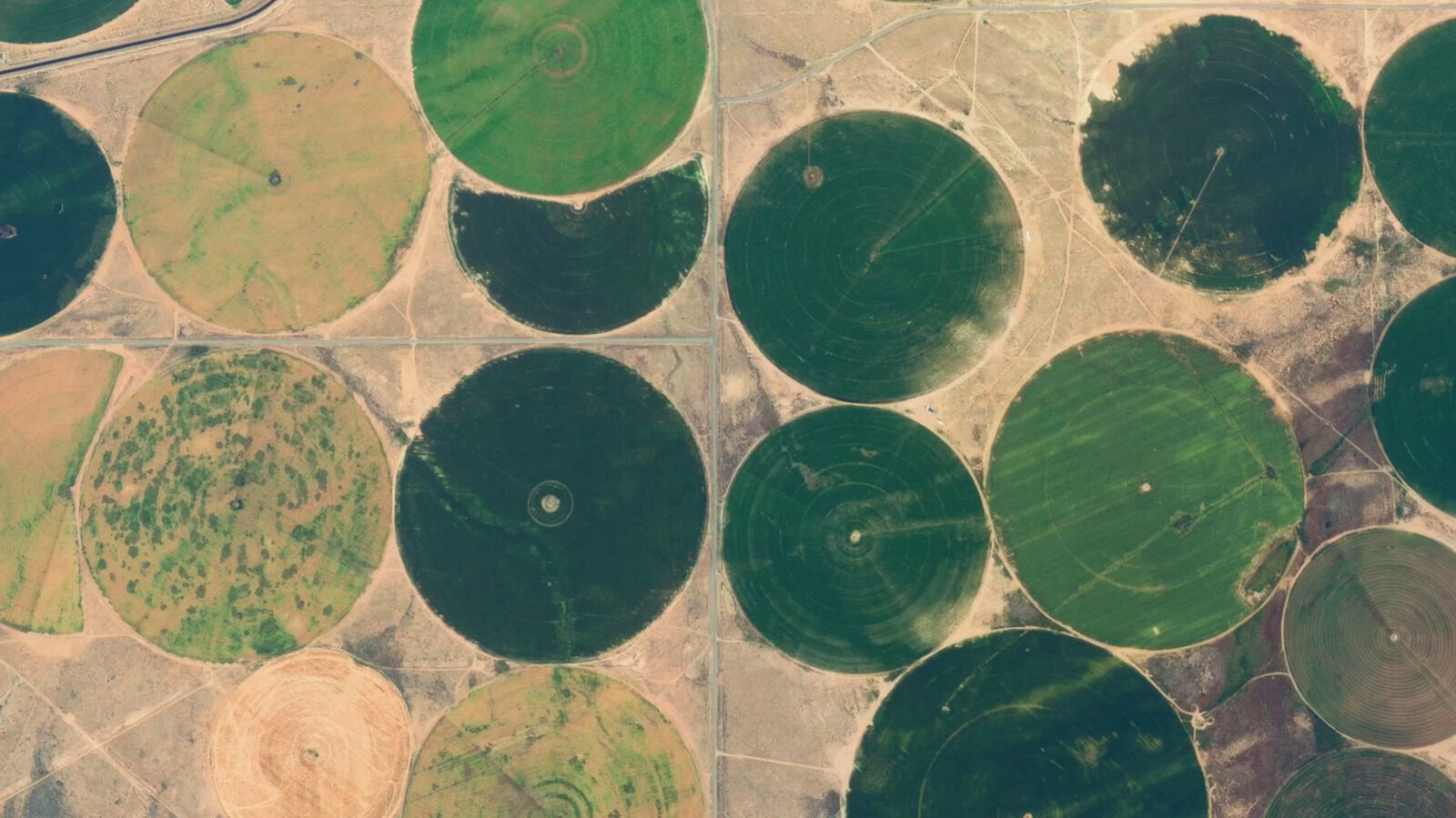

If you have ever gazed out of an airplane window while flying over the vast expanses of the American Midwest, you may have noticed the striking green circles dotting the landscape. These vibrant patches, resembling a whimsical polka dot pattern, are not merely artistic creations or the result of extraterrestrial activity. Instead, they are a testament to an innovative agricultural technique known as central pivot irrigation. In this article, we will explore the origins, mechanisms, and impacts of this technology on modern farming.
Understanding the green circles from above
The green circles visible from an airplane are primarily circular fields dedicated to crop cultivation. They are a product of a sophisticated irrigation method that allows farmers to efficiently water their crops. Each circle is centered around a pivot point, which serves as the heart of the irrigation system.
The structure consists of a long arm, usually constructed of steel, that extends outward from this pivot. Along the length of the arm, there are strategically placed sprinklers that rotate around the pivot point, ensuring that water is evenly distributed across the entire crop circle. This design allows for a uniform watering process, which is crucial for maximizing crop yields.
- Efficient Water Usage: Central pivot irrigation systems significantly reduce water wastage compared to traditional irrigation methods.
- Labor Reduction: The automation of watering reduces the need for manual labor, streamlining the farming process.
- Crop Health: By providing a consistent water supply, these systems help prevent overwatering and promote healthier plants.
- Increased Yields: The efficiency of these systems often leads to better crop yields, ultimately benefiting farmers economically.
The evolution of irrigation technology
To fully grasp the significance of central pivot irrigation, it is essential to consider the historical context of its invention. The United States experienced a catastrophic agricultural crisis during the 1930s known as the Dust Bowl. This environmental disaster, characterized by severe droughts and soil depletion, forced millions of farmers to abandon their land in search of better opportunities.
In this challenging environment, traditional farming methods became untenable, and the need for a revolutionary irrigation solution became urgent. In 1948, Frank Zybach, a Nebraska farmer, introduced the central pivot irrigation system. This invention not only transformed American agriculture but also played a pivotal role in revitalizing the Great Plains region.
Impact on American agriculture
The introduction of central pivot irrigation has had profound implications for farming in the United States. The efficiency of this system has allowed farmers to cultivate crops in areas that were previously deemed unsuitable for agriculture due to water scarcity.
As a result, the agricultural landscape has undergone a dramatic transformation. The circular fields that characterize the modern American countryside are now synonymous with agricultural productivity. The versatility of central pivot systems extends beyond just growing vegetables; they have also facilitated the expansion of livestock farming by enabling the cultivation of ample animal feed.
Benefits of central pivot irrigation
The advantages of central pivot irrigation systems are numerous, contributing to sustainability and productivity in agriculture:
- Water Conservation: By delivering water directly to the plants, these systems minimize evaporation losses, making them a more sustainable choice in water-scarce regions.
- Soil Health Improvement: Controlled irrigation prevents soil erosion and degradation, preserving the land for future generations.
- Crop Diversity: Farmers can grow a wider variety of crops, enhancing food security and market options.
- Economic Efficiency: Reduced labor costs and higher yields translate to increased profits for farmers.
Challenges and considerations
Despite the many benefits, central pivot irrigation systems are not without challenges. Farmers must consider several factors when implementing this technology:
- Initial Cost: The investment required for purchasing and installing a central pivot system can be significant, posing a barrier for small farmers.
- Maintenance Needs: Regular upkeep is necessary to ensure that the system operates efficiently, which can incur additional costs.
- Water Availability: Farmers must have access to sufficient water resources to make the system effective, which can be a concern in drought-prone areas.
The future of irrigation technology
As agriculture continues to face challenges brought on by climate change, population growth, and resource scarcity, the role of technologies like central pivot irrigation will likely become even more critical. Innovations in irrigation systems are emerging, focusing on enhancing efficiency and sustainability.
For example, the integration of sensor technology and data analytics can optimize water usage further by providing real-time information about soil moisture levels and crop needs. These advancements represent the next step in the evolution of agricultural practices, ensuring that farmers can continue to produce food sustainably while minimizing environmental impact.
In summary, the green circles observed from the air are more than just a visual delight; they signify a landmark advancement in agricultural technology that has reshaped the farming landscape of America. As we move forward, the need for continued innovation and adaptation in agricultural practices will be paramount in meeting the demands of a growing population while preserving our natural resources.