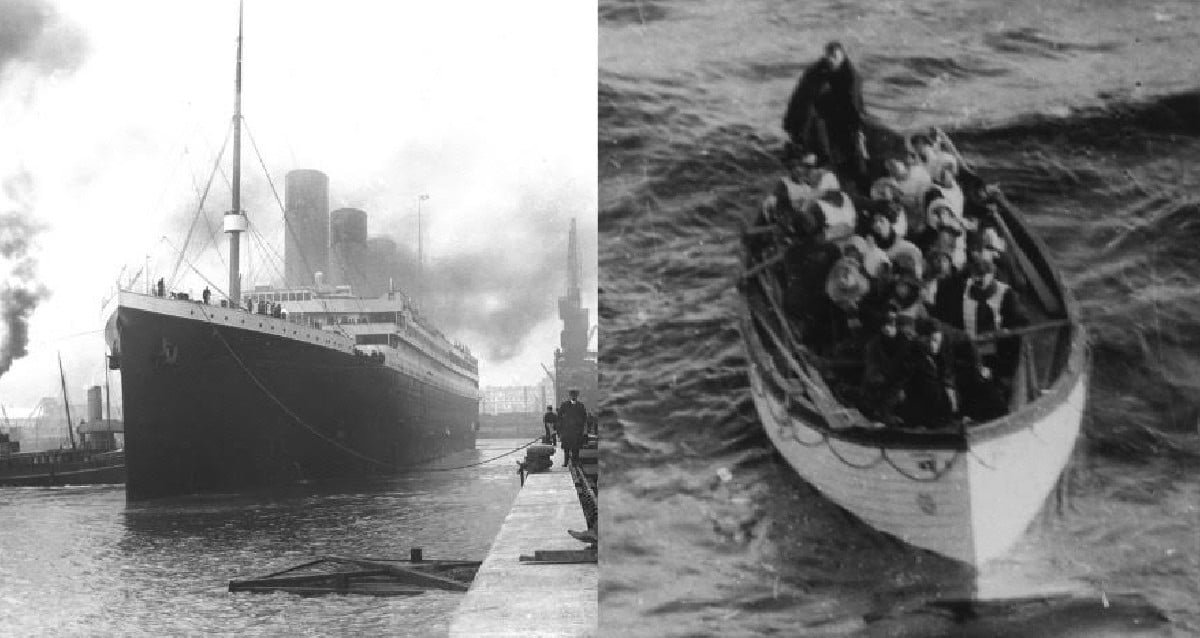
The sinking of the RMS Titanic in April 1912 resulted in the deaths of approximately 1,500 people, while only 700 survived. A critical factor in this high mortality rate was the inadequacy of the ship’s lifeboat system, characterized by an insufficient number of boats and a failure to utilize those available to their full capacity.
Lifeboat Capacity and Legal Requirements
At the time of its construction, the Titanic was designed with ample space for safety equipment. While original plans suggested 48 lifeboats, the final number was reduced to 32, and eventually to 20 to avoid cluttering the deck. The final configuration consisted of:
- 14 full-sized boats capable of carrying 65 passengers each.
- 2 emergency boats with a capacity of 40 people each.
- 4 collapsible boats that could hold 47 people each.
This total capacity of 1,178 people was far below the 2,200 individuals on board during the maiden voyage from Southampton to New York. Despite this shortfall, the ship met the legal standards of 1912. As History Net notes, maritime law only required ships of that size to carry 16 lifeboats, as wireless communication and shipbuilding advances were believed to make full evacuations unnecessary.
Operational Failures and Lack of Training
The evacuation process was hampered by a lack of preparation and inconsistent execution. Survivors later reported that the crew never conducted a lifeboat drill during the voyage. According to Encyclopedia Titanica, such drills were typically scheduled for Sundays, but for reasons possibly including strong winds or the desire not to interrupt meal service, the drill never took place.
When the ship struck an iceberg at 11:40 p.m. on April 14, the response was delayed. Although Captain Edward Smith ordered the lifeboats to be readied at 12:05 a.m., the first boat did not launch for approximately 40 minutes. This delay was caused by several factors:
- The time required to uncover the boats and assemble the crew.
- Passenger denial and hesitation to leave the perceived safety of the luxury vessel for small boats in the open ocean.
- Confusion regarding evacuation protocols.
Conflicting Orders and Underfilled Boats
The command to prioritize “women and children” was interpreted differently by the officers in charge. On the starboard side, First Officer William Murdoch interpreted this as “women and children first,” allowing men to board if space remained. Conversely, on the port side, Second Officer Charles Lightoller interpreted the order as “women and children only.”
These conflicting interpretations, combined with the refusal of some women to leave their husbands and the fear among crew members that fully loaded boats might break the lowering gear, led to many boats launching far below capacity. For example, Lifeboat 7 launched with only 28 people, and Emergency Lifeboat 1 carried just 12 passengers.
The Final Moments and Rescue
The sinking occurred so rapidly that not all equipment could be deployed. Collapsible boats A and B were washed off the deck before the crew could prepare them. As the ship disappeared beneath the waves, survivors in the water faced extreme hypothermia in the frigid North Atlantic waters.
Many lifeboats rowed away from the sinking vessel to avoid being pulled down by the ship’s suction or being swamped by desperate survivors. A crewman, Joseph Scarrott, recalled the harrowing sounds of those struggling in the water during the silence of the night.
The survivors remained adrift until the RMS Carpathia arrived around 4 a.m. to rescue them and transport them to New York.
Aftermath and Maritime Law Reform
The disaster exposed the fatal flaws in existing maritime safety laws. Following the tragedy, the nameplates were removed from the rescued lifeboats and they were sold. However, the event sparked a global campaign for “lifeboats for all.” According to Encyclopedia Titanica, this led to a rapid increase in the number of lifeboats carried by shipping companies worldwide.
Bruce Ismay, director of the White Star Line and a survivor, acknowledged that the laws regarding the preservation of life were inadequate because they were based on the assumption that large steel ocean liners were unsinkable. The Titanic disaster proved that no ship is entirely immune to catastrophic failure, leading to a fundamental shift in safety regulations for all future maritime travel.