

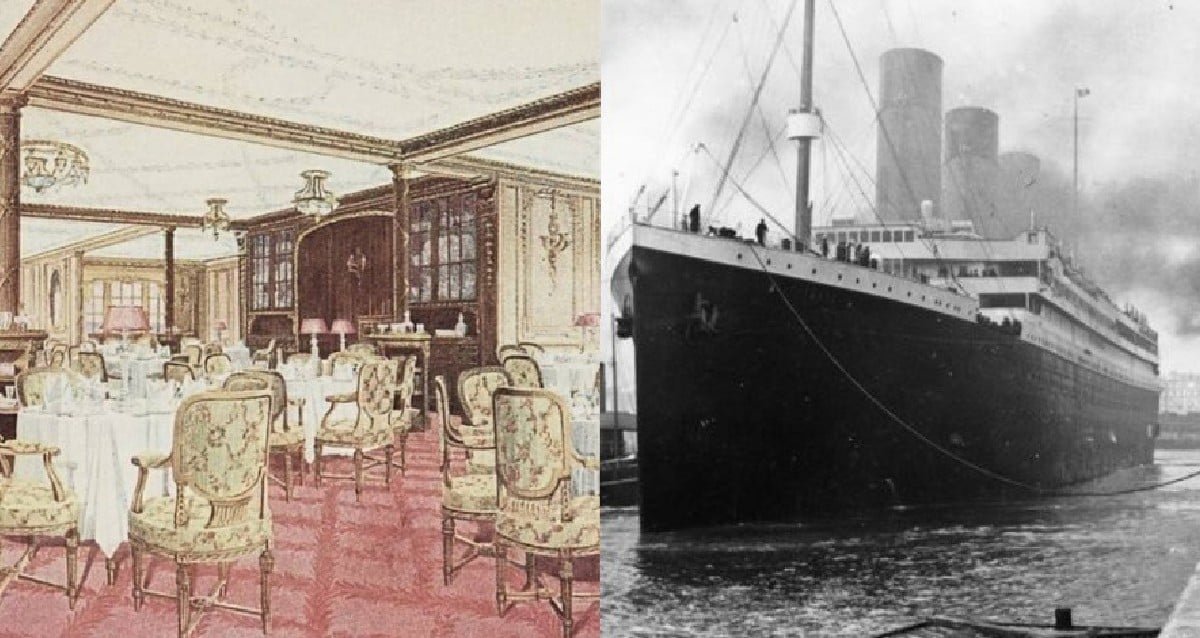
The RMS Titanic was designed as the ultimate symbol of luxury and social status during the early 20th century. For the 324 first-class passengers who boarded the ship on April 10, 1912, the voyage offered an unprecedented level of comfort, featuring high-end dining, extravagant staterooms, and exclusive leisure facilities. These amenities were strategically located on the upper decks to minimize noise and vibration from the ship’s engines, creating a serene environment for the world’s wealthiest individuals, including bankers, businessmen, and socialites.
Titanic First Class Rooms Price and Accommodations
Access to the ship’s most prestigious areas came with a significant financial cost. The pricing for first-class tickets varied greatly depending on the level of luxury desired:
- Basic First Class Cabins: Cost approximately £30 (roughly $4,000 in modern currency).
- Standard Suites: Ranged from £100 to £300 (approximately $20,000 to $60,000 today).
- Lavish Suites: The most expensive accommodations cost between £500 and £1,000 (equivalent to $100,000 to $200,000 today).
The Layout of First Class Staterooms
Staterooms were equipped with various configurations, including single, double, or triple beds. Most rooms featured a dressing table, sofa, wardrobe, and basin. While communal bathrooms were the standard for most passengers, those staying on B-Deck and C-Deck enjoyed more opulent settings, including en-suite bathrooms.
The pinnacle of accommodation was the four parlor suites located on B-Deck and C-Deck. These exclusive spaces provided guests with a private promenade deck, two large bedrooms with walk-in wardrobes, a private bathroom, and a spacious sitting room. These sitting rooms were designed for hosting small social gatherings and featured plush furniture, card tables, and faux fireplaces, supplemented by electric heaters for additional warmth.
What Were Some of the Luxuries on the Titanic?
Beyond the private cabins, the ship offered an array of public spaces designed for socialization and relaxation. The A-Deck Promenade, stretching 546 feet, was reserved exclusively for first-class travelers. This area served as a hub for outdoor activities such as shuffleboard, dominoes, and chess.
Other exclusive leisure facilities included:
- The Gymnasium: A state-of-the-art facility for the time, equipped with rowing machines, exercise bikes, punching bags, and unique devices like electric camels and electric horses, with a staff member present to assist guests.
- Wellness Areas: First-class passengers had access to Turkish baths on F-Deck and a squash court on G-Deck, the latter of which included a professional instructor.
- Social Lounges: The ship featured a reading and writing room, a smoke room, and a sprawling first-class lounge for socializing.
First Class Dining and Culinary Options
Dining was a central part of the first-class experience. The RMS Titanic was one of the first British steamships to offer multiple dining venues separate from the main dining saloon. While passengers could receive morning tea and pastries in their rooms, full meal services were conducted in the ship’s restaurants.
Exclusive Dining Venues
Passengers had several high-end choices for their meals:
- The À la Carte Restaurant: A separate, exclusive venue for first-class guests.
- Café Parisien: A new addition not found on the sister ship Olympic, characterized by wicker furniture and ivy-covered trellises.
- The Verandah Café (Palm Court): A space where guests often dined to the accompaniment of live music.
- The First-Class Dining Saloon: Measuring over 10,700 square feet, this was the largest room ever built on a ship at the time, capable of seating up to 554 passengers.
Who Had the Most Expensive Room on the Titanic?
The most expensive accommodations were the parlor suites, occupied by the wealthiest individuals on board. Among these passengers was John Jacob Astor IV, the wealthiest person on the ship with a net worth in the billions of dollars. Other prominent figures included Benjamin Guggenheim and J. Bruce Ismay, the chairman of the White Star Line, who occupied a deluxe suite.
Life and Survival Rates for First Class Passengers
The social hierarchy of the ship was reflected in the survival statistics following the collision with an iceberg on April 15, 1912. First-class passengers had the highest probability of survival, with a 60% survival rate. In contrast, second-class passengers had a 40% survival rate, and third-class passengers had only a 25% survival rate.
Despite these advantages, over 100 first-class passengers perished. Notable deaths included John Jacob Astor IV and the couple Isidor and Ida Straus. Some survivors, such as the socialite Molly Brown, became known for their philanthropy and efforts to assist other survivors after the tragedy. Others, like Colonel Archibald Gracie IV, survived the sinking but suffered lasting psychological trauma, often recalling the urgency of getting passengers into lifeboats.
The management of the crisis on deck involved various officers, including William Murdoch, who worked to coordinate the evacuation process during the ship’s final hours.
Comparison of First Class and Third Class Experience
The disparity between the classes was stark. While first-class passengers enjoyed the upper decks and luxury amenities, third-class passengers, mostly immigrants and middle-class travelers, were located closer to the ship’s engines. Their cabins were significantly smaller and lacked the extravagant wardrobes and en-suite bathrooms found in the upper-class quarters. This spatial separation not only defined the quality of the voyage but also heavily influenced the accessibility of lifeboats during the disaster.