
Archaeologists from the Archaeological Park of Pompeii have uncovered a wooden cupboard containing dozens of personal items that remained untouched for nearly 2,000 years. The discovery was made during excavations of a residence known as the House of Cornelius Maximus, located on Via dell’Abbondanza, one of the city’s primary thoroughfares. These artifacts provide a direct window into the daily lives of Roman citizens just before the eruption of Mount Vesuvius in 79 C.E.
Personal Artifacts and Daily Life
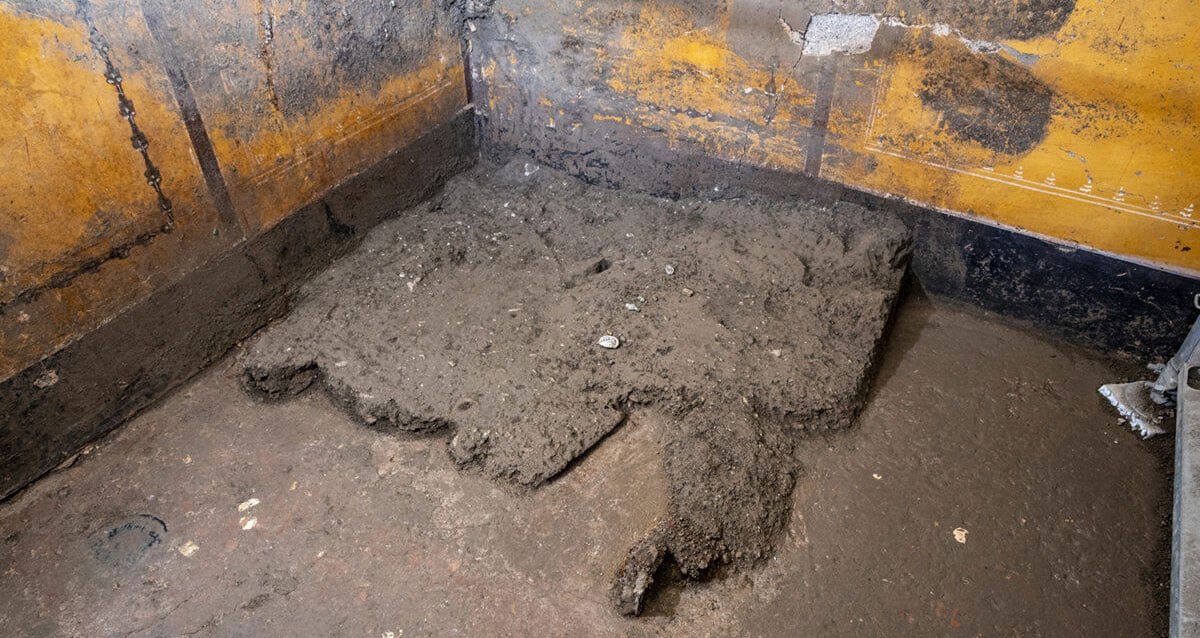
The remains of the cupboard, which left an imprint in the ash, allowed researchers to identify a variety of objects. Among the findings were tweezers, a pestle for mixing makeup, a small glass perfume bottle, and an incense burner. The team also recovered various ceramic vessels and cookware, suggesting the room served as a multifunctional space for personal care and domestic utility.
One of the most significant finds was a necklace consisting of approximately 24 miniature charms. These crepundia, made from bone, clay, glass, and rock, depicted figures such as the gods Bes and Mercury, as well as pinecones and grapes. These rattles were traditionally worn by Roman children for spiritual protection and to help adults track their movements through the sound they made. According to a statement from the Archaeological Park of Pompeii, these items are often the only childhood possessions kept into adulthood.
Evidence of a Sudden Evacuation
The presence of 38 bronze coins found inside a small woven container reveals the urgency of the disaster. The fact that both currency and items with high sentimental value, such as the children’s necklace, were left behind indicates that the inhabitants had to flee their home instantly. This suggests a total lack of time to collect essential valuables before the ash and pyroclastic flows buried the city.
Site director Gabriel Zuchtriegel noted that while the identity of the residents cannot be reconstructed with absolute certainty, these fragments bring historians closer to the human dimension of the past. Further details can be found in the archaeologists’ article on the discovery.
What Was Recently Found in Pompeii
Recent excavations have focused on deeper investigations and restoration projects in the area of Via dell‧Abbondanza. The House of Cornelius Maximus has become a focal point, where researchers have found not only the cupboard but also intricate wall paintings. These frescoes are believed to have originated from a workshop located on a nearby street, highlighting the artistic and commercial connectivity of the Roman city.
As reported by Reuters, the discovery of ordinary objects restores a human connection to the tragedy of 79 C.E., shifting the focus from grand architecture to the private, intimate details of Roman domesticity.
How Many Pompeii Bodies Have Been Found?
While the exact number of bodies recovered from the city is vast, the preservation of human remains in the ash has allowed archaeologists to create plaster casts of victims. These casts provide a poignant visual record of the victims’ final moments, complementing the findings of personal artifacts like the cupboard’s contents to paint a complete picture of the city’s population.
When Were the Archaeological Remains of Pompeii First Discovered?
The archaeological remains of the city were first discovered in the late 16th century, with sporadic excavations beginning in 1748. The entrance to the House of Cornelius Maximus was first excavated in 1912, but modern restoration projects have now enabled deeper, more precise investigations into the residence’s interior.