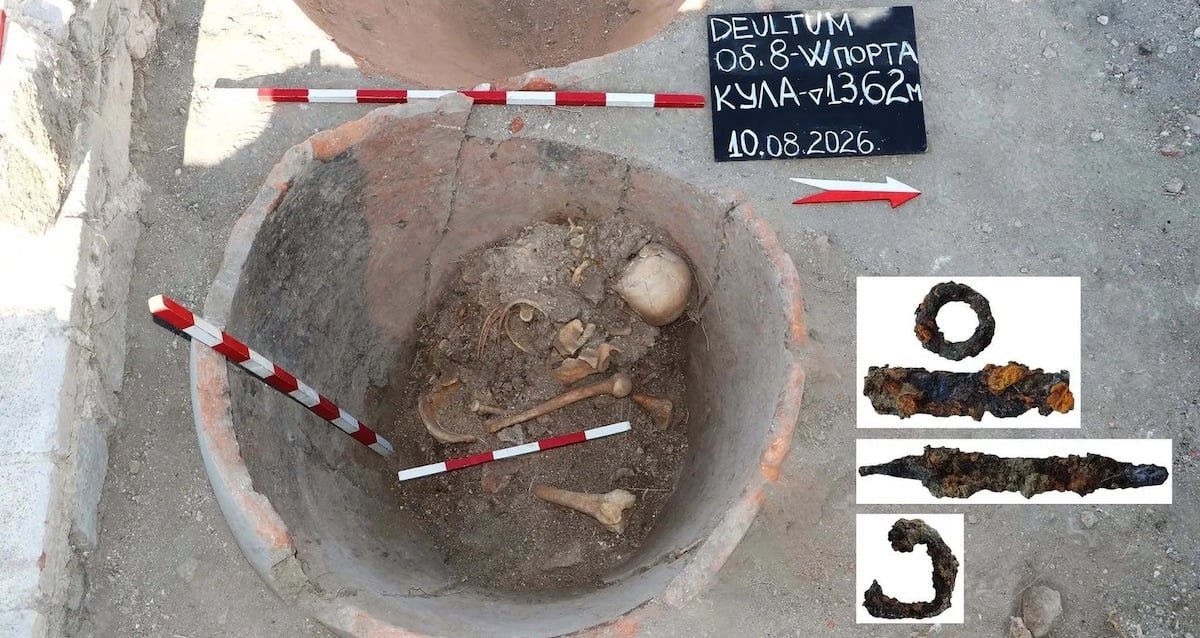
Archaeologists excavating the ruins of the ancient Roman colony of Deultum in eastern Bulgaria have discovered the complete skeleton of a young man inside a dolium, a large ceramic storage vessel. Dating back to approximately 400 C.E., the remains suggest a desperate attempt to seek refuge during a period of violent invasions that marked the decline of Roman dominance in the region.
Discovery at the Deultum Roman Colony
The discovery took place within the northern turret, a small tower located near the city’s western Roman gate. Unlike typical archaeological finds in ancient cities, which are usually concentrated in designated burial grounds, this skeleton was found in a non-funerary context. According to Live Science, such findings typically indicate extraordinary circumstances, such as natural disasters or sudden military attacks.
The man was found in a fetal position, with his knees pressed to his chin and his face turned downward. Alongside the remains, researchers recovered two iron knives and a belt. While the man was not a trained warrior, the presence of the weapons suggests he was prepared to defend himself if discovered by intruders.
The Role of the Dolium in Ancient Storage
A dolium was the largest type of pottery used during antiquity, primarily designed for the bulk storage of liquids and grains. Key characteristics of these vessels include:
- Primary Use: Storage of olive oil, wine, and other essential commodities.
- Capacity: The largest known dolia could hold up to 260 gallons.
- Specific Find: The vessel in Deultum was smaller than the maximum known size, measuring roughly three feet in diameter.
Evidence of Invasion and Destruction
The surrounding environment provided critical clues regarding the cause of death. Archaeologists identified a significant layer of debris and burned materials in the turret, including:
- Ashes, coals, and blackened walls.
- Melted glass and broken tiles or bricks.
- Animal bones, suggesting livestock had been moved into the tower for protection.
During the fourth and fifth centuries, Deultum faced intense pressure from East Germanic tribes and the Huns. As detailed by Standart News, it is believed the man entered the jar to hide from attackers, but perished when the city was set ablaze. His position indicates he made no attempt to exit the vessel, suggesting he may have succumbed to smoke inhalation or heat while hiding.
Post-Attack Reconstruction
Following the conflict, survivors returned to the site and leveled the floor of the ruined tower to install a new one. In doing so, they inadvertently built over the dolium, sealing the remains of the young man beneath the new floor for over 1,600 years.
Archaeological Context in Bulgaria
The region of Bulgaria is rich with diverse archaeological findings, leading to frequent public interest in unique discoveries.
Were vampire skeletons ever found in Bulgaria?
While this specific find in Deultum is related to a military invasion, Bulgaria has a history of uncovering “vampire burials.” These are graves where bodies were buried with stones in their mouths or pinned down with stakes, reflecting ancient folklore and beliefs used to prevent the dead from rising, rather than actual supernatural entities.
Was there ever a skeleton found in Bulgaria that contained gold?
Yes, Bulgaria is famous for its Thracian gold treasures. Many royal tombs from the Thracian period have revealed skeletons accompanied by exquisite gold masks, jewelry, and weaponry, contrasting sharply with the humble remains of the man found in the Deultum storage jar.
Future Research and Analysis
The skeleton has been transported to Sofia for detailed analysis by a physical anthropologist to determine a more precise date of death and the man’s origins. Excavations are scheduled to continue next summer, focusing on the entire western Roman gate, which dates back to 300 C.E., to further understand the city’s final days.