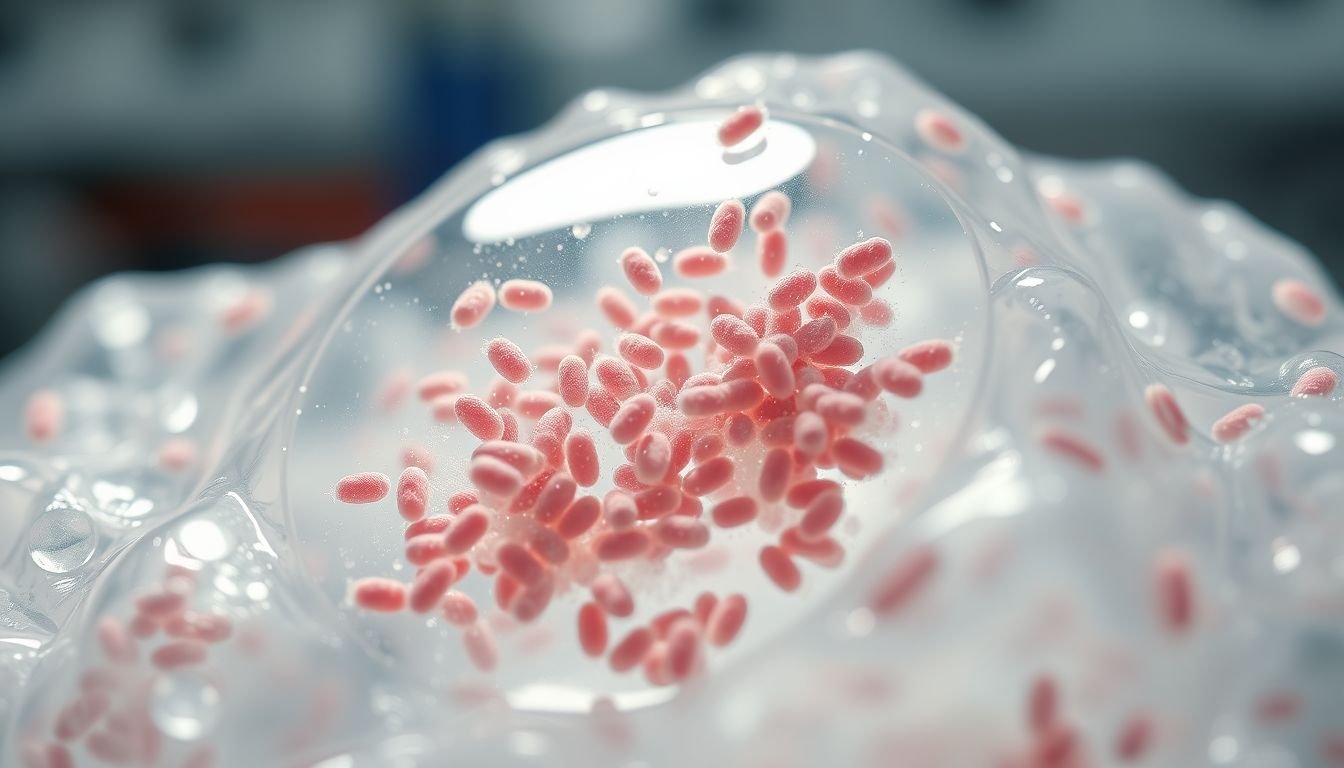

Scientists have developed a living plastic that is durable during use and degrades quickly upon activation. This innovation addresses the global plastic pollution crisis, as approximately 20 million metric tons of plastic enter the environment annually, with traditional plastics taking up to 1,000 years to decompose. By embedding microbes within the material, researchers have created a plastic that can be broken down into its basic building blocks within six days of activation.
The Role of Bacillus subtilis in Biodegradation
The core of this technology relies on the use of Bacillus subtilis, a fast-growing bacterium known for its ability to secrete proteins and create biofilms. Researchers engineered a specific version of this microbe to produce two types of polymer-degrading enzymes. This dual-pronged approach ensures efficient decomposition:
- First Enzyme: Cuts long polymer chains into smaller, manageable fragments.
- Second Enzyme: Attacks these short chains from the ends toward the middle, completing the degradation process.
Controlled Activation and Material Stability
To prevent the plastic from degrading prematurely, the Bacillus subtilis bacteria are embedded in their spore form and combined with the polymer polycaprolactone. In this state, the bacteria remain dormant, ensuring the plastic remains stable and durable for its intended use. The degradation process is only triggered by a specific heated nutrient solution, which activates the spores spores. Once activated, the spores “come online” and begin breaking down the polymers.
Can We Really Live Without Plastic?
While the environmental impact of conventional plastics is relatively cheap to produce (costing between $0.70 and $1.20 per pound), the long-term ecological cost is high. Living plastic represents a compromise between the utility of the current material and thes environmental needs. While it is difficult to imagine a world entirely without plastic due to its convenience and low cost, this biodegradable alternative provides a path toward reducing the long-term accumulation of waste in ecosystems.
Everything Is Impossible Until It Is Done
The development of living plastic was once considered theoretically impossible. However, the engineering of dormant spores within a polymer matrix provides a practical solution to the stability-biodegradability paradox. This breakthrough demonstrates that scientific advancements in microbiology and chemistry can transform how materials are used and recycled, turning a seemingly impossible task into a reality.