

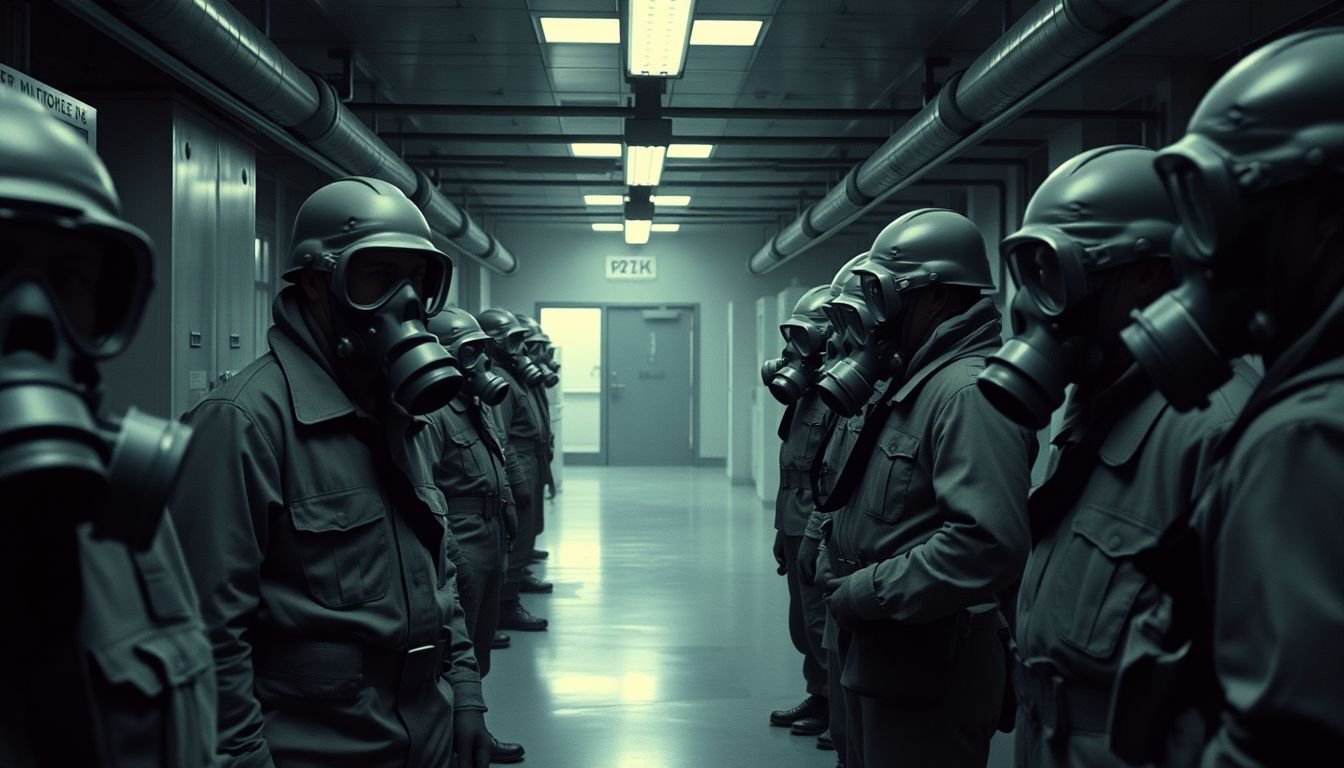

Between 1955 and 1975, the U.S. Army Chemical Corps Medical Department conducted classified medical studies on nearly 7,000 volunteer soldiers at Edgewood Arsenal in Maryland. These experiments involved the administration of hundreds of chemical agents and psychoactive drugs to evaluate human performance and the efficacy of protective equipment during the Cold War.
Cold War Context and Facility Purpose
The testing program emerged during a period of intense political and economic rivalry between the Allies and the Soviet Union. Following the end of World War II, the era of the Red Scare drove the U.S. government and military to secretly investigate the potential for chemical warfare, both as a weapon and a threat to be defended against.
The experiments took place at Edgewood Arsenal, a facility established in 1918 specifically for the research and development of chemical warfare. The base served as the primary hub for the Army Chemical Corps to determine how various substances affected soldiers in the field.
Chemical Agents and Testing Objectives
Researchers subjected volunteers to a total of 254 different chemicals. These substances were selected to test a wide range of physiological and psychological responses. The agents used in the studies included:
- Nerve agents and their corresponding antidotes.
- Blistering agents and various irritants.
- Psychoactive drugs, including LSD, PCP, and cannabinoids.
The primary goal of these studies was to analyze the mental and physical performance of soldiers while exposed to these agents. Additionally, the military used the volunteers to test the reliability and effectiveness of protective clothing and gear designed to shield personnel from chemical attacks.
Official Health Assessments
In the following decades, multiple evaluations were conducted to determine if the participants suffered long-term health complications. Between 1982 and 1985, the Institute of Medicine published studies indicating no significant adverse health effects among the volunteers. A 2003 study in Military Medicine reached similar conclusions, noting that while exposed soldiers experienced more sleep disturbances than control groups, they reported fewer issues with attention.
A 2016 Department of Defense report further claimed there were no significant health impacts. However, this finding was contested in 2018 by the National Academies of Science. The review concluded that the 2016 report was incomplete and should not be the sole scientific basis for assessing the long-term health effects of the chemicals used at the base, recommending a more comprehensive evaluation framework.
Veteran Testimonies and Health Discrepancies
Despite official findings, some veterans have reported severe, lasting medical issues. In an interview with CNN, former soldier Tim Josephs stated that the nature of the chemicals administered was not disclosed. Josephs described receiving injections and pills labeled only as “agent one” or “agent two.” He reported developing tremors similar to Parkinson’s disease shortly before his two-month assignment ended, receiving a formal diagnosis in his mid-50s.
Similar reports of long-term health struggles have been documented by the American Homefront Project, highlighting a discrepancy between government-funded studies and the personal health experiences of the soldiers involved.