

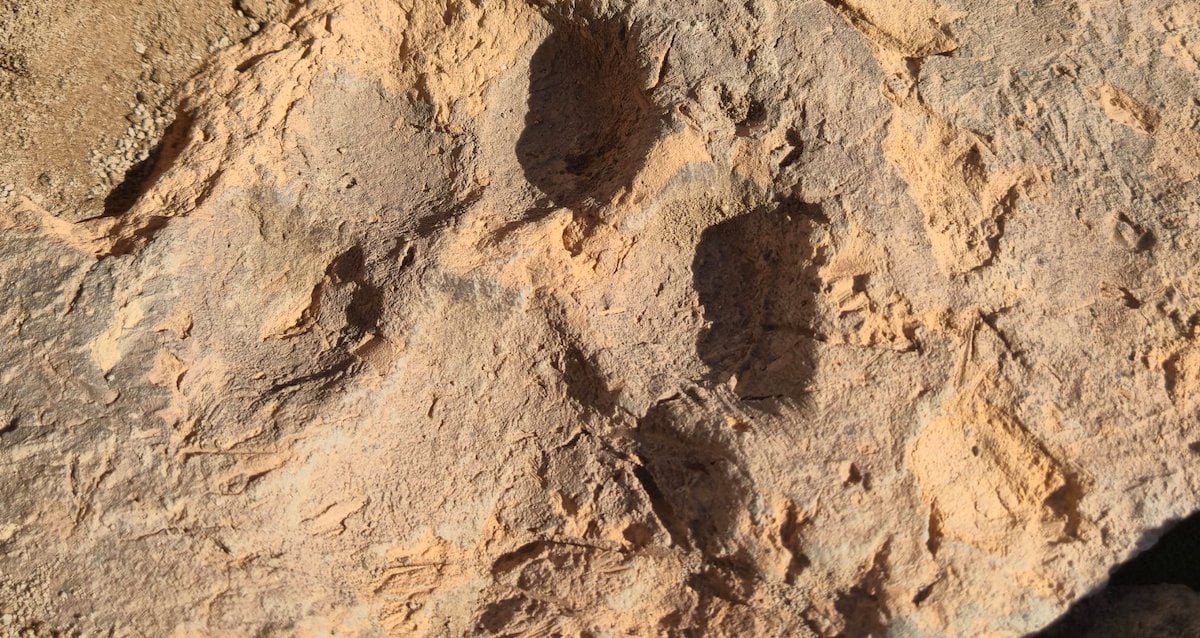
Archaeologists from Bilecik ¡eyh Edebali University have discovered a 4,000-year-old dog paw print embedded in a clay brick at the Tavánslí Höyûk site in western Turkey. The imprint was found among the ruins of a house that was destroyed during a violent attack around 1700 B.C.E., providing a rare glimpse into the domestic life of the Bronze Age.
The Discovery at Tavánslí Höyûk
The mud brick featuring the paw print was uncovered during ongoing excavations led by Dr. Erkan Fidan. The site, which first saw human habitation approximately 8,000 years ago, experienced a period of instability. Early settlements were erased by floods, and the area remained uninhabitable until roughly 3200 B.C.E. near the start of the Bronze Age.
Tavánslí Höyûk flourished as a settlement for about 1,500 years before it was burned to the ground in an attack around 1700 B.C.E. Evidence of this conflict is extensive, with archaeologists finding spearheads, arrowheads, and daggers, as well as human remains that indicate a deadly assault. The brick with the dog’s paw print was found within the debris of one of these burned-down residences.
How the Imprint was Preserved
The preservation of the paw print occurred because of the traditional method of brick-making in ancient Anatolia. According to a statement from Bilecik ¡eyh Edebali University, the process involved combining soil, water, and straw. The resulting mixture was then left in the sun to dry and harden.
The dog likely stepped on the wet clay brick while it was drying in the sun, leaving a permanent mark before the material solidified. This brick was subsequently used in the construction of a house that would eventually be destroyed 4,000 years ago.
Dogs in Ancient Anatolian Society
The discovery provides a direct connection to the everyday interactions between humans and animals. Dr. Fidan noted that dogs had a long and integrated history in Anatolia. By the Bronze Age, they were already a familiar part of daily life in these settlements, acting as companions, guards, or hunting partners. In an interview with IFLScience, Fidan explained that while the team cannot confirm if this specific dog was a pet in the modern sense, the find offers a remarkable connection to the past.
The Oldest Domesticated Dogs
Anatolia has been a critical region for understanding canine domestication. A study published in the journal Nature in March of this year identified the world’s oldest confirmed domesticated dogs at the Pínarbaáá site in Turkey, dating back 15,800 years. Other findings at the Pínarbaáá and Boncuklu sites show puppies buried alongside humans, suggesting that dogs were valued as emotional companions rather than just utilitarian tools for hunting or protection.
Frequently Asked Questions About Ancient Animal Prints
While the discovery in Turkey is unique, it is not the same as modern efforts to preserve animal prints. For those wondering how to bake a clay paw print, modern methods typically involve using non-toxic, air-dry or kiln-fired clay to capture an imprint of a pet’s paw. In contrast, the ancient brick from Tavánslí Höyûk was created through a functional construction material that happened to capture a moment in time.
Regarding the oldest dog fossils, the archaeological record in Turkey continues to evolve as new discoveries are up to date. The findings at Pínarbaáá have shifted our understanding of the timeline of canine domestication, placing the oldest known domesticated dogs in this region of western Turkey.
The paw print in the brick serves as a reminder that the bond between humans and dogs has remained consistent over millennia. Much like the 1,900-year-old cat kneading marks found in Jerusalem, this discovery highlights the commonalities of shared living spaces between humans and their animals throughout history.