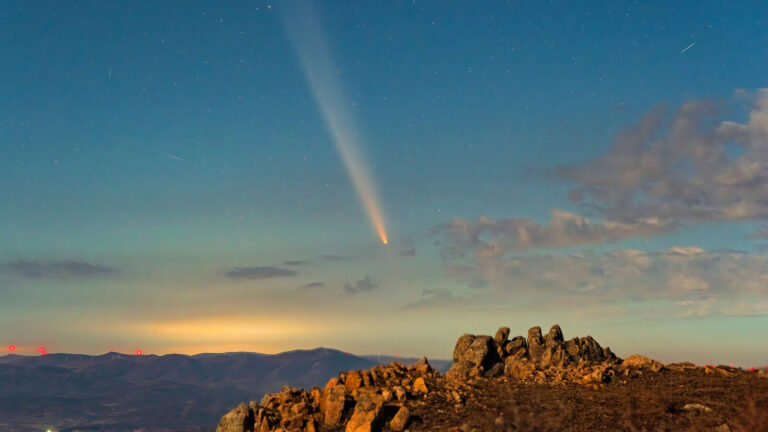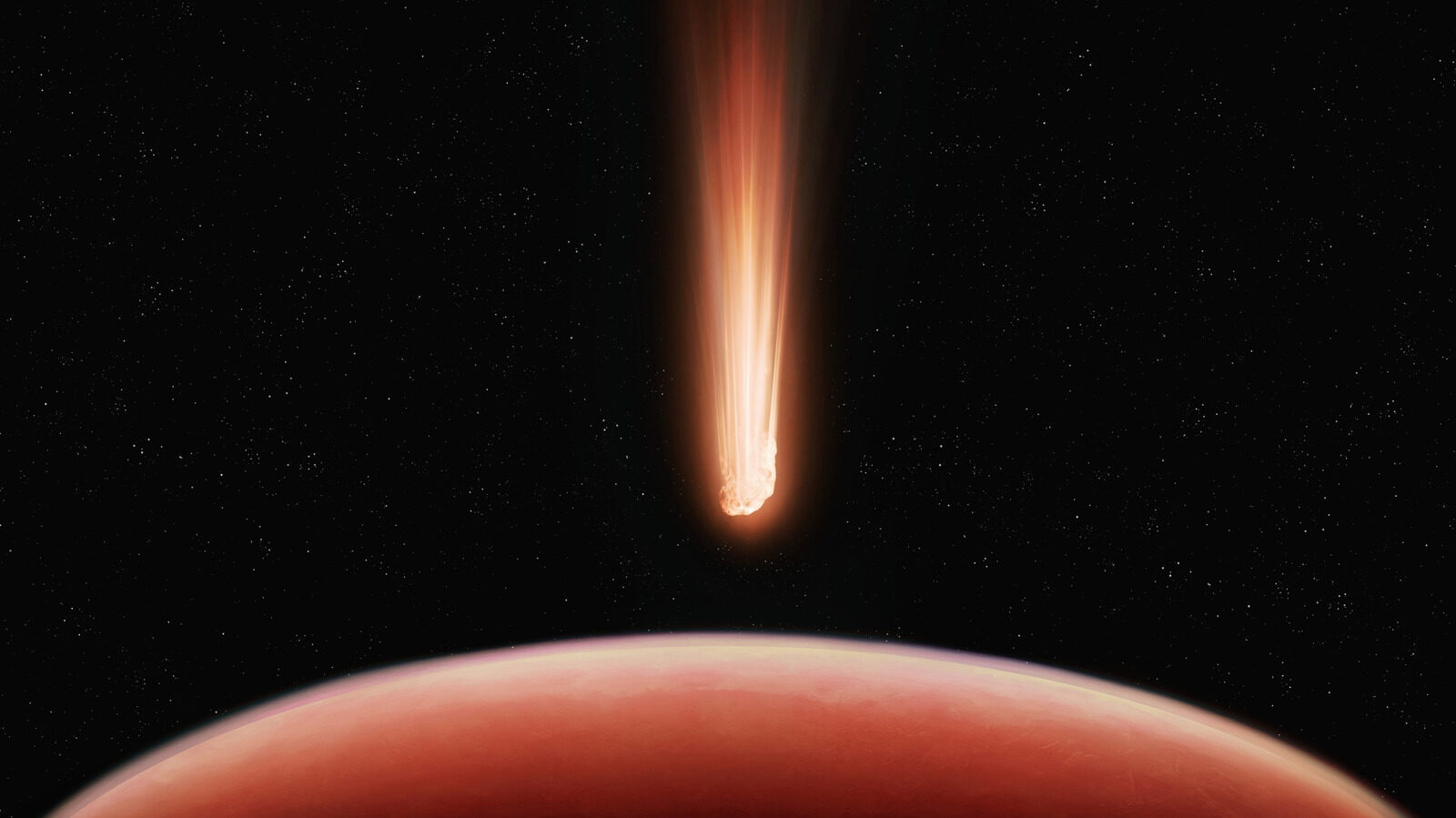
The universe is a vast expanse of mysteries, and every so often, it reveals wonders that spark our curiosity and awe. One such wonder is the recent discovery of a comet that stands out from the rest, not just in its characteristics but also in its origins. This comet, known as 3I/ATLAS, invites us to explore the unknown and understand our place in the cosmos.
Comets have fascinated humanity for centuries, often heralding significant events or serving as a canvas for our imaginations about the universe. But 3I/ATLAS is unique, as it originates from outside our solar system, providing a rare glimpse into the interstellar environment that surrounds us.
What is the 3I/ATLAS comet?
The 3I/ATLAS comet was detected by astronomers using the Asteroid Terrestrial-impact Last Alert System (ATLAS) telescope on July 1, 2025, in Rio Hurtado, Chile. This groundbreaking discovery was made possible through a series of “pre-discovery” observations, which included contributions from several international telescopes, including the Zwicky Transient Facility at Caltech’s Palomar Observatory. Initial findings revealed that the comet is already within Jupiter’s orbit and was approximately 410 million miles from the sun at the time of its discovery.
In terms of its trajectory, 3I/ATLAS is estimated to be moving at an astounding speed of around 137,000 miles per hour. It is expected to traverse the inner solar system by October, where it will remain a safe distance of about 150 million miles from Earth, minimizing any potential danger to our planet. However, it will come considerably closer to Mars, raising the exciting possibility that the Mars Reconnaissance Orbiter could capture images of it.
Why is 3I/ATLAS significant?
3I/ATLAS is not just another comet; it is a remarkable interstellar visitor that has captured the attention of astronomers worldwide. Here are some reasons why this comet is so special:
- Interstellar Origin: Unlike most comets that originate from the Kuiper Belt or the Oort Cloud within our solar system, 3I/ATLAS comes from interstellar space. This provides a unique opportunity to study material from outside our solar system.
- Size and Composition: Astronomers estimate that the comet could measure up to 12.4 miles wide, making it a significant object to study. Observations suggest it has a short tail, indicative of the release of gas and dust as it approaches the sun.
- Speed and Trajectory: 3I/ATLAS is moving faster than any previous interstellar comet, surpassing the speeds of 1I/’Oumuamua and 2I/Borisov. This high velocity indicates that it is not gravitationally bound to the sun, merely passing through our solar system.
- Rarity: It is only the third known interstellar object detected in our solar system, following 1I/’Oumuamua in 2017 and 2I/Borisov in 2019. Each of these objects offers invaluable insights into the composition and behavior of celestial bodies outside our solar system.
- Scientific Collaboration: Researchers from various institutions are collaborating to track and study 3I/ATLAS, similar to the efforts made for the rare exoplanet Enaiposha. Their work will enhance our understanding of both interstellar comets and planetary systems.
How does 3I/ATLAS compare to previous interstellar objects?
To fully appreciate the significance of 3I/ATLAS, it is helpful to compare it to previous interstellar visitors. The two most notable are:
- 1I/’Oumuamua: Discovered in 2017, ‘Oumuamua sparked much debate regarding its origin and nature. Its elongated shape and rapid speed suggested it might be a fragment of a larger body from another star system.
- 2I/Borisov: This comet, detected in 2019, was confirmed as a true comet due to its visible tail. Unlike ‘Oumuamua, Borisov showed characteristics typical of solar system comets, including a tail formed by sublimating ices.
Comparing 3I/ATLAS to these prior discoveries reveals a fascinating evolution in our understanding of interstellar objects and their characteristics. Its high speed and size indicate it may be a much older remnant from a planetary system light-years away from our own.
The scientific community’s interest in 3I/ATLAS
The excitement surrounding 3I/ATLAS is palpable within the scientific community. Astronomers like Michele Bannister from the University of Canterbury have emphasized the transformative nature of studying such unique comets. The data collected from 3I/ATLAS will not only enhance our knowledge of interstellar bodies but also provide insights into the formation and evolution of solar systems.
Efforts to track and observe 3I/ATLAS will continue through September 2025, utilizing ground-based telescopes. As the comet approaches the sun, its visibility will diminish, but it is expected to re-emerge in early December, allowing scientists further opportunities to study its properties. This ongoing research will be crucial for understanding the composition, behavior, and potential origins of this remarkable comet.
The broader implications of interstellar comets
Discoveries like 3I/ATLAS challenge our understanding of the cosmos and our place within it. They offer a glimpse into the materials that exist beyond our solar system and raise intriguing questions about the potential for life elsewhere. The study of these comets can help scientists to:
- Understand Solar System Formation: Analyzing interstellar comets provides clues about how solar systems form and evolve over time.
- Investigate Exobiology: The composition of these comets may reveal organic materials that contribute to the origins of life.
- Explore Galactic Evolution: Studying interstellar visitors helps to understand the dynamics of our galaxy and the interactions between different stellar systems.
The ongoing research into 3I/ATLAS and other interstellar objects represents a fascinating frontier in astrophysics, broadening our horizons and challenging us to look beyond our solar system.