Black holes, often regarded as the most enigmatic entities in the universe, have captivated both scientists and the public alike for decades. Their nature and formation remain shrouded in mystery, giving rise to numerous theories and hypotheses. A recent breakthrough in our understanding of black holes, particularly a newly identified class of them, is not only intriguing but also crucial for comprehending how these cosmic giants evolve over time.
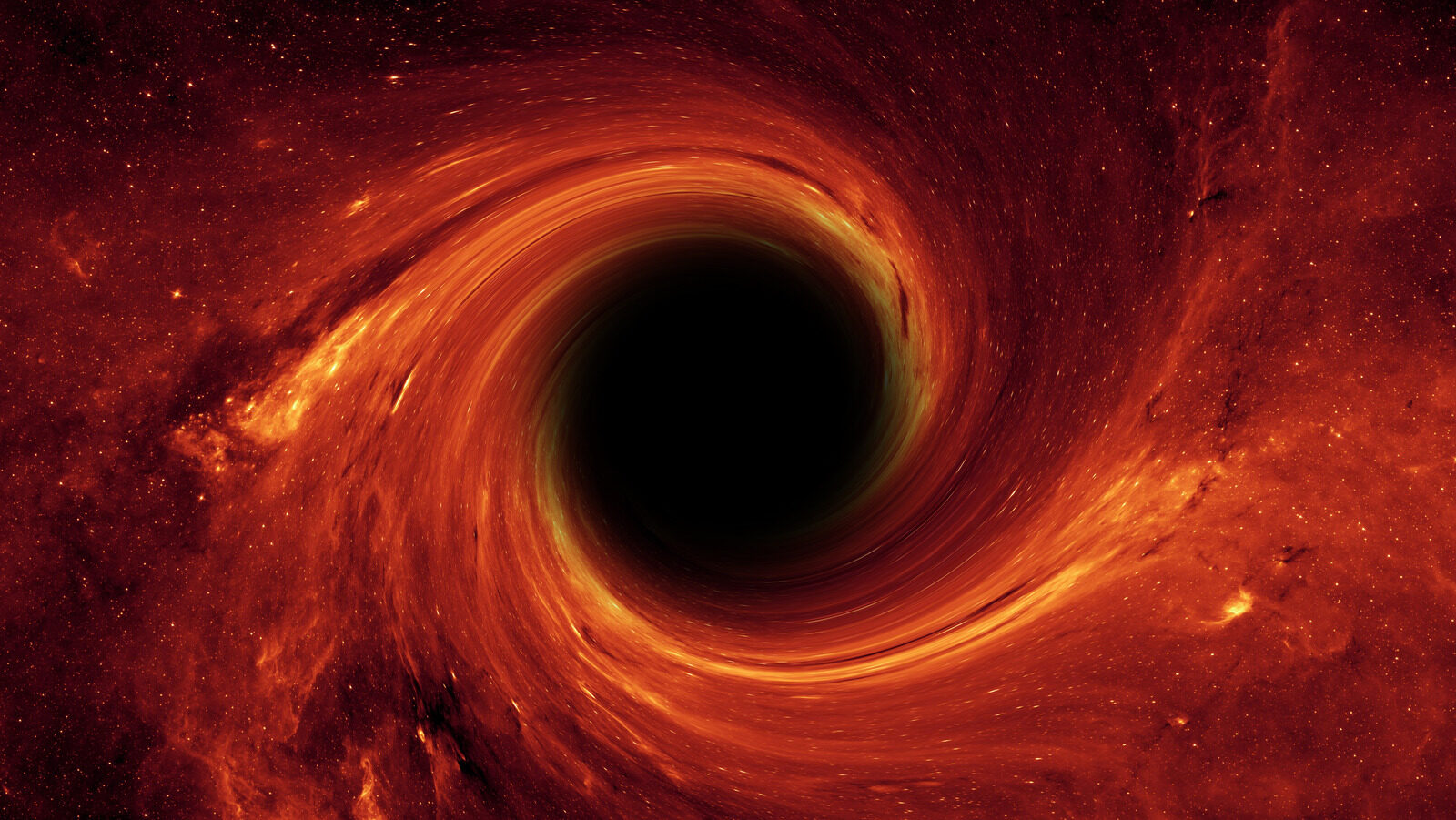
As we delve into the complexities of black holes, it’s essential to note that they are not merely “holes” in space but rather regions where gravity is so strong that nothing, not even light, can escape their grasp. This article explores the significance of a new class of black holes, known as intermediate-mass black holes, and how their discovery may deepen our understanding of the universe.
Unveiling the enigma of intermediate-mass black holes
Black holes are categorized into three primary types based on their mass: stellar-mass black holes, intermediate-mass black holes (IMBHs), and supermassive black holes. Each category presents its unique challenges and mysteries. Stellar-mass black holes typically range from a few to hundreds of solar masses, while supermassive black holes can have masses equivalent to millions or even billions of suns. However, IMBHs occupy a perplexing middle ground, with masses ranging from a few hundred to a few hundred thousand times that of our sun.
Despite their theoretical significance, IMBHs have eluded direct observation for years, leading scientists to refer to them as “missing-link black holes.” They are thought to form through the merging of stellar-mass black holes or the collapse of massive stars, yet concrete evidence has remained elusive. The recent identification of these intermediate black holes through innovative observational techniques heralds a new era in astrophysical research.
Breakthrough discoveries from the LIGO and Virgo observatories
Researchers from Vanderbilt University, led by assistant professor Karan Jani, have made remarkable strides in detecting IMBHs using data from the LIGO and Virgo gravitational-wave observatories. Their findings, published in the Astrophysical Journal Letters, reveal that they have identified multiple intermediate-mass black holes located billions of light-years away from Earth.
The significance of this discovery lies in the method employed. By re-analyzing existing data from 11 candidate events recorded during LIGO-Virgo’s third observing run, the researchers were able to isolate gravitational wave signals indicative of the formation of IMBHs. This innovative technique utilized advanced waveform models, a Bayesian algorithm named RIFT, and artificial intelligence to filter out background noise that typically obscures low-frequency signals associated with IMBHs.
- The data analyzed came from events as far as 37 billion light-years away.
- The closest event was located 2.5 billion light-years from our planet.
- Five out of the eleven analyzed events were confirmed to produce “lite” intermediate black holes.
Understanding the implications of intermediate-mass black holes
The detection of IMBHs could provide critical insights into the evolution of black holes and the dynamics of galaxy formation. These black holes may serve as a transitional form between stellar-mass and supermassive black holes, offering clues about how the latter grow over cosmic time scales.
Despite the excitement surrounding this discovery, IMBHs remain enigmatic. The gravitational waves produced during their formation are often challenging to detect due to their low-frequency nature. Earth-based detectors like LIGO struggle to isolate these signals from the ever-present background noise of the universe. However, the advancements made in this research signal a promising direction for future studies.
New horizons: Future observational strategies and technologies
In light of recent discoveries, researchers are considering various strategies to enhance our understanding of IMBHs. Among the most promising initiatives is the upcoming Laser Interferometer Space Antenna (LISA), scheduled for launch in the 2030s. LISA will orbit the sun and measure gravitational waves at lower frequencies, providing an unprecedented opportunity to study IMBHs.
Beyond LISA, other potential avenues of exploration include:
- Developing lunar-based detectors to minimize environmental noise.
- Using advanced AI algorithms to improve signal detection and analysis.
- Collaborating with international observatories to gather a broader dataset.
The implications of these advanced observational techniques are vast. With improved technology, scientists hope to track the formation, growth, and movement of IMBHs, shedding light on their role in the cosmic landscape.
Astrophysical significance of intermediate-mass black holes
The study of IMBHs is not just an academic pursuit; it has profound implications for our understanding of the universe. These cosmic entities could be the remnants of the very first stars that formed after the Big Bang or represent a crucial step in the evolutionary chain leading to supermassive black holes found at the centers of galaxies.
As researchers continue to explore the mysteries of IMBHs, they may unlock critical insights into:
- The processes that govern black hole mergers.
- The chemical composition of the early universe.
- The role of black holes in galaxy formation and evolution.
As we refine our observational tools and methodologies, the hope is that the veil of mystery surrounding these intriguing cosmic structures will gradually lift, revealing the secrets of their formation and evolution.
Final thoughts on the ongoing research of black holes
The discovery of intermediate-mass black holes marks a significant milestone in our quest to understand the universe’s most mysterious objects. With ongoing research and advancements in technology, we are on the cusp of uncovering the secrets of these cosmic giants. As we continue to explore the cosmos, the potential for new discoveries remains boundless, opening doors to a deeper understanding of the universe and our place within it.