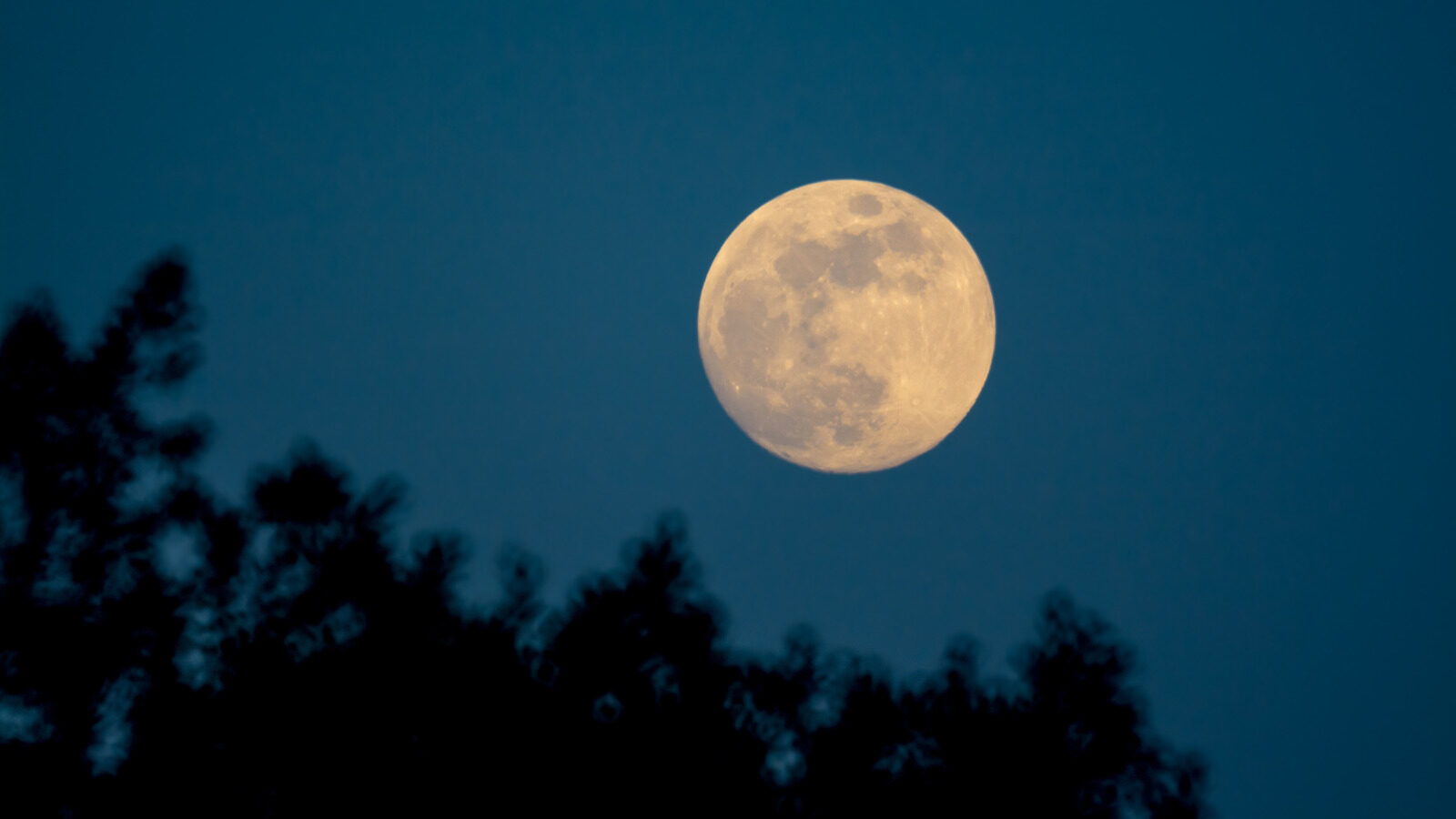
The moon has captivated humanity for millennia, inspiring art, science, and countless cultural narratives. One of the most intriguing aspects of this celestial body is the phenomenon known as the moon illusion. Why does the moon appear larger when it’s near the horizon compared to when it’s high in the sky? This question has puzzled scientists and casual observers alike, leading to various theories and discussions. Let’s delve deeper into the moon illusion and explore its complexities.
Understanding the moon illusion: what is it?
The moon illusion refers to the optical phenomenon where the moon appears significantly larger when it is close to the horizon than when it is positioned higher in the sky. Despite the optical illusion, the size of the moon remains constant; it does not physically change dimensions. This fascinating visual effect is experienced universally, regardless of one’s location on Earth.
Interestingly, the moon illusion is not exclusive to the full moon phase. It can occur during any phase of the moon, yet it is most noticeable during the full moon when it’s at its lowest point on the horizon. This is particularly prominent during certain seasons, like summer, when the conditions create a striking visual contrast.
Why does the moon illusion occur?
The exact reasons behind the moon illusion remain a topic of ongoing research and debate. Several theories have emerged over the years, attempting to explain why our brains perceive the moon differently based on its position in the sky. Some of the most notable hypotheses include:
- Relative size theory: This theory suggests that when the moon is near the horizon, our brains compare it with other objects, such as trees and buildings, which makes it seem larger. In contrast, when the moon is high in the sky, it lacks these reference points.
- Aerial perspective: The atmosphere creates a distortion effect. When the moon is near the horizon, it appears through more atmospheric layers, which can enhance its size in our perception.
- The Ponzo illusion: This visual illusion indicates that our brains interpret objects in relation to lines and angles, which can create misleading perceptions of size. When the moon is framed by distant objects, it can appear larger.
Despite these theories, none have been universally accepted as the definitive explanation, leaving scientists intrigued and puzzled.
The role of cultural perceptions in the moon illusion
Culture plays a significant role in how we perceive the moon. Different cultures have various names for the full moons, often tied to agricultural cycles or seasonal changes. For instance, the July full moon is often referred to as the “buck moon” because it coincides with the time of year when male deer grow their antlers. This connection to nature can enhance the emotional impact of the moon experience, influencing our perception.
Additionally, folklore and mythology surrounding the moon can shape how individuals interpret its appearance. Many cultures have legends that attribute mystical properties to the moon, which can lead to heightened awareness and emotional responses during lunar events.
Photographic evidence and the moon illusion
Interestingly, the moon illusion does not translate to photographs. When a picture is taken of the moon at low altitude and compared with one taken at a higher elevation, they appear to be the same size. This discrepancy indicates that the moon illusion is purely a perceptual phenomenon, rooted in how our brains interpret visual information rather than an actual change in the moon’s size.
Photographers and astronomers alike have noted this aspect, leading to a deeper understanding of the relationship between perception and reality in visual contexts. The realization that the moon’s size is consistent across different settings only adds to the mystery of the illusion.
The summer solstice and its impact on the moon illusion
The summer solstice marks the time when the sun is at its highest point in the sky in the Northern Hemisphere, resulting in longer daylight hours. This astronomical event also influences the moon’s position. During this period, the moon appears particularly low on the horizon, often coinciding with the full moon phases like the buck moon or the strawberry moon.
This alignment creates a unique opportunity for observers to experience the moon illusion at its most pronounced. The combination of the moon’s position and the atmospheric conditions can lead to vibrant displays, with the moon sometimes taking on a warm, orange hue, reminiscent of a harvest moon. These visual effects can be captivating and are often celebrated in various cultural festivities.
Scientific explorations of the moon illusion
Researchers continue to explore the moon illusion through various scientific methods, including behavioral studies and psychological experiments. By examining how different populations perceive the moon, scientists hope to unravel the complexities of human vision and cognition.
For example, experiments involving virtual reality environments have been used to simulate moon positions and gather data on how people react to different lunar configurations. Such studies aim to decode the underlying mechanisms of the moon illusion, contributing to a broader understanding of human perception.
Conclusion: the enduring mystery of the moon illusion
The moon illusion remains one of the most captivating and perplexing phenomena in the realm of astronomy and psychology. Despite advancements in scientific understanding, the illusion continues to elude a definitive explanation. This ongoing mystery is a reminder of the complexities of human perception and the wonders of the universe.
As scientists delve deeper into this optical illusion, they uncover fascinating insights not just about the moon, but also about how we perceive and interact with the world around us. The moon, in all its phases and sizes, will continue to inspire curiosity and wonder, making it a timeless subject of exploration and fascination.