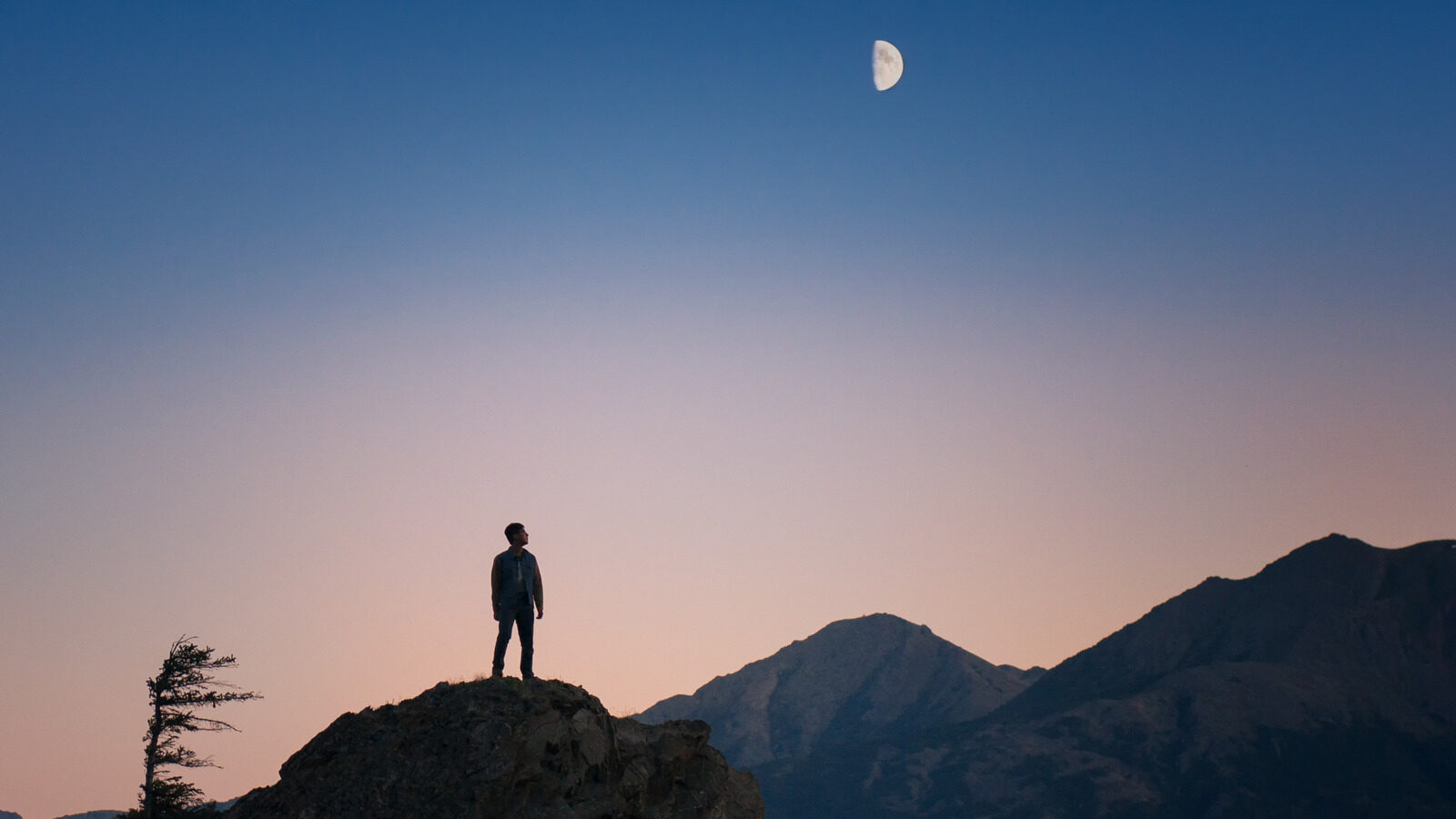
The moon has captivated humanity for millennia, acting as a celestial companion that influences our tides, inspires art, and even serves as a backdrop for countless myths and legends. However, beyond its familiar phases, the moon presents a variety of stunning phenomena that can leave us in awe. From unusual colors to its changing size, let’s explore some of the most fascinating lunar events that you can witness in the night sky.
A yellowish-orange full moon
Although the moon’s surface is primarily gray, it often appears to be white or even yellowish-orange when viewed from Earth. This striking coloration can lead many to wonder why the moon takes on these hues. The answer lies in the Earth’s atmosphere and the way light behaves.
The moon’s yellow or orange appearance is primarily a result of atmospheric scattering. When the moon is near the horizon, it has to pass through a greater thickness of the Earth’s atmosphere, causing shorter blue wavelengths of light to scatter more than the longer red wavelengths. This phenomenon is known as Rayleigh scattering, which explains why the moon often looks more golden when it is rising or setting. When the moon is high in the sky, however, it usually appears whiter as the light reaches it without significant scattering.
- Yellow light is less scattered than blue light.
- A horizon moon appears more orange due to the thicker atmosphere it shines through.
- Distance to the observer changes the perceived color of the moon.
A pink-like moon during the spring
April’s full moon is famously known as the “Pink Moon,” but don’t expect to see a rosy celestial body lighting up the night sky. The name originates from the pink flowers known as phlox that bloom during this time in North America.
While the moon may not actually appear pink, atmospheric conditions can create an optical illusion where it seems to take on a slightly rosy hue, particularly when it rises near the horizon. As with other lunar phenomena, this coloration can be influenced by various factors, including pollution or dust in the atmosphere that may enhance warm tones.
- The Pink Moon is named after blooming phlox flowers.
- Atmospheric conditions can cause it to appear slightly rosy.
- Local air quality can impact the moon’s perceived color.
Reddish-brown lunar eclipse
Perhaps one of the most dramatic lunar events is the total lunar eclipse, during which the moon often takes on a striking reddish-brown color, commonly referred to as a “blood moon.” This phenomenon occurs when Earth passes directly between the sun and the moon, casting a shadow that can change the moon’s appearance dramatically.
The eerie color arises due to the scattering of sunlight through Earth’s atmosphere. As the blue light is scattered away, the red wavelengths are refracted and illuminate the moon’s surface, resulting in its deep, coppery hue. This captivating transformation is not only visually stunning but also a reminder of celestial mechanics at play.
- A lunar eclipse occurs when the Earth blocks sunlight from reaching the moon.
- The reddish appearance is due to the scattering of light through the atmosphere.
- Blood moons are often seen as omens in various cultures.
A bright red moon
The term “blood moon” can also refer to the moon’s appearance during specific atmospheric conditions, such as high pollution levels or the presence of ash from volcanic eruptions. In these scenarios, the moon can appear vividly red, creating a striking visual spectacle.
This effect is primarily due to the scattering of shorter wavelengths of light, like blue, which can be diminished by particles in the atmosphere. When significant pollutants or particles are present, they can enhance the reddish hue of the moon, leading to a captivating display that can evoke both beauty and concern.
- Air quality significantly impacts the moon’s coloration.
- Volcanic ash can create atmospheric conditions that enhance red hues.
- Bright red moons can be mistaken for blood moons during eclipses.
A blue moon
The phenomenon of a “blue moon” is particularly rare and can refer to two different occurrences. The first definition describes the second full moon in a calendar month, while the second refers to a moon that appears blue due to certain atmospheric conditions.
Real blue moons are extremely rare and can happen due to the scattering of particular light wavelengths, especially when large particles like smoke or dust are present in the atmosphere. These particles can scatter red light, allowing the blue wavelengths to dominate, creating the unusual appearance of a blue moon.
- A blue moon can occur twice in a month, making it a rare event.
- Atmospheric conditions contribute to a literal blue hue.
- It inspires cultural phrases like “once in a blue moon,” highlighting its rarity.
Supermoons and micromoons
Beyond color, the moon’s size can also vary dramatically, giving rise to the terms “supermoon” and “micromoon.” A supermoon occurs when a full moon is at its closest point to Earth in its orbit, appearing significantly larger and brighter than usual. This phenomenon can happen several times a year and is often a spectacular sight.
Conversely, a micromoon is the opposite event, occurring when the moon is at its farthest point from Earth, making it appear smaller and dimmer than the average full moon. Understanding the differences between these two phenomena can enrich your lunar viewing experience.
- A supermoon appears up to 30% brighter than a typical full moon.
- Micromoons can make the moon look less prominent in the night sky.
- Supermoons and micromoons occur due to the moon’s elliptical orbit.
The science behind moon colors
Understanding the science behind these lunar phenomena enriches our appreciation of the night sky. Each event is driven by a combination of atmospheric conditions and the moon’s position relative to Earth and the sun.
Several factors can influence how we perceive the moon, including:
- The angle of light from the sun.
- The composition of Earth’s atmosphere, including pollutants.
- Geographic location and elevation of the observer.
How to best observe moon phenomena
To fully enjoy the spectacular displays of the moon, consider these tips for observation:
- Find a clear, dark location away from city lights.
- Use binoculars or a telescope for enhanced views.
- Check lunar calendars for upcoming events like eclipses or supermoons.
By being informed and prepared, you can turn a simple glance at the moon into a memorable and enriching experience. Each lunar phenomenon offers a unique glimpse into the beauty and complexity of our celestial neighbor.