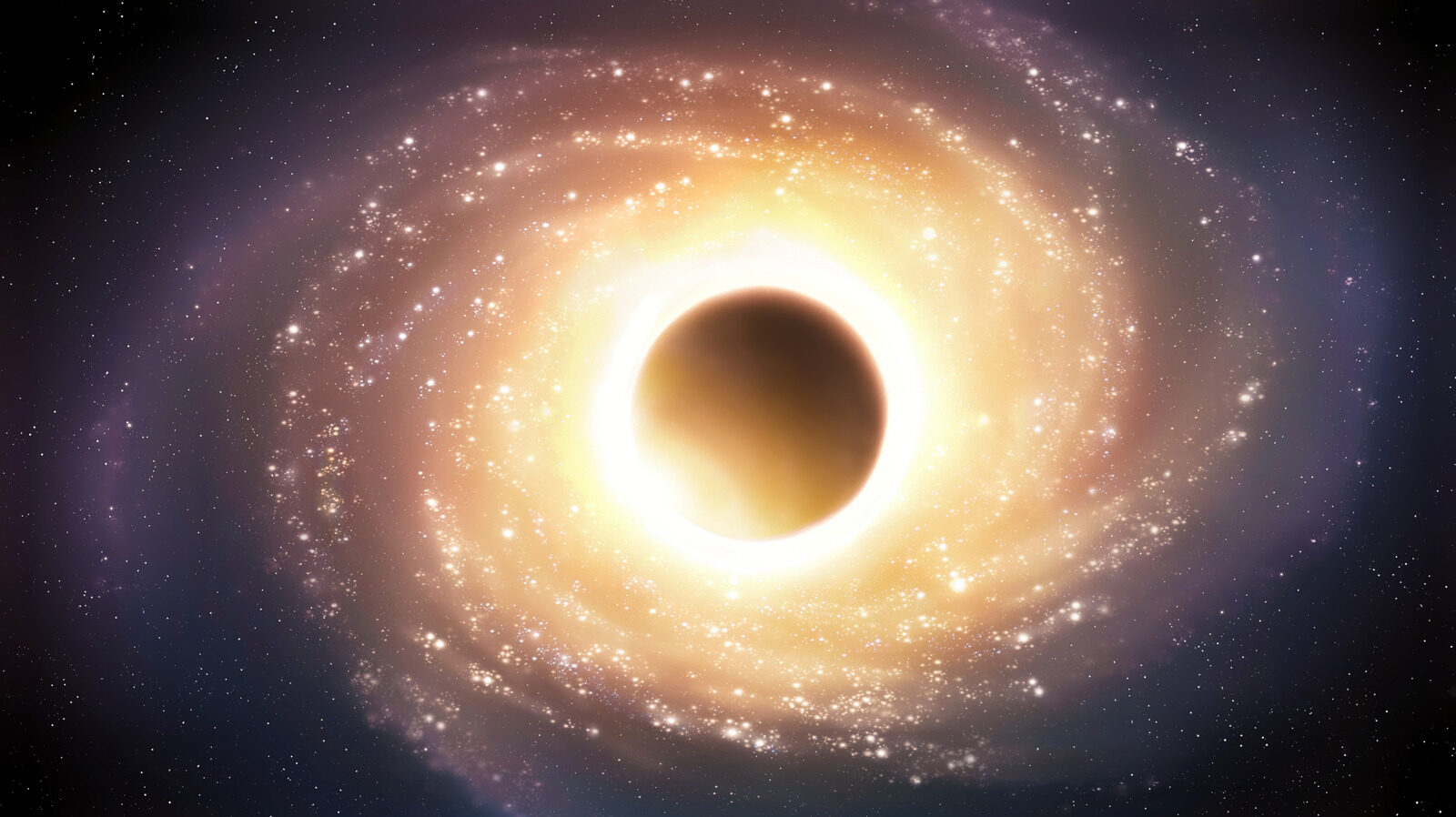

Imagine a cosmic reservoir of water so vast que contiene 140 billones de veces la cantidad de agua en la Tierra. Este descubrimiento no solo amplía nuestro entendimiento sobre el agua en el universo, sino que también plantea preguntas intrigantes sobre la formación de galaxias y la posibilidad de vida en otros rincones del cosmos. A medida que profundizamos en este tema fascinante, exploraremos la naturaleza de los quásares, el descubrimiento del agua, y lo que esto significa para nuestra comprensión del universo.
The astonishing discovery of a colossal water reservoir
In 2011, a groundbreaking study by scientists at NASA’s Jet Propulsion Laboratory led by Matt Bradford unveiled a remarkable find: a water reservoir located in the quasar APM 08279+5255, situated an incredible 12 billion light-years away from Earth. This reservoir contains a staggering 140 trillion times the amount of water found on our planet, illustrating the sheer scale of water in the universe.
This finding was not a simple stroke of luck. It involved meticulous observations from two teams of astronomers who utilized advanced telescopes like the Plateau de Bure Interferometer and the 33-foot Z-Spec telescope to detect signatures of water vapor. The process was painstaking, requiring confirmation through multiple signals, ultimately leading to the understanding of the enormous water reservoir within this quasar.
The quasar itself is a highly luminous object powered by a supermassive black hole, which represents a unique environment where extreme conditions allow water vapor to exist. Scientists noted that the temperature of the water vapor in APM 08279+5255 is approximately -81.4 degrees Fahrenheit, with a density that is around 100 times greater than what we observe in similar regions of the universe.
- The discovery of such a vast water reservoir reshapes our understanding of where water can exist in the universe.
- Quasars like APM 08279+5255 provide insight into the early universe due to their distance.
- Water vapor in this quasar exists under extreme conditions, differing from typical forms found in our solar system.
Understanding quasars and their significance
Quasars, or quasi-stellar objects, are among the brightest and most energetic entities in the universe. They are formed when massive amounts of matter fall into supermassive black holes, causing significant energy release and resulting in the emission of light that can outshine entire galaxies. The luminosity of quasars can be up to 100,000 times greater than that of our Milky Way galaxy.
These cosmic beacons serve as vital tools for astronomers. Because they are located at extreme distances, the light we observe today is essentially a glimpse into the past, revealing the conditions of the early universe. For example, APM 08279+5255 allows scientists to study the universe as it was when it was only 2 billion years old.
Exploring quasars also helps researchers understand galaxy formation and evolution. The presence of water vapor in the quasar indicates that the necessary components for life might have existed much earlier than previously thought.
The implications of discovering ancient water vapor
The discovery of water vapor in APM 08279+5255 is significant because it suggests that water has been present in the universe since its early days. This aligns with a 2025 paper published in Nature Astronomy, which posits that water may have existed during the formation of the first galaxies. This challenges previous assumptions about when water first appeared in the cosmos.
Water plays a crucial role in the potential for life. As NASA often emphasizes in its search for extraterrestrial life, liquid water is a key indicator. The presence of water vapor in APM 08279+5255 indicates that the essential ingredients for life have been present for a significant period. This discovery not only lends credence to the idea that life could exist elsewhere but also provides substantial evidence of how galaxies evolve.
- Water is essential for star formation, cooling gas clouds, and facilitating new star creation.
- The existence of water vapor indicates a warm, dense environment within the quasar, contrary to the notion of it being a cold, empty space.
- This finding informs our understanding of cosmic evolution and the conditions necessary for life.
Comparing water in our solar system to cosmic water vapor
While the water in APM 08279+5255 exists solely as vapor, water in our solar system is typically found in liquid or solid forms. For instance:
- Europa, a moon of Jupiter, is believed to have a subsurface ocean beneath its icy crust.
- Enceladus, a moon of Saturn, actively ejects plumes of water vapor into space, suggesting a subsurface ocean.
- Mars has polar ice caps and is known to contain water in the form of ice, which scientists are actively studying for signs of past life.
This contrast highlights the diverse states of water across the universe and emphasizes the extreme conditions present in quasars like APM 08279+5255. The unique environment of this quasar creates a setting where water vapor can thrive, further expanding our understanding of where and how water exists in the cosmos.
Future explorations and the quest for knowledge
The discovery of such an immense reservoir of water vapor opens many avenues for future research and exploration. Understanding the role of water in cosmic evolution can help scientists refine their models of galaxy formation and the development of stars. This quest not only seeks to unravel the mysteries of our universe but also aims to identify potential habitats for extraterrestrial life.
As astronomers continue to study quasars and their associated phenomena, they will gain deeper insights into the universe’s history and the processes that shape it. The implications of these discoveries resonate through various fields, from astrophysics to astrobiology, reinforcing the importance of water as a fundamental element in the universe.
With technology advancing rapidly, future observations with more powerful telescopes and instruments will enable us to explore even further back in time, continuing to illuminate the conditions of the early universe and the origins of water and life as we know it.