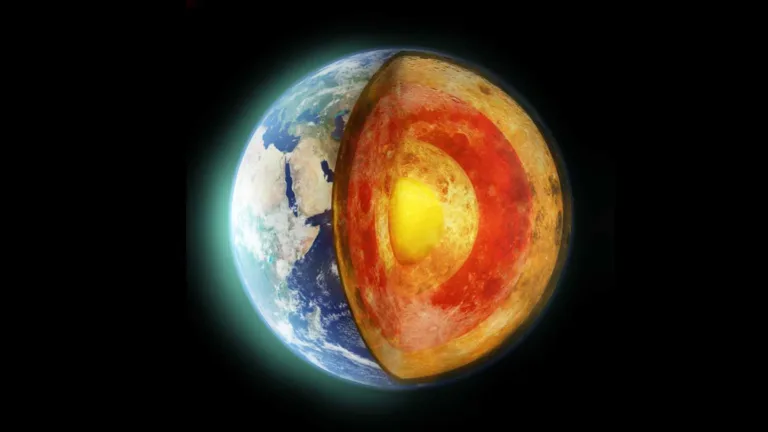
The dynamics of our planet are often taken for granted, with many people unaware of the fascinating changes occurring beneath our feet. One such intriguing phenomenon is the recent acceleration in the Earth’s rotation, leading to shorter days. This change carries implications that, while subtle, can affect our daily lives and how we measure time. Let’s delve into the science behind this phenomenon and explore its implications.
Days have been getting shorter since 2020
Since 2020, scientists have observed a remarkable trend: the Earth has begun to spin faster than at any point in the last half-century. In that year alone, we recorded the shortest 28 days in history. As the years have progressed, this trend shows no sign of reversing, with predictions indicating that 2025 could potentially host the shortest day ever recorded.
Although a solar day is conventionally defined as 86,400 seconds or 24 hours, tiny fluctuations in this duration can be measured with high precision using atomic clocks. These exceptional timekeeping devices utilize the vibrations of atoms to maintain accuracy, deviating by less than a second over millions of years. Thanks to the International Earth Rotation and Reference Systems Service (IERS), we can track these variations with precision.
The first indication of this accelerated rotation was on July 19, 2020, when a day was completed 1.47 milliseconds shorter than the standard 86,400 seconds. The trend continued with subsequent years showing similar fluctuations:
- 2021: -1.47 ms
- 2022: -1.59 ms
- 2023: -1.31 ms
- 2024: -1.66 ms
These records highlight a clear pattern of shorter days, raising questions about what might be causing such changes.
Understanding the causes of Earth’s accelerated rotation
The reasons behind the Earth’s changing rotation speed are complex and multifaceted. They stem from a variety of factors, including:
- Tidal effects: The gravitational pull of the moon and the sun can alter the Earth’s rotation speed.
- Mass distribution: The shifting of mass, whether through tectonic activity or melting ice caps, can impact rotation.
- Seismic activity: Significant earthquakes can redistribute mass within the Earth, affecting its spin.
- Weather patterns: Atmospheric changes and variations in ocean currents can also play a role.
Despite extensive research, scientists like Leonid Zotov from Moscow State University have struggled to pinpoint a singular cause for this increase in speed. They suggest that the changes are likely influenced by internal dynamics of the Earth, rather than external factors such as oceanic or atmospheric conditions.
The Earth isn’t slowing down for now
As of now, the trend of a speeding Earth is expected to continue. Predictions indicate that the next shortest day could occur on one of several key dates in 2025: July 9, July 22, or August 5. These dates coincide with the moon’s position, affecting the rotational speed of the planet. The most likely candidate for the record-breaking shortest day is August 5, projected to be approximately 1.51 milliseconds shorter than the average.
While these changes may seem minor, they carry implications for how we keep time. The IERS and other timekeeping authorities are already considering the need for adjustments. By 2029, experts anticipate they might need to subtract a second from our clocks, a concept referred to as a “negative discontinuity.” This adjustment, although seemingly trivial, could lead to significant complications in technology, especially in computer network timing systems.
In addition to the technical challenges, experts emphasize that the ongoing changes in Earth’s rotation should not be a cause for alarm. While it’s essential to track these changes, the scientific community believes that the Earth will eventually stabilize its rotation speed again. However, the current acceleration raises intriguing questions about our planet’s dynamics and the long-term implications for life on Earth.
The broader implications of changing day lengths
As our days become shorter, the implications extend beyond just the measurement of time. Here are some areas that may be affected:
- Navigation Systems: GPS and other navigation technologies depend on precise time measurements. Changes in Earth’s rotation could necessitate recalibration of these systems.
- Scientific Research: Changes in day length may impact various scientific fields, from astronomy to climate science, as researchers rely on consistent time measurements for experiments and observations.
- Cultural and Social Practices: Human activities, including agriculture and daily routines, are often aligned with the natural cycle of day and night. Alterations in day length could influence these traditional practices.
While these changes may seem abstract, they remind us of the delicate balance within our planetary system and the interconnectedness of natural processes and human activities.
The quest for understanding Earth’s rotation
The acceleration of the Earth’s rotation is a topic of great interest in the scientific community, as researchers continue to seek explanations for this phenomenon. Studies are ongoing, with experts collaborating across disciplines to unravel the complexities of our planet’s dynamics. The results of such studies not only enhance our understanding of Earth but also inform how we might address the challenges posed by changing environmental conditions.
As we navigate these changes, it becomes increasingly important to consider the implications for our society and the natural world. Understanding the Earth’s rotation isn’t just an academic exercise; it is vital for adapting to a rapidly changing environment.