
The Cailleach is a divine entity in Gaelic folklore, serving as the goddess of winter and storms. She is a complex figure associated with both the destructive power of the cold season and the creation of the physical landscape of Ireland and Scotland. Known as the “veiled one” in Old Irish, her name has evolved over time to be translated as “old woman,” “hag,” or “witch” in English translations.
Physical Characteristics and Attributes
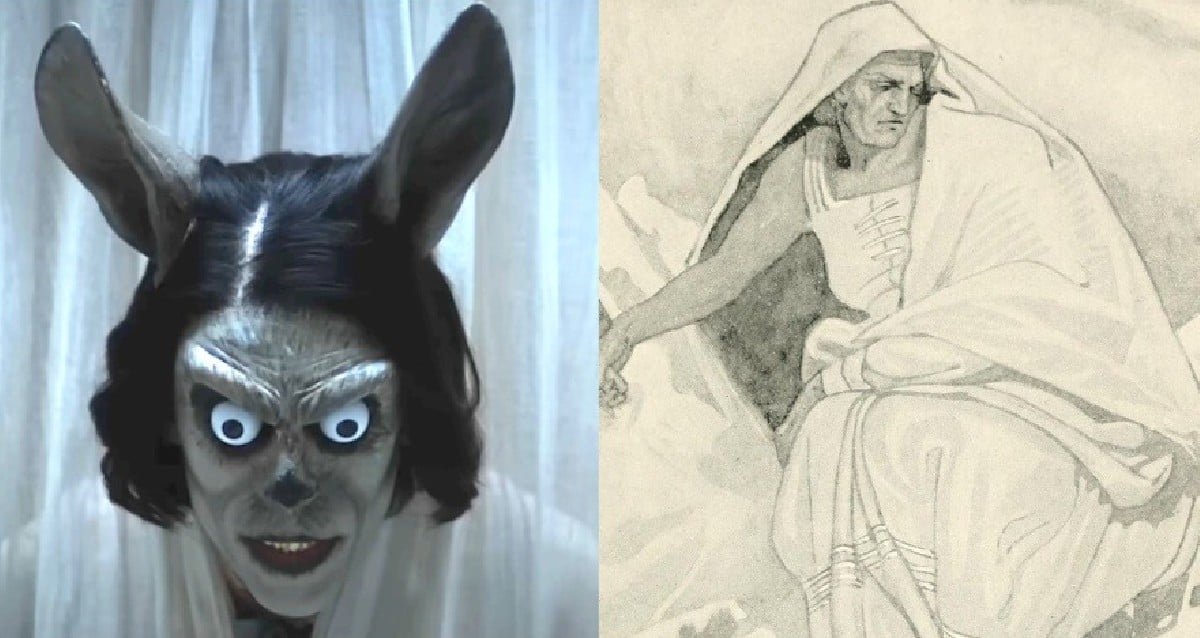
In mythological descriptions, the Cailleach is typically depicted as an elderly woman, often with a single eye. Her appearance is described as having blue skin, white hair, and red teeth, with some legends suggesting she wears clothing made of skulls. Beyond her human-like form, she is said to possess the ability to transform into a giant bird.
Her power over the weather is manifested through specific tools. She uses a staff to freeze the ground and fight off the arrival of spring. In some accounts, she also wields a powerful hammer, which she uses to shape the mountains and valleys of the north.
The Creation of the Landscape
The Cailleach is credited with shaping the geography of Ireland and Scotland. According to Scottish Folk-Lore and Folk Life, she created highlands and valleys by dropping rocks from her creel and molding the landscape with her hammer. Some myths suggest she created mountains as stepping stones for her journey across the land.
Numerous geographical locations are named in her honor. Key sites include:
- Hag’s Head (Ceann Caillí) on the southernmost tip of the Cliffs of Moher in Ireland.
- Ben Cruachan, the largest mountain in Argyll and Bute, Scotland, where she is known as the “Witch of Ben Cruachan.”
- Labbacallee wedge tomb in County Cork, referred to as the “Hag’s Bed” (Leaba Chaillí).
Another legend states that Hag Rock in Coulagh Bay, Cork, marks the spot where she waited for her lover, the Irish sea-god Manannán mac Lir. As Mythopedia reports, these connections to the land reinforce her role as a deity of nature and the earth.
Seasonal Transitions and Rituals
The Cailleach’s influence extends to the agricultural cycle and the transition between winter and spring. Her success in maintaining winter is determined by the weather on February 1, during the festival of Imbolc (also known as Saint Brigid’s Day). On this day, the Cailleach is said to collect firewood for the remainder of the winter season.
The weather on Imbolc determines the length of the winter:
- Sunny weather indicates that the Cailleach can collect more firewood, meaning winter will last longer.
- Poor weather prevents her from collecting firewood, meaning spring will arrive sooner.
Additionally, the Cailleach brings in winter by washing her snow-white hair in the Gulf of Corryvreckan, an act that takes three days and triggers a massive winter storm.
Among farmers, a traditional ritual involves the corn doll. A corn doll symbolizing the Cailleach is created by the first farmer to finish the grain harvest. This doll is then tossed into the field of the field of the other farmer who has not finished their harvest. The last farmer to finish the harvest must take the doll into their home for the winter, meaning they must “take care of the Cailleach” throughout the cold months.
Modern Interpretations and Pop Culture
While the ancient Gaelic goddess is a daunting mythological figure, her image has been adapted in modern media. In the British BBC television show Merlin, she appears as a figure who demands a sacrifice to restore order after the veil between the living and the dead is broken. In the 2026 horror movie Hokum, she is portrayed as an evil witch who kidnaps children and leads them through the underworld.
As RTE noted, the modern interpretation of the Cailleach as a personified evil witch is often a result of the translation of “cailleach” as “witch” or “hag” in English. This differs from her original role as a winter deity and a creator of the land.
For those interested in the deeper layers of Irish mythology, Irish Myths provides further context on her relationship with the land and the land’s sacred sites. More detailed research into the other fairies of English tradition can be found in The Fairies in English Tradition and Literature.
The Cailleach is a formidable figure of Gaelic mythology, representing the destructive power of nature and the transition of the seasons. Her image remains a significant part of thegroupIdle folklore of the Gaelic world.