
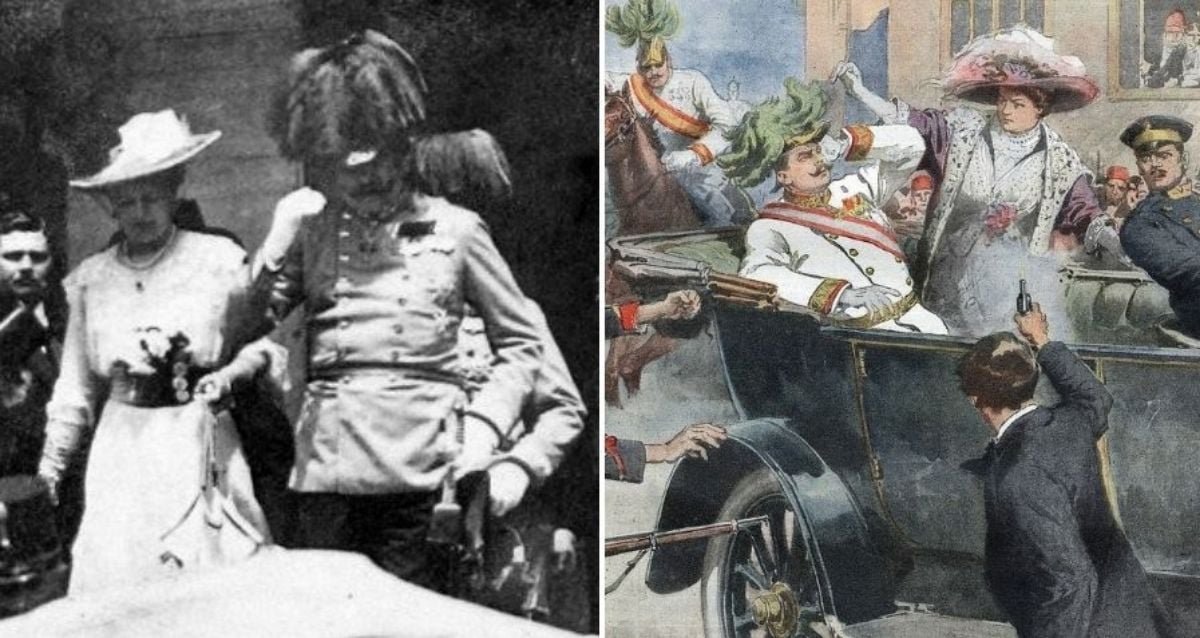
On June 28, 1914, the assassination of Archduke Franz Ferdinand, heir to the Austro-Hungarian throne, and his wife Sophie, triggered a global conflict that resulted in an estimated 15 to 22 million deaths. The event took place in Sarajevo, Bosnia, during a military inspection visit. The perpetrator, Gavrilo Princip, a 19-year-old Bosnian Serb nationalist, fired two point-blank shots that ended the lives of both the Archduke and the Duchess, initiating a diplomatic crisis that escalated into World War I.
The Geopolitical Tension in the Balkans
The road to the assassination was paved by decades of territorial disputes and rising nationalism. Following the 1878 Treaty of Berlin, Bosnia and Herzegovina were placed under Austro-Hungarian occupation. This arrangement created deep resentment among local populations who desired unification with Serbia. In 1908, Austria-Hungary officially annexed Bosnia and Herzegovina, a move that outraged Serbian nationalists and intensified regional instability.
Conflict between the two powers was not limited to territory. In 1906, a trade dispute known as the Pig War occurred when Austria-Hungary restricted Serbian pork imports to pressure the kingdom. By 1903, Serbia had shifted its diplomatic focus toward Russia, moving away from its previous ties with Austria-Hungary. This shift, combined with the growing power of the Serbian state, led the Habsburg Empire to view Serbia as an existential threat to its stability.
The Plot and the Black Hand
The assassination was orchestrated by a network of revolutionary groups. Young Bosnia, a movement seeking the unification of South Slavic people, provided the ideological drive, while the Black Hand, a secret military society formed by Royal Serbian Army officers, provided the logistical support. Gavrilo Princip and five other co-conspirators were armed with pistols, grenades, and cyanide capsules provided by the Black Hand.
Security for the visit was notably lax. According to the National World War I Museum, officials had essentially left the safety of the Archduke to providence. Only about 100 police officers were deployed to guard a four-mile procession, leaving the motorcade vulnerable to attack.
The Events of June 28, 1914
The assassination attempt began shortly after 10 a.m. as the motorcade moved along Appel Quay. Nedeljko Áabrinovié, one of the conspirators, threw a grenade at the Archduke’s car, but the bomb bounced off the vehicle, injuring several people but leaving Franz Ferdinand unharmed. Following a reception at the Town Hall, the Archduke decided to visit the wounded at the hospital.
A critical error occurred when the driver, failing to follow the new route intended to avoid the city center, turned onto a side road. As the driver attempted to turn around, the engine stalled directly in front of Gavrilo Princip. At approximately 10:45 a.m., Princip stepped forward and fired two shots. The first hit the Archduke in the neck and the second hit Duchess Sophie in the abdomen.
Count Franz von Harrach, who was in the car, recalled that the Archduke’s last words were focused on his wife: “Sophie! Sophie! Don’t die. Live for my children!”
Both died within minutes. This sequence of events is detailed further in The Origins of the War of 1914.
What did the assassination of Archduke Franz Ferdinand spark?
The assassination acted as the immediate catalyst for World War I. Austria-Hungary, believing the Serbian government was complicit, issued the July Ultimatum on July 23, 1914. This document contained ten demands, including the suppression of anti-Austrian propaganda and allowing Austro-Hungarian officials to participate in the judicial investigation within Serbian territory.
Serbia accepted most terms but refused to allow foreign officials to conduct investigations on its soil, citing a violation of sovereignty. On July 28, 1914, exactly one month after the assassination, Austria-Hungary declared war on Serbia. Due to a complex system of mutual defense treaties, Russia mobilized to support Serbia, Germany mobilized to support Austria-Hungary, and soon France and the United Kingdom were drawn into the conflict. This global war lasted four years and saw the emergence of new military technologies, similar to how later conflicts saw the US military pigeon guided missile project in World War II.
Main causes of World War I
While the assassination was the spark, the war was not caused by a single event. Historians identify several systemic causes:
- Militarism: The aggressive buildup of armed forces and the glorification of war.
- Alliances: The network of secret and open treaties that ensured a local conflict would escalate into a global one.
- Imperialism: The competition for colonies and resources in Africa and Asia.
- Nationalism: The desire for ethnic groups to achieve self-determination, particularly in the Balkans.
The resulting conflict pitted the Allied Powers (including France, Great Britain, Russia, Italy, and later the United States) against the Central Powers (Germany, Austria-Hungary, and the Ottoman Empire). This era of total war changed the global landscape, setting the stage for future military advancements and the involvement of figures like Jimmy Stewart in World War II service.
Does World War I happen if Franz Ferdinand survived?
Historians debate whether the war would have occurred without this specific assassination. While Gavrilo Princip insisted that the war was inevitable, the systemic tensions—imperialism, militarism, and the alliance system—suggest that another crisis would likely have triggered a general European war. However, the timing, the nature of the the conflict and the specific alignment of powers might have differed if the Archduke had survived the attack in Sarajevo.
The aftermath of the assassination led to a period of unprecedented devastation. The scale of loss was so immense that it redefined the concept of warfare, eventually leading to the other great global conflicts of the 20th century, including the events surrounding the atomic bombing of Nagasaki and the end of World War II.
Trial and Fate of the Assassins
Gavrilo Princip and his co-conspirators were arrested immediately after the shooting. Princip was convicted of murder and high treason. Because he was only 19 years old, he was ineligible for the death penalty under Austro-Hungarian law, and was instead sentenced to 20 years in prison.
Princip died of tuberculosis in 1918, before his sentence was completed, while incarcerated in prison. His actions, though targeted at a specific political goal of South Slavic unification, triggered a sequence of events that resulted in the death of millions of people worldwide.