If you’ve ever watched “Jurassic Park,” you might recall the fierce and terrifying Velociraptors that haunted the film’s characters. However, what you remember from the screen pales in comparison to the scientific reality. The portrayal of these dinosaurs has been a subject of extensive debate and research, revealing fascinating insights into their true nature and appearance. Let’s dive deep into what Velociraptors really looked like and why Hollywood took such creative liberties.
Understanding the real appearance of Velociraptors
When discussing Velociraptors, it’s crucial to understand that the creatures depicted in “Jurassic Park” are significantly different from their real-life counterparts. This disparity stems from a blend of artistic license and the evolving understanding of dinosaur paleobiology.
Firstly, paleontologists have made remarkable discoveries about Velociraptors over the past few decades. Recent findings suggest that these dinosaurs were not the large, scaly beasts seen in the movie, but rather much smaller and likely feathered. The real Velociraptor mongoliensis, which roamed during the Late Cretaceous period, was about the size of a modern-day turkey, measuring roughly 1.6 feet tall and weighing around 15 to 30 pounds.
One of the most significant discoveries was made in 1998 when a Velociraptor forearm was unearthed in Mongolia. The fossil exhibited clear evidence of feather attachment sites, suggestive of a feathered body. This finding fundamentally altered the perception of Velociraptors, painting them as more avian than reptilian.
- Real Velociraptors were relatively small.
- They likely had feathers covering their bodies.
- They were agile and fast, adapted for hunting.
- They possessed a sickle-shaped claw on each foot, used for slashing prey.
How “Jurassic Park” misconstrued Velociraptors
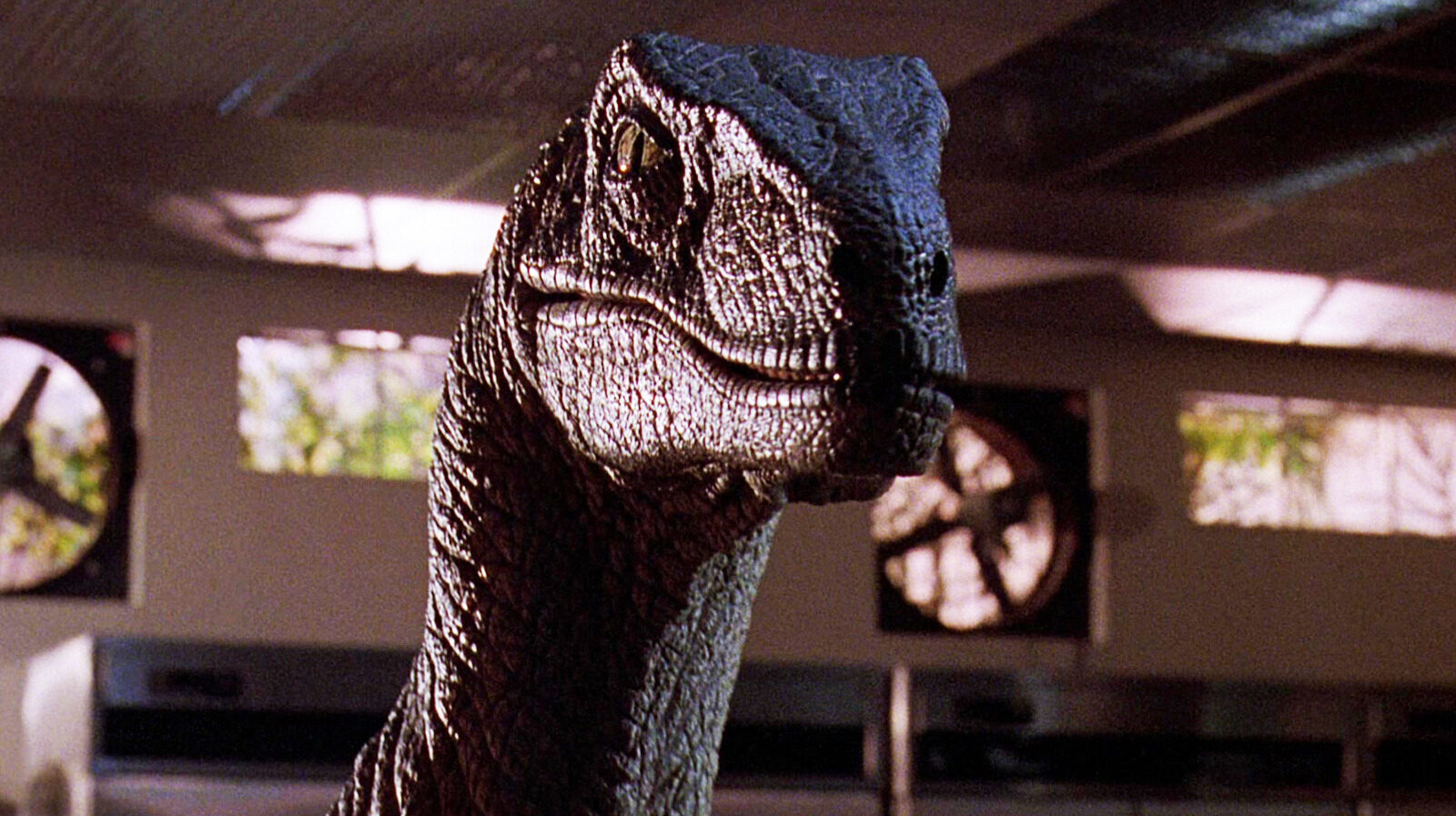
The depiction of Velociraptors in “Jurassic Park” showcased them as large, scaly reptiles with an intimidating presence. This portrayal was not merely a minor deviation but a significant departure from scientific accuracy. The raptors are shown as being much larger than they actually were, standing over six feet tall, which contributed to their fearsome reputation in the film.
Moreover, the film’s raptors lacked the essential feather characteristics that have become a staple in modern depictions of dinosaurs. This omission is particularly striking given the increasing body of evidence supporting the feathered appearance of many theropods, including Velociraptors. The sensationalized behavior of these creatures in the film—working together to hunt and outsmart humans—was also exaggerated, as it is not entirely clear how social these dinosaurs were in reality.
Another notable aspect is their portrayal as purely carnivorous predators. While it’s true they were meat-eaters, their actual diet and hunting strategies remain subjects of ongoing research. Some paleontologists suggest they might have scavenged as well as hunted, displaying a more complex behavior than shown in the film.
Why did filmmakers choose to alter Velociraptors?
When creating a blockbuster film like “Jurassic Park,” the need for dramatic effect often takes precedence over scientific accuracy. The filmmakers, including author Michael Crichton and director Steven Spielberg, opted for a more visually striking and frightening version of the Velociraptor that would resonate with audiences. However, this decision was influenced by more than just artistic license.
The raptors depicted in the film were primarily inspired by another dinosaur species known as Deinonychus antirrhopus, which is larger and more robust than Velociraptor. Deinonychus was discovered in the 1960s and showcased features such as a large sickle-shaped claw and a more formidable build, making it a more suitable candidate for a monster movie creature.
In terms of cinematic storytelling, the larger and more intimidating Deinonychus provided a more engaging antagonist for the film’s heroes. The choice to present these creatures as scaly and menacing also aligned with the aesthetic preferences of 1990s cinema, where dinosaurs were depicted as brutal predators.
The impact of inaccurate representations
While “Jurassic Park” is acclaimed for its groundbreaking visual effects and storytelling, its portrayal of dinosaurs, particularly Velociraptors, has had a lasting impact on public perception. The film helped shape a generation’s understanding of dinosaurs, embedding these inaccurate images deeply into popular culture.
This phenomenon raises important questions about the responsibility of filmmakers in depicting scientific subjects. While creative liberties are expected in entertainment, the balance between accuracy and artistic expression is critical, especially when the subject matter is based on real historical entities.
As scientific knowledge continues to evolve, so too does the understanding of what dinosaurs looked like. Ongoing research continues to reveal more about the anatomy and behavior of Velociraptors, leading to a more nuanced appreciation of these fascinating creatures.
What can we learn from studying Velociraptors?
The study of Velociraptors offers valuable insights into the evolutionary history of dinosaurs and their relationship with modern birds. As paleontologists uncover more fossils and advanced techniques, our understanding of their physiology and behavior becomes clearer.
- They help illustrate the evolution of feathers in theropods.
- Studying their fossils can provide clues about dinosaur social behavior.
- Insights gained can lead to a better understanding of ecosystem dynamics during the Late Cretaceous.
Ultimately, the journey from “Jurassic Park” to the modern scientific understanding of Velociraptors highlights the importance of continual learning and adaptation in both science and media. As new discoveries emerge, the image of these captivating creatures will undoubtedly continue to evolve.