

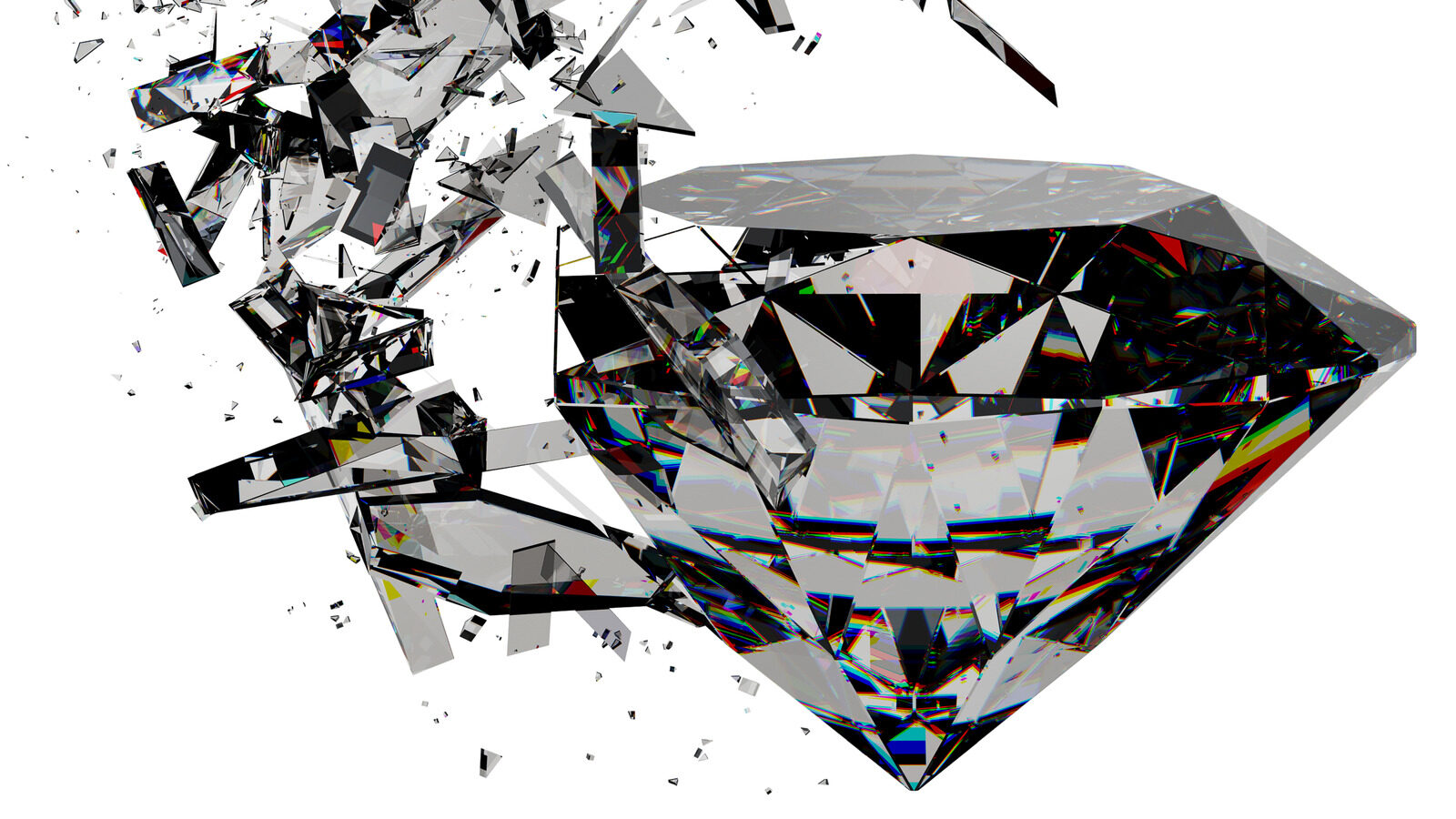
When we think of diamonds, the first thing that often comes to mind is their stunning brilliance and their status as symbols of luxury and durability. Yet, what many people don’t realize is that beneath their dazzling exterior lies a more complex truth about their properties. The age-old belief that diamonds are unbreakable is not entirely accurate. Let’s delve into the fascinating world of diamonds to uncover the science behind their hardness and brittleness, and to better understand why cutting them is such a meticulous art.
Understanding the hardness of diamonds
Diamonds are renowned as the hardest naturally occurring material on Earth. The term “diamond” itself originates from the Ancient Greek word “adámas,” which means “invincible” or “unbreakable.” However, this perception is somewhat misleading. While diamonds can resist scratching and are exceptionally hard, they are not impervious to breakage.
The notion of hardness can be perplexing, as it varies in meaning across different contexts. In everyday language, “hard” might refer to something that is difficult to bend or break, but in the realm of materials science, hardness has a more precise definition. It measures a material’s ability to withstand permanent deformation, and scientists recognize three distinct types of hardness:
- Scratch hardness: This is assessed by dragging a harder material across the surface and measuring the depth of the resulting groove.
- Rebound hardness: This involves dropping a hammer with a harder tip and measuring how high it bounces back.
- Indentation hardness: This is determined by pressing a harder material into the surface and measuring the depth of the indentation.
Diamonds score a perfect 10 on the Mohs hardness scale, making them the hardest known material. However, their unique chemical structure contributes to their brittleness, which can lead to shattering under certain conditions.
The surprising brittleness of diamonds
While diamonds are incredibly hard, they possess a low toughness, which is a different property altogether. In materials science, toughness refers to the ability of a material to absorb energy and deform without fracturing. In simpler terms, toughness is about how much stress a material can endure before breaking apart, while hardness is about resisting shape changes.
It might be surprising to learn that rubber, for instance, is considered tougher than diamonds. Despite its softness, rubber can withstand significant force without breaking. When subjected to extreme impacts, a diamond can fracture easily, shattering into numerous tiny pieces. This disparity arises from the very structure of diamonds, which consists of carbon atoms arranged in a rigid crystal lattice.
The tightly bonded carbon atoms create a stable but brittle formation. When a diamond is struck, the force can cause shockwaves to travel through the crystal lattice. If the force is concentrated along specific weaknesses in the lattice known as cleavage planes, the diamond will fracture. This phenomenon is akin to a house of cards collapsing when a slight disturbance occurs.
The art of diamond cutting
The process of cutting diamonds is a delicate and intricate art that requires precision and expertise. Given their hardness, one might assume that cutting them is straightforward, but it is anything but simple. A single miscalculation can lead to unwanted fractures or splits.
To cut diamonds effectively, professionals use other diamonds as tools, since they are the only materials hard enough to do so. This unique requirement is one reason why perfect spherical diamonds are very rare; we simply lack the tools capable of shaping them accurately. Instead, diamond cutters capitalize on the natural cleavage planes in diamonds for the cutting process.
Here’s a simplified overview of how diamonds are typically cut:
- Initial cuts are made using diamond-tipped saws or lasers to score the diamond at the desired angle.
- A steel cleaver, which is tougher and can withstand significant force, is then driven into the scored line to split the diamond into two pieces.
- The resulting halves are nearly perfect at the molecular level, as they follow the natural planes of the diamond’s crystal lattice.
The final shaping of the diamond involves several additional steps to achieve its iconic facets and sharp angles. During the bruiting phase, diamonds are placed in cement bowls with only the edges exposed. The exposed part is rubbed against another diamond, refining its shape. Finally, the diamond is polished using diamond powder to achieve its brilliant shine.
Comparing diamonds with other materials
To appreciate the unique characteristics of diamonds, it is beneficial to compare them with other materials. While diamonds stand out for their hardness, several other materials demonstrate different but equally impressive properties.
| Material | Hardness (Mohs scale) | Toughness |
|---|---|---|
| Diamond | 10 | Low |
| Rubber | 0.5-2 | High |
| Steel | 4-8 | Moderate to High |
| Glass | 5-6 | Low |
This comparison highlights the unique position diamonds hold in the materials world. They excel in hardness, making them ideal for applications such as cutting tools and abrasives, but their low toughness limits their use in applications where impacts are likely. Understanding these distinctions is crucial for industries that rely on diamond materials.
The implications of diamond properties in various industries
The unique properties of diamonds have profound implications across various sectors, from jewelry to industrial applications. In the jewelry industry, diamonds are prized for their beauty and durability, making them the preferred choice for engagement rings and other fine jewelry. However, their brittleness necessitates careful handling and setting to prevent damage.
In industrial contexts, diamonds are used in several applications, including:
- Cutting tools: Diamonds are employed in saws and blades for cutting hard materials.
- Grinding wheels: Diamond dust is utilized in grinding wheels for precision work.
- Drilling: Diamond-tipped drill bits are used to bore through tough substrates.
While diamonds are invaluable in these roles, the understanding of their brittleness ensures that manufacturers and users alike implement the necessary precautions to maximize their lifespan and effectiveness.
Conclusion regarding diamonds’ unique properties
The journey through the world of diamonds reveals a complex interplay between hardness and brittleness. While they are often celebrated for their strength, the reality is that diamonds require careful handling and specific techniques for cutting and shaping. This understanding not only enhances our appreciation for these remarkable gemstones but also informs their application across various industries.