
Imagine discovering a creature that has existed for over 400 million years, thought to have vanished from the Earth long before the first dinosaurs ever walked the planet. This is the fascinating story of the coelacanth, a fish that has captured the imagination of scientists and the public alike. Its unique features and historical significance make it a true marvel of the natural world.
The 400-million-year-old fish that defied extinction
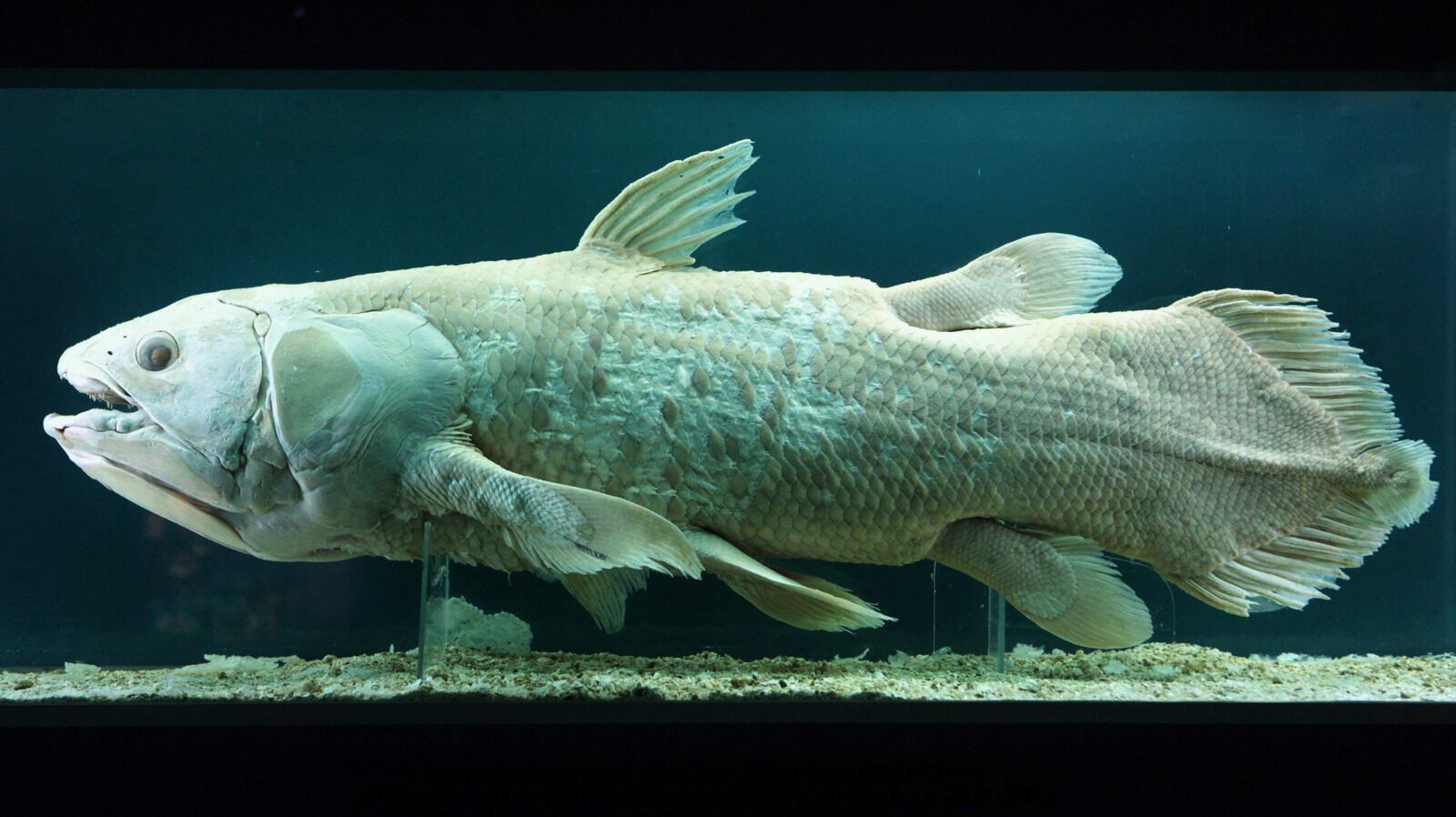
In December of 1938, a remarkable event took place off the coast of South Africa. Marjorie Courtenay-Latimer, the curator of the East London Museum, received a call from a local fisherman named Hendrik Goosen. He had caught a strange-looking fish in his trawler nets and thought it might be of interest. What Courtenay-Latimer found was nothing short of astonishing: a five-foot-long fish with shimmering blue and white scales, and unusual fins that didn’t resemble any known species.
Courtenay-Latimer quickly reached out to her friend, Professor James L.B. Smith of Rhodes University, sharing her sketches and observations. Upon examining the fish, Smith recognized it as a coelacanth, a prehistoric species believed to have gone extinct 66 million years earlier. This unexpected discovery was announced in the prestigious journal Nature, forever altering the scientific understanding of marine life. Smith named the species Latimeria chalumnae to honor Courtenay-Latimer’s vital role in its identification.
Significant discoveries surrounding the coelacanth
The story of the coelacanth is one of multiple discoveries, stretching back to its initial fossil findings. The earliest documented coelacanth fossil was described by the renowned naturalist Louis Agassiz in 1836, a year after he identified the giant shark known as megalodon.
The oldest coelacanth fossils date back approximately 420 million years, placing them in the Devonian period, an era often referred to as the “Age of Fishes.” This period occurred long before the first dinosaurs appeared, with about 200 million years separating them. The timeline of coelacanth evolution is as remarkable as the existence of the fish itself.
After the initial discovery of Latimeria chalumnae, Smith sought additional specimens, offering rewards to fishermen. His efforts paid off when a fisherman from the Comoro Islands revealed that these fish, known locally as “gombessa,” were occasionally caught unintentionally. Another significant breakthrough occurred in 1997, when Mark and Arnaz Mehta Erdmann identified a new species, Latimeria menadoensis, while on vacation in Indonesia. This discovery confirmed that the coelacanth lineage had persisted in two distinct forms, highlighting its unique adaptability.
Unique characteristics of the coelacanth
Coelacanths possess several distinctive features that set them apart from other fish. Here are some of their most notable characteristics:
- Lobed fins: Unlike typical fish fins, coelacanths have lobed fins that resemble small legs. This structure allows for a unique method of swimming, moving in a way reminiscent of walking.
- Extra tail lobe: Their tail features an additional lobe, giving the appearance of having a “tail on a tail,” further setting them apart from other fish.
- Intracranial joint: Coelacanths are unique in having a hinged joint in their skulls, which enables them to open their mouths extraordinarily wide, facilitating the capture of prey.
- Primitive features: The coelacanth has characteristics typically found in ancient fish, connecting it to a lineage that dates back millions of years.
These features not only highlight the coelacanth’s ancient lineage but also demonstrate its evolutionary significance. The existence of such primitive traits challenges modern understanding of fish evolution and adaptation.
The coelacanth’s current status and conservation challenges
Despite its remarkable history, the coelacanth faces serious threats today. The populations of these fish are small and fragmented, with estimates suggesting that only 300 to 400 coelacanths exist around the Comoro Islands. Their elusive nature makes it difficult to assess their numbers in other regions.
Historically, coelacanths were heavily fished following their rediscovery, leading to a black market for these “living fossils.” Today, both species, Latimeria chalumnae and Latimeria menadoensis, are classified as endangered, with L. chalumnae listed as critically endangered by the International Union for Conservation of Nature (IUCN).
Conservation efforts are critical to ensuring the survival of the coelacanth. Some of the key strategies include:
- Research and monitoring</: Regular scientific research is essential to understanding coelacanth populations and their habitats.
- Protected areas: Establishing marine protected areas can help safeguard their ecosystems from overfishing and habitat destruction.
- Public awareness: Educating local communities and the global public about the coelacanth’s significance can foster stewardship and conservation efforts.
- Regulation of fishing: Implementing sustainable fishing practices can reduce the accidental catch of coelacanths.
The story of the coelacanth is a profound reminder of the resilience of life on Earth. As we learn more about this ancient fish, we also uncover valuable insights into the history of evolution and the importance of preserving biodiversity for future generations.