
Vladimir Demikhov’s name is often whispered in the halls of medical history, both lauded and condemned for his pioneering work in transplantology. This Soviet doctor dared to push the boundaries of what was considered possible, leaving behind a legacy that continues to spark debate even today. One of his most infamous experiments involved creating a two-headed dog in 1959, a feat that would forever etch his name in the annals of scientific curiosity.
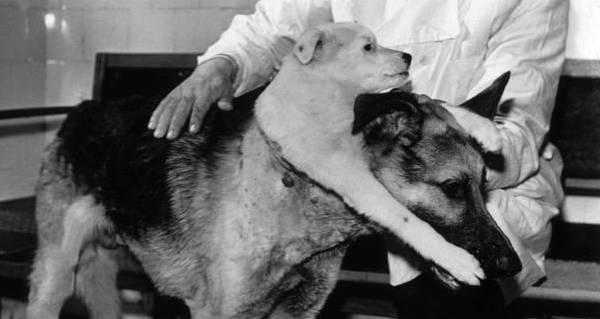
Demikhov’s journey into the realm of head transplants began with a series of 23 surgeries on dogs, each one a grueling test of surgical skill and scientific ambition. He meticulously studied the complexities of vascular reconstruction and bone articulation, gradually honing his techniques over years of relentless experimentation. Finally, with his 24th attempt, history was made. A large German Shepherd named Brodyaga became the host for a transplanted head and neck from a smaller dog called Shavka.
The resulting real two-headed dog lived for a remarkable four days, its existence a testament to Demikhov’s surgical prowess. Both heads exhibited signs of sentience, capable of hearing, seeing, smelling, and even swallowing. This groundbreaking experiment, while ethically controversial, undeniably pushed the boundaries of medical knowledge. It raised profound questions about animal welfare and the limits of scientific exploration, leaving an indelible mark on the world of transplantology.
Vladimir Demikhov and Transplantology
Vladimir Demikhov’s interest in transplantation wasn’t a fleeting fancy; it was a lifelong obsession that consumed his every waking moment. He saw beyond the immediate practicalities of organ replacement and envisioned a future where complex surgical procedures could fundamentally alter the human condition. Demikhov believed that by understanding the intricate mechanisms of animal tissue, he could unlock the secrets to revolutionizing human healthcare.
His early research focused on grafting blood vessels and tissues between different organs within a single animal. This meticulous work laid the groundwork for his more ambitious ventures into head transplantation. Demikhov wasn’t driven by a desire for fame or notoriety; his motivations were deeply rooted in scientific curiosity and a genuine belief that he could make a difference in the world. He saw himself as a pioneer, forging new paths in a field where few dared to tread.
Despite facing fierce criticism and ethical concerns from within the scientific community, Demikhov persevered. He believed that his work, though controversial, had the potential to yield groundbreaking results with immense benefits for humanity. The two headed dogs he created, although short-lived, served as crucial stepping stones in his research, providing valuable insights into the complexities of organ integration and nervous system communication.
The Two-Headed Dog Experiment
The creation of the two-headed dog in 1959 was a culmination of years of meticulous research and countless hours spent honing Demikhov’s surgical skills. This wasn’t just a simple transplantation; it was a complex ballet of delicate procedures involving amputations, intricate vascular reconstruction, and even the use of plastic strings to attach vertebrae.
Demikhov carefully selected Brodyaga, a large German Shepherd, as the host animal for the transplant. Shavka, a smaller dog, provided the head and neck that would be meticulously intertwined with Brodyaga’s existing anatomy. The surgery itself was a marvel of precision engineering, a testament to Demikhov’s unwavering dedication to his scientific pursuit.
Despite the inherent risks and ethical complexities, Demikhov persevered, driven by the belief that this experiment held the key to unlocking new frontiers in medicine. The resulting two-headed dog lived for four days, demonstrating that both heads could function independently. Though brief, this remarkable existence offered valuable insights into the interconnectedness of organ systems and the potential for complex surgical interventions.
Surgical Procedure and Results
Demikhov’s surgical technique was a delicate dance of precision and ingenuity. He meticulously dissected both the donor dog (Shavka) and the recipient dog (Brodyaga), carefully isolating blood vessels and nerves that would be crucial for connecting the two heads. The transplanted head and neck were then carefully sutured to Brodyaga’s existing anatomy, with painstaking attention paid to aligning the spinal vertebrae.
To ensure a stable connection, Demikhov utilized plastic strings to bind the vertebrae together, effectively bridging the gap between the two distinct animal parts. He also meticulously reconstructed the blood vessels, creating intricate networks that allowed for the circulation of blood and nutrients throughout the newly combined organism. This complex procedure required immense skill and focus, highlighting Demikhov’s commitment to pushing the boundaries of surgical science.
The results, though tragically short-lived, were nothing short of remarkable. The two-headed dog exhibited signs of sentience in both heads, demonstrating a remarkable capacity for independent movement and sensory perception. Both heads could hear, see, smell, and even swallow, confirming that Demikhov had successfully integrated two distinct neurological systems into one functioning entity.
Ethical Considerations and Controversy
Demikhov’s groundbreaking work, while undeniably impressive from a scientific standpoint, ignited a firestorm of controversy surrounding its ethical implications. Many critics argued that the suffering inflicted on the animals involved outweighed any potential benefits gained from the experiments. The complex and invasive surgeries, coupled with the inherent challenges of integrating two distinct neurological systems, raised serious concerns about animal welfare and the very nature of scientific inquiry.
The public outcry against Demikhov’s methods was widespread, fueling intense debate within the scientific community. Some argued that the pursuit of knowledge, however controversial, justified the means, while others insisted that ethical considerations must always take precedence over scientific ambition. This clash of ideologies highlighted the inherent tension between scientific progress and our moral responsibility towards sentient beings.
Despite facing staunch opposition, Demikhov defended his work, emphasizing its potential to advance medical understanding and ultimately benefit humanity. He believed that the two-headed dog experiment, though controversial, offered invaluable insights into the complexities of organ transplantation and the interconnectedness of biological systems. Even today, Demikhov’s legacy remains a complex tapestry woven with threads of brilliance, controversy, and enduring ethical questions about the boundaries of scientific exploration.
Legacy and Impact of Demikhov’s Work
Though shrouded in controversy, Demikhov’s work undeniably left a lasting impact on the field of medicine. His pioneering research laid the groundwork for future advancements in transplantation surgery, paving the way for more refined techniques and increased success rates. Although his methods were often criticized as barbaric by modern standards, his unwavering dedication to pushing scientific boundaries inspired countless researchers to explore the potential of organ transplantation.
The two-headed dog experiment, while shocking in its audacity, forced the world to confront complex ethical questions surrounding animal welfare and the limits of scientific exploration. This sparked a crucial dialogue about the responsibilities that come with scientific advancement, prompting ongoing discussions about how best to balance progress with compassion. Demikhov’s legacy serves as a reminder that even the most controversial experiments can yield valuable insights, albeit at a significant cost.
Despite the ethical dilemmas surrounding his work, Demikhov’s contributions to transplantology cannot be ignored. His pioneering efforts helped to shape the field we know today, pushing the boundaries of what was considered possible and inspiring generations of researchers to continue exploring the frontiers of medical science.