
The animal kingdom exhibits an astonishing array of life forms, each shaped by intricate biological processes. Among nature’s extraordinary variations, the occurrence of two-headed animals, a condition known as polycephaly, profoundly captivates both scientific inquiry and public imagination. This rare congenital anomaly involves a single organism possessing two distinct heads, offering a unique window into the complex interplay of genetics and embryonic development.
Polycephaly arises from specific cellular events and genetic mutations during the earliest stages of embryonic growth. A key factor in this unusual morphology is often linked to the sonic hedgehog (SHH) gene. This gene plays a crucial role in patterning the developing embryo. Disruptions or overactivity in its signaling pathway can lead to an abnormal widening of the head region, resulting in the formation of two separate heads instead of one.
While often associated with reptiles like snakes and turtles, polycephaly can also affect mammals, including cows, sheep, and pigs. The precise mechanisms behind these developmental anomalies are still under active investigation. Environmental factors, such as pollution and habitat changes, are thought to potentially contribute to their incidence. Although many polycephalic animals face significant challenges and short lifespans, their existence provides invaluable insights into biological variation and resilience.
Understanding Polycephaly: Genetic Origins and Embryonic Development
Polycephaly is defined as a rare congenital anomaly characterized by the presence of multiple heads on a single body. The term most commonly refers to dicephalic animals, specifically those exhibiting two heads. This extraordinary biological phenomenon is primarily a consequence of genetic mutations and critical developmental errors that occur during the initial stages of embryonic formation.
A significant contributor to this unusual development is the sonic hedgehog (SHH) gene. This gene is fundamental for proper embryonic patterning, particularly in establishing the body’s midline and guiding neural tube and limb development. If the SHH gene becomes overactive or its signaling pathway is disrupted, it can trigger an abnormal expansion of the cephalic region during development. This leads to the formation of two distinct head structures rather than a single, unified one.
Polycephaly can be understood as a form of incomplete embryonic fission, closely related to conjoined twins. In such cases, a single embryo begins the process of duplication but fails to fully separate, leading to shared body parts and often culminating in the development of two heads. Investigating these complex underlying genetic and developmental processes is a core focus of developmental biology and teratology, the specialized study of birth defects and congenital anomalies.
Environmental Factors Contributing to Polycephaly
While genetic factors are the primary basis for polycephaly, various environmental influences, known as teratogens, can significantly increase the likelihood of these rare developmental abnormalities. These external factors can disrupt the delicate biological processes that guide embryonic growth, cellular differentiation, and organogenesis.
Pollution is a major contributor, introducing harmful chemicals and heavy metals into ecosystems. Exposure to such pollutants during crucial stages of gestation can interfere with cellular signaling pathways. These substances may also induce genetic damage, potentially leading to errors in embryonic development. Furthermore, habitat degradation and overfishing can place immense stress on animal populations, indirectly contributing to a higher incidence of developmental anomalies through compromised maternal health or increased vulnerability to other stressors.
Climate change and its associated effects, such as rising water temperatures, are also being examined for their potential impact on polycephalic development. Warmer aquatic environments, for instance, can alter metabolic rates and physiological conditions for marine life. This might influence gene expression or increase the vulnerability of developing embryos to mutations and other anatomical abnormalities. This highlights the intricate relationship between an organism’s genetic makeup and its external environment in shaping developmental outcomes.
Polycephaly Across Diverse Animal Species
The occurrence of two-headed animals is a phenomenon documented across a wide spectrum of the animal kingdom, particularly among vertebrates. This widespread observation underscores the fundamental biological mechanisms involved in early development and the occasional deviations that can arise across different taxonomic groups.
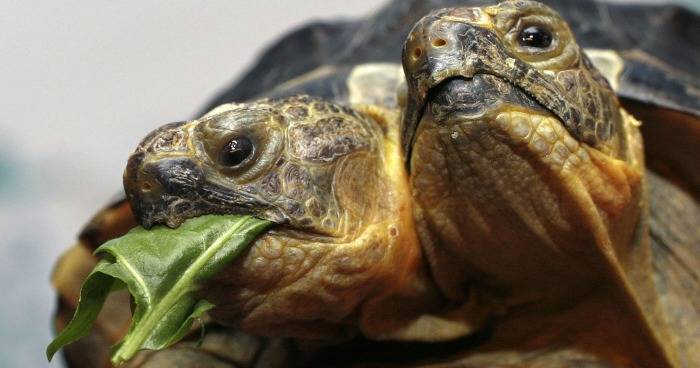
Reptiles, especially snakes and turtles, frequently exhibit cases of polycephaly. Two-headed snakes often possess two fully formed heads, each capable of independent sensory input and feeding. However, this independence often leads to significant physiological challenges, such as conflicting commands for movement or competition for food resources. Similarly, while two-headed turtles are rare, they have been observed sharing a single shell and limbs while exhibiting distinct head movements and behaviors.
Although less common, polycephaly also occurs in mammals, with reported instances in cows, sheep, and pigs. These cases tend to be more severe due to the complex physiological demands of mammalian development and birth, often resulting in lower survival rates. Beyond reptiles and mammals, polycephalic occurrences have been documented in birds, fish, and some amphibians, illustrating the universal nature of these developmental anomalies across various animal classes.
Survival Challenges and Scientific Significance of Polycephaly
The examination of polycephalic animals provides invaluable insights into key areas of developmental biology, genetics, and teratology. By studying these rare conditions, scientists can deepen their understanding of the intricate processes of normal embryonic development, cellular differentiation, and the functional roles of genes like sonic hedgehog. Such research aids in unraveling the complex mechanisms that lead to congenital anomalies, enhancing our appreciation for the precision required in the formation of a complete organism.
Despite their intriguing appearance, two-headed animals face significant challenges to survival. The presence of two brains often leads to conflicting impulses, complicating coordinated movement and hindering their ability to evade predators or hunt effectively. Feeding can also become competitive, and shared internal organs may be malformed or insufficient to support two heads, resulting in severe metabolic strain and other physiological challenges. Consequently, most polycephalic animals have significantly shortened lifespans, with many not surviving long after birth or hatching.
Ultimately, polycephaly serves as a poignant reminder of the delicate balance within biological systems and the remarkable diversity of life. While these rare conditions pose formidable challenges for individual animals, they significantly contribute to our scientific understanding of life’s fundamental processes and the potential for unexpected biological variation.